Today, Ottawa is the national capital. But when the city was founded in 1826, it had a different name: Bytown.
Before it became Ottawa and, later, Canada’s capital, Bytown was a canal town and lumber hub with a growing commercial centre. Like many other cities in British North America, Bytown struggled to source funds for major projects, pay its workers and provide residents with money for everyday use. To fill those gaps, merchants and residents used foreign coins, bills of exchange, commercial scrip and early bank notes until the first currency laws for the Province of Canada came into effect in 1857.
The Ottawa River: the power of water
The story of Bytown begins long before the town was founded in 1826. And it cannot be told without involving the Ottawa River. Since time immemorial, First Nations have lived along the river and used it for travel, trade and treaty-making. Starting in the mid‑17th century, Europeans travelled the river for the fur trade and to establish new settlements. Its waters, falls and rapids shaped where communities took root, where industries developed and how people moved through the region.
Today, the Ottawa River forms a natural border between Quebec and Ontario. But for the people living on either side of it, the river has long been a source of prosperity, regardless of political borders. The real challenge for travellers and settlers was the river’s natural obstacles, including the falls and rapids created by rising elevations farther inland. The most notable obstacle was the Chaudière Falls, or Kettle Falls. The Algonquin Anishinaabe referred to the falls by several names, most notably Akikodjiwan, meaning boiling kettle, and Akikpautik meaning Pipe-Bowl Falls. Samuel de Champlain recorded the name as Asticou, which is believed to be a transcription of Akikok, meaning boiler. The names reflected the same reality: the falls made continuous navigation of the 1,200-kilometre river impossible. But they offered a natural place for two towns to grow, one on either side of the river: Bytown on the south shore and Wrightstown on the north.
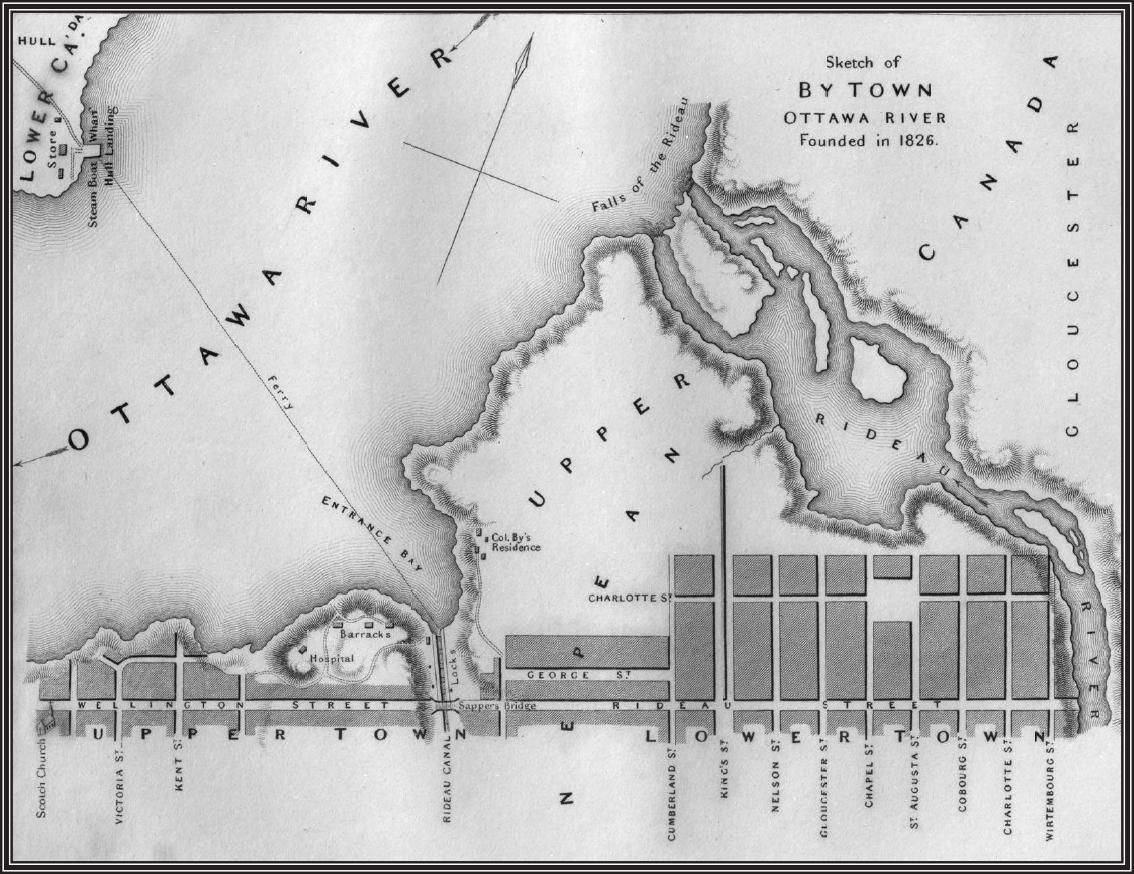
The first map of Bytown was made in 1831, five years after the town’s founding.
Source: J. Bouchette, The British Dominions in North America, H. Colburn and R. Bentley, London: 1831
Philemon Wright: founder of Hull
In 1800, Philemon Wright, an American farmer from Massachusetts, settled on the north shore of the Ottawa River across from the Chaudière Falls with his family, five other families and a few dozen labourers. They cleared land, established homesteads and began farming to feed the settlement. The settlement was named Wrightstown, and in only a few years the town included mills, small shops, a brewery and a hotel. Wrightstown later became Hull, which was incorporated in 1875, and then in 2002 was amalgamated with other municipalities to form the city of Gatineau, Quebec.
Wright helped establish the region’s lumber industry and, in 1806, was the first person to drive a log raft, the Columbo, down the Ottawa River to Montréal and then along the St. Lawrence River to the city of Québec. For years, the fledgling community of Wrightstown survived on local food and lumber resources with many necessary supplies, such as tools, clothing and imported dry goods, coming up the river from Montréal and Halifax, and from as far away as New York, Boston and London.
A small group of coins in the National Currency Collection—housed in the Bank of Canada Museum—show the range of coins that were used in Wrightstown. In 1965, Major Sheldon Carroll, the collection’s curator, met an Ottawa collector with some truly remarkable coins. They were American, Spanish and Spanish-Colonial silver coins that circulated in Wrightstown. What made these coins unique was that they were countermarked with a set of initials. Those initials belonged to Wright, his spouse Abigail and their six children: Christopher Columbus, Philemon Jr., Ruggles, Tiberius, Christiana Hanna and Abigail. Carroll purchased the coins for the Museum, where they reside today.
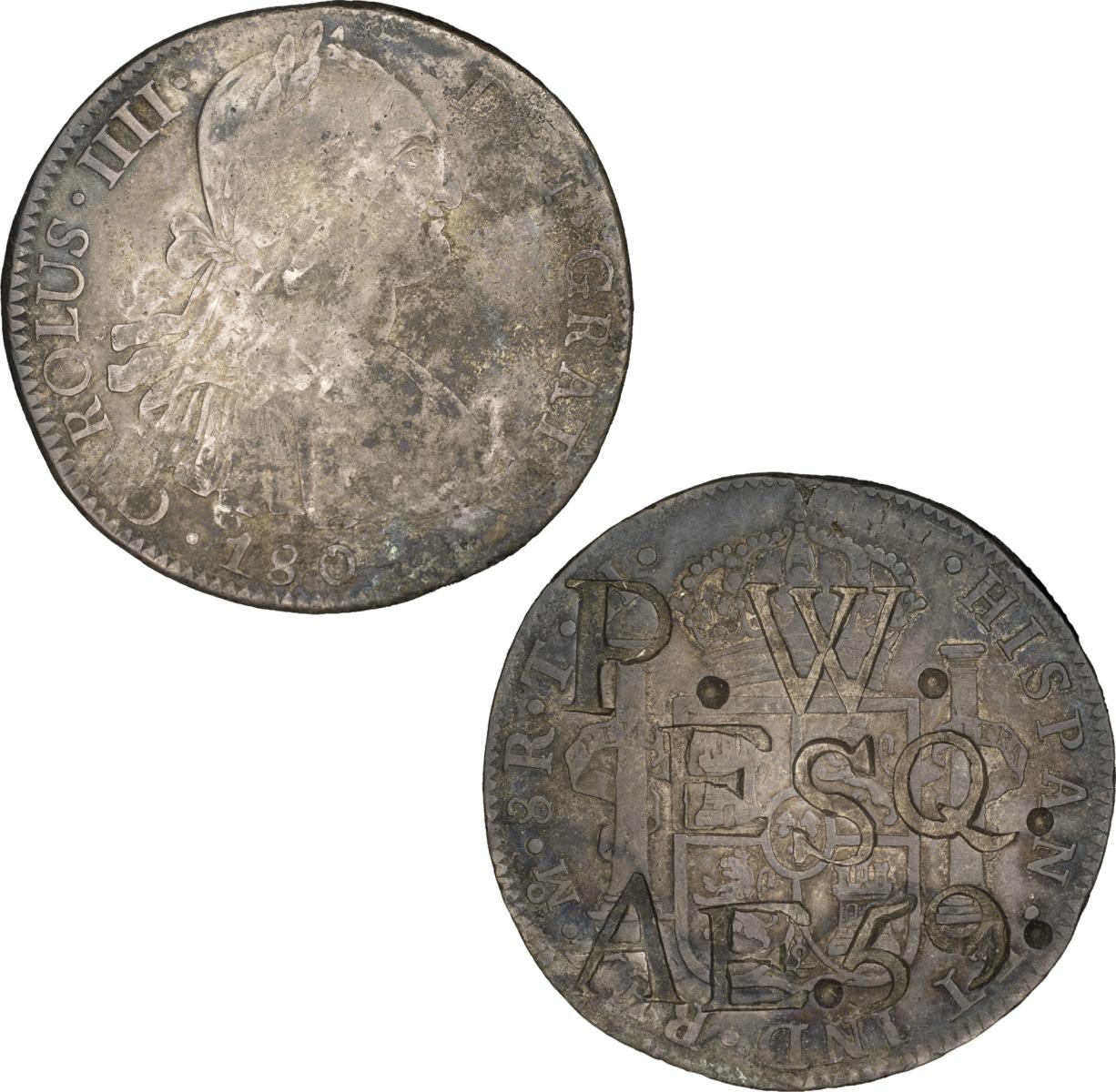
Philemon Wright used silver coins that circulated in Wrightstown to make souvenirs for himself and his family. In this example, Wright had his initials, P.W., his title, ESQ. (for Esquire), and his age, 59, punched into the reverse side of an 1804 Spanish-American 8 reales coin struck in Mexico City (Mo mintmark).
Source: Spain, Charles IV, 8 reales, coin, Mexico mint, countermarked, 1804|1965.49.3
The Rideau Canal: a passage to Lake Ontario
The settlement on the south shore of the Ottawa River, between the Rideau River and the barrier of the Chaudière Falls, has a different story. That story involves finding a strategic military and commercial route between Montréal and Lake Ontario that was safe from the threat of American hostilities along the St. Lawrence River.
In 1826, British colonial authorities ordered Colonel John By of the Royal Engineers to construct a canal connecting the Ottawa River and the city of Kingston on Lake Ontario. After months of surveying and tracing the route, construction began with workers digging canals between natural bodies of water and building locks to connect the waterways. The Rideau Canal was completed in 1832.
By hired some experienced and innovative men to help him, including Thomas McKay and John Redpath. Both were instrumental in the construction of the Rideau Canal. John Redpath had previously been involved in the construction of the Lachine Canal west of Montréal in 1821. McKay later built the first bridge over the Chaudière Falls to Wrightstown and founded the town of New Edinburgh in 1834, which is a neighbourhood of Ottawa today.
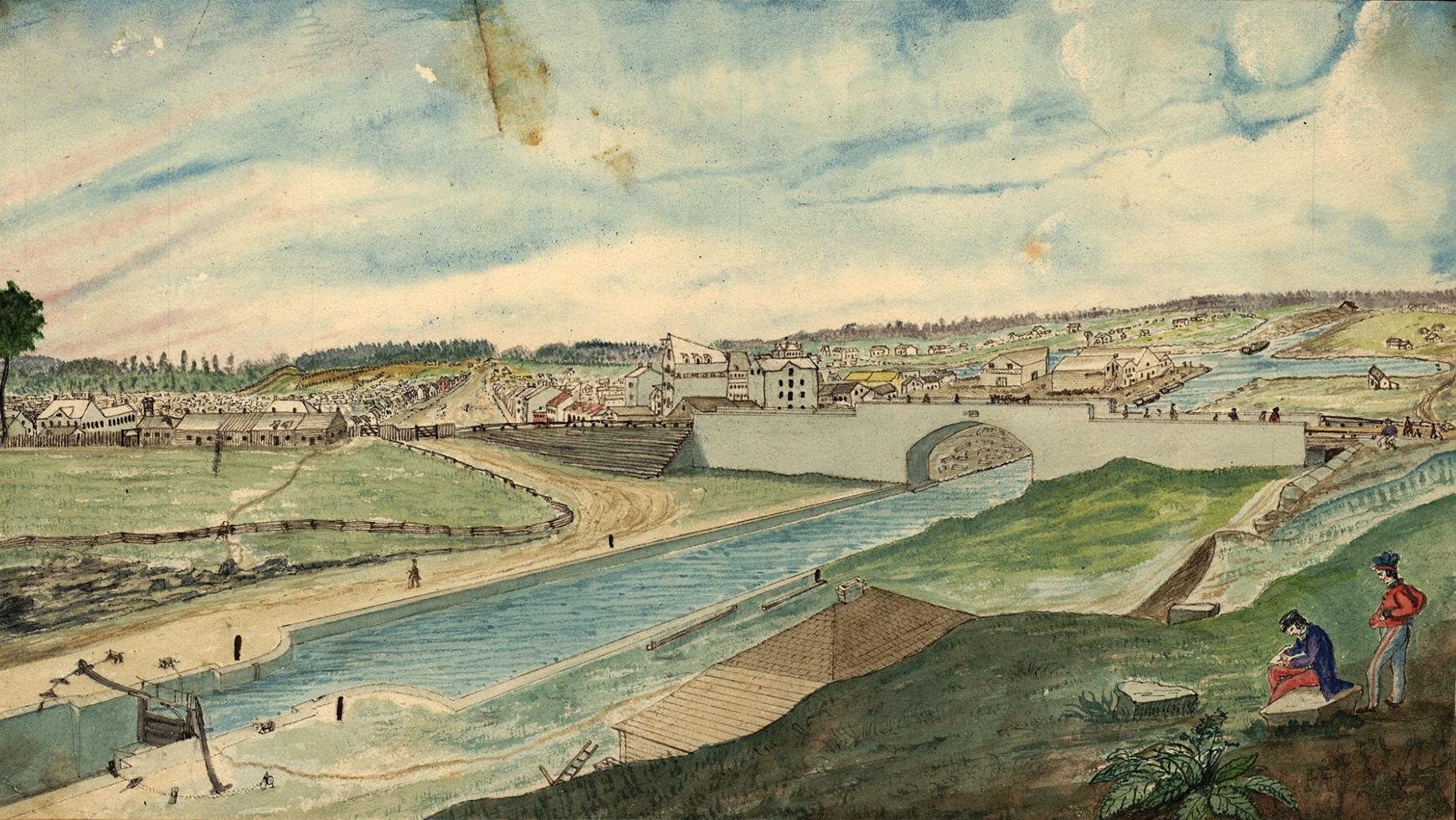
This 1845 painting by Thomas Burrowes, who surveyed land for the development of the Rideau Canal, depicts a view of the Lower Town neighbourhood in Bytown. In the centre of the painting is Sapper’s Bridge over the Rideau Canal at the head of the lock system leading to the Ottawa River.
Source: Wikimedia Commons, Archives of Ontario, C 1-0-0-0-11
Money in Bytown before banking
Along with his engineering duties, By oversaw the local commissariat office where cash and supplies were stored and distributed to canal workers. The Commissariat Building, constructed in 1827, still stands next to the northernmost locks and today houses the Bytown Museum. Labourers working on the canal were usually paid in US half dollars, the equivalent of the daily wage of 2 shillings and 6 pence or 50 cents.
All the labourers on the Canal were paid in Yankee half-dollars; the commissariat furnished these to the contractors, brought up in boxes from Montreal. It was curious enough to see the contractors crawling through the woods with their dollar-bags on their backs. Poor fellows! the trouble Government found in making ready cash payments involved many of them in great distress.
–John Mactaggart. Three Years in Canada: An Account of the Actual State of the Country in 1826-7-8. Volume 1. London: 1829
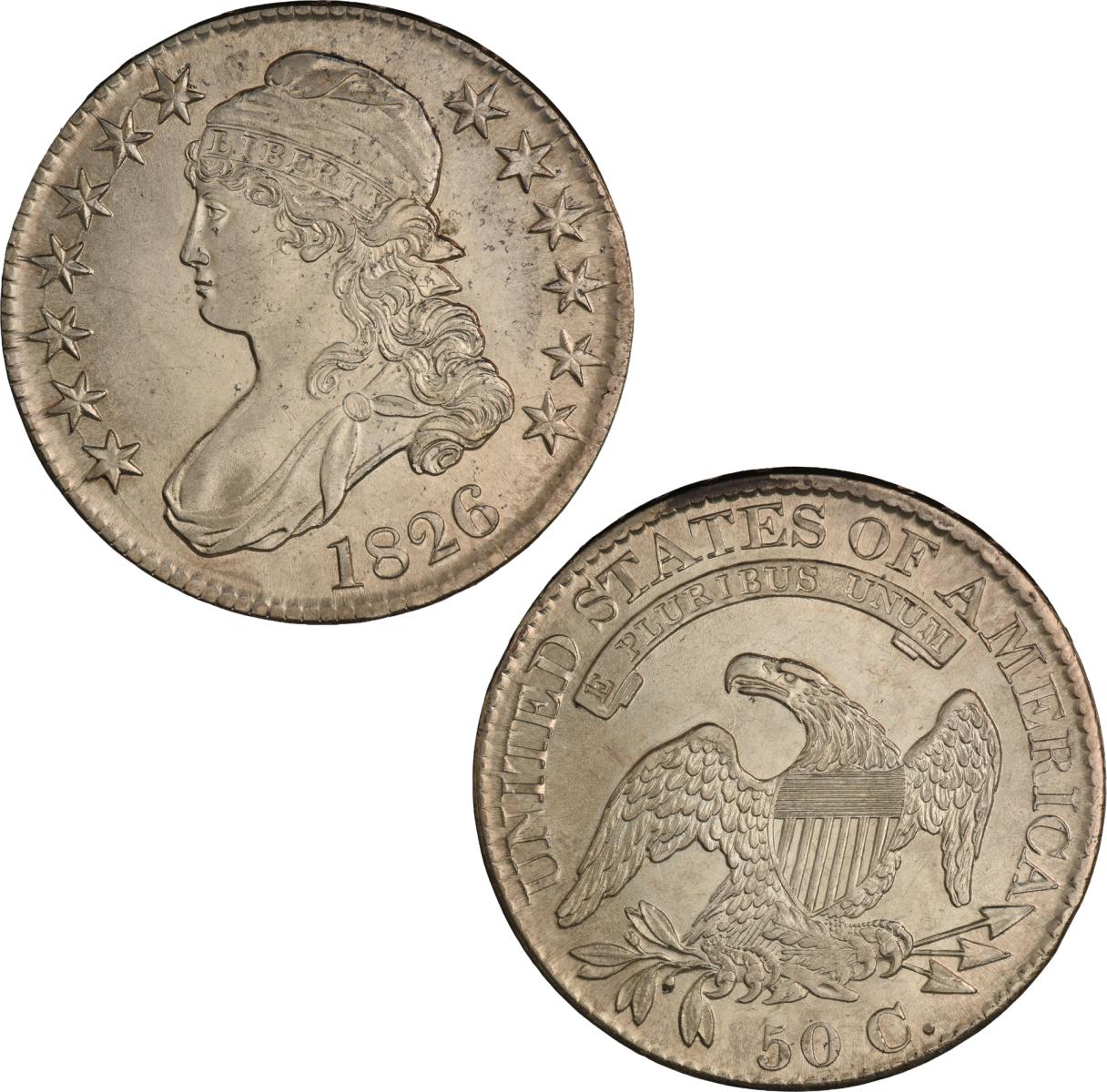
French-Canadian and Irish labourers who built the Rideau Canal were paid with American, or “Yankee,” half dollars like this one. However, other coins circulated in Bytown and were undoubtedly used as currency.
Source: United States of America, US Mint, ½ dollar, coin, 1826| 1974.151.7559
Until the late 1850s, gold and silver coins imported from around the world served as currency in British North America because the colonies generally weren’t allowed to mint their own coins. Upper and Lower Canada each had its own standard for valuing these foreign coins, hoping to keep them in circulation to avoid shortages. Even so, these coins were in short supply, and merchants often used bills of exchange and cheques for payment. For routine purchases, most workers and their families used semi-official copper bank tokens, outmoded and dubious commercial tokens and whatever official coins from the United States or the United Kingdom they could find. Bytown was no different: its economy ran on foreign coins, commercial scrip—private paper money issued by merchants—and copper tokens.
Over time, the growth of chartered banks and new currency laws helped stabilize the monetary system, and a uniform currency was introduced in the Province of Canada in 1858.
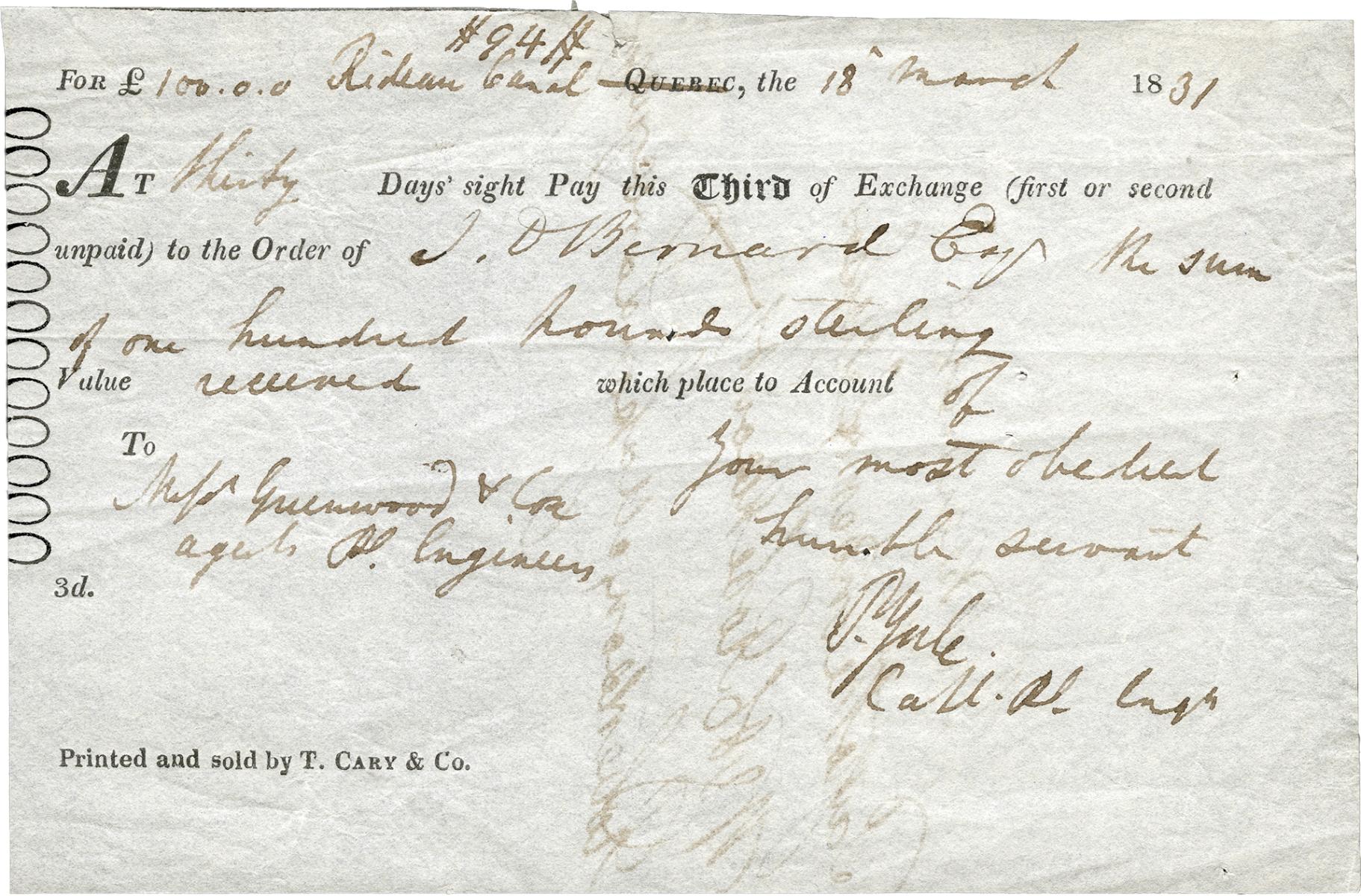
Bills of exchange were quite handy and very common for making payments. This one was issued at “Rideau Canal” on March 18, 1831, and ordered Messrs. Greenwood & Co., agents of the Royal Engineers, to pay £100 to J.D. Bernard after 30 days. It was signed by Captain P. Yule of the Royal Engineers.
Source: Bytown, Upper Canada, Captain P. Yule, Royal Engineers, 100 pounds, bill of exchange, 1831| 1973.73.28
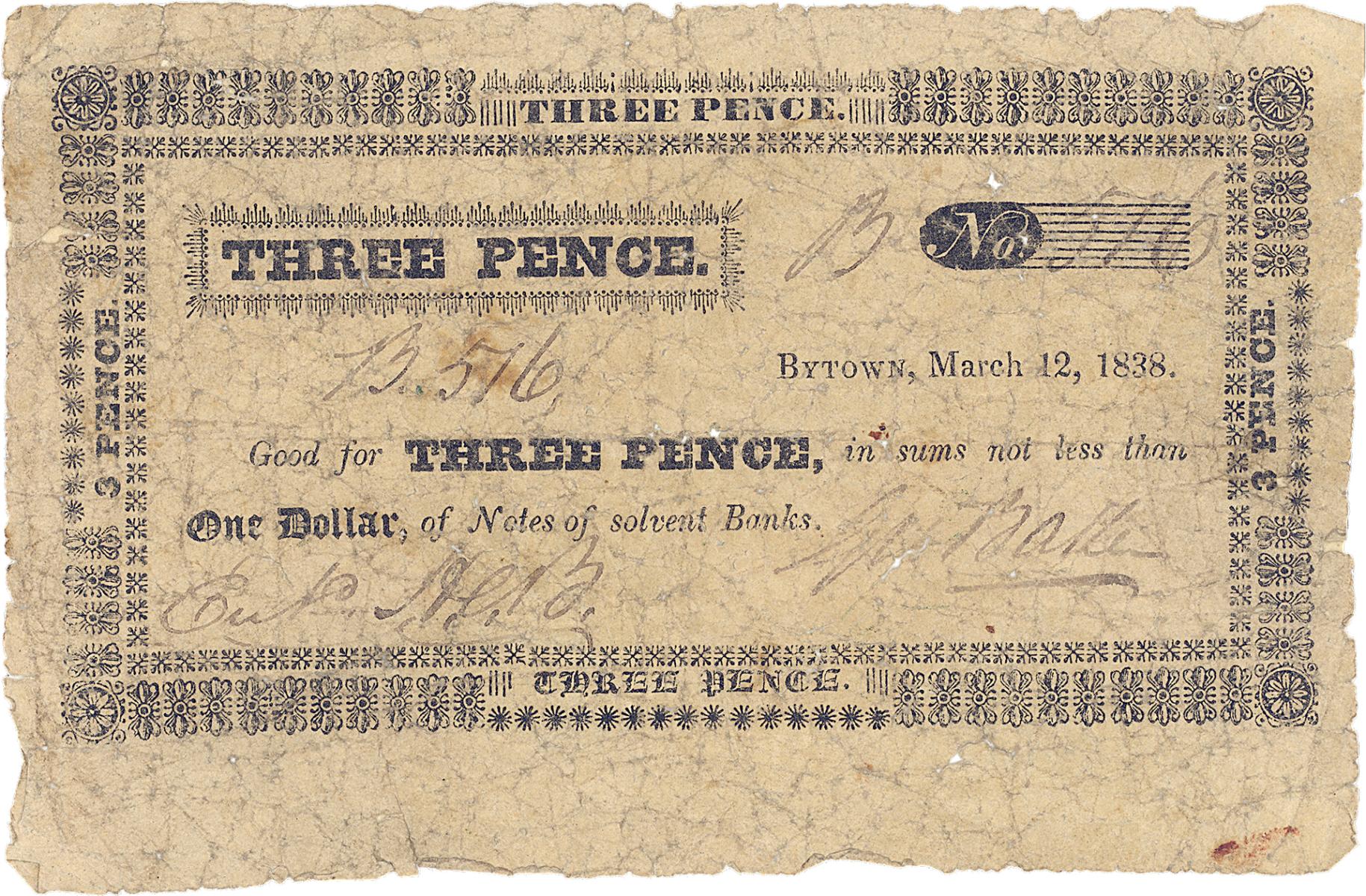
Beyond his civic duties as Bytown’s magistrate and postmaster, George W. Baker was involved in commercial and business ventures. Why he was issuing scrip in 1838 is unclear, but it may be related to the Panic of 1837 when banks stopped redeeming their notes in gold and silver coins. In response, some merchants resorted to issuing scrip for small change that was payable in bank notes.
Source: Bytown, Upper Canada, George W. Baker, 3 pence, commercial scrip, 1838| 1976.166.16
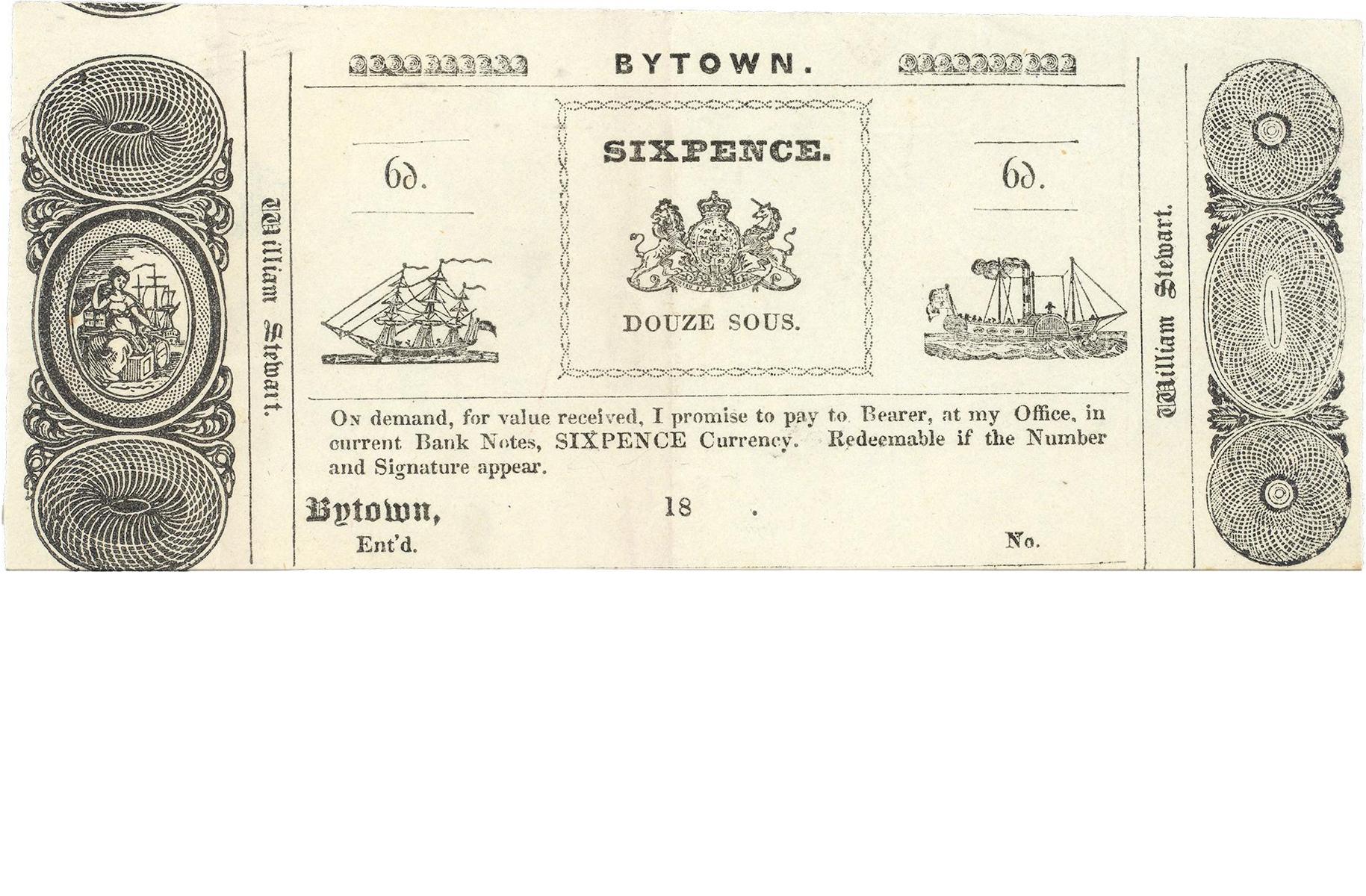
William Stewart, a Scottish-born politician and lumberman, settled in Bytown in 1827. He ran his own timber camps on the upper Ottawa River and its tributaries. Although all known examples of his scrip are unissued and unsigned, it is believed that Stewart used these notes to pay his workers.
Source: Bytown, Upper Canada, William Stewart, 6 pence, commercial scrip, 1838| 1977.38.4
Bytown banking
Wherever new businesses or major construction projects got underway in the colonies, banks often followed close behind to provide financial services. Yet commercial banks took several years to set up shop in Bytown because of an 1824 law (4 Geo IV, c.13, 1824). It barred out-of-province banks from operating in Upper Canada unless they redeemed their notes within the province.
In the years before the law’s passage, banks such as the Bank of Montreal (called Montreal Bank before 1821) and the Bank of Canada—a private bank in Montreal, not to be confused with today’s central bank—accepted deposits of gold and silver coins at their branches and agencies in Upper Canada. But the coins were shipped to their head offices in Montréal, which were the only places where notes could be redeemed for coins. The 1824 law had been passed to stop this drain of gold and silver from the province, and it forced the banks to close their Upper Canada branches the same year. Bytown, founded two years later in 1826, would have to wait for a commercial bank.
With the Union of the Canadas in 1841, the law was repealed, and the Montreal banks were free to immediately open branches in Bytown. The first to do so was the Bank of Montreal, which opened an office in the Lower Town neighbourhood in 1842. James Stevenson Jr. became the bank’s first agent. Banking was something of a family business as James Stevenson Sr. represented two rival banks—the Commercial Bank of Canada and the People’s Bank of Ottawa—and served as the Crown’s timber agent in Bytown from 1839 to 1851. Another Bank of Montreal branch opened on Wellington Street in the more commercial—and affluent—neighbourhood of Upper Town in 1846. In time, other banks such as the Bank of British North America, Quebec Bank, Bank of Upper Canada and the Commercial Bank of the Midland District opened offices and branches in Bytown.
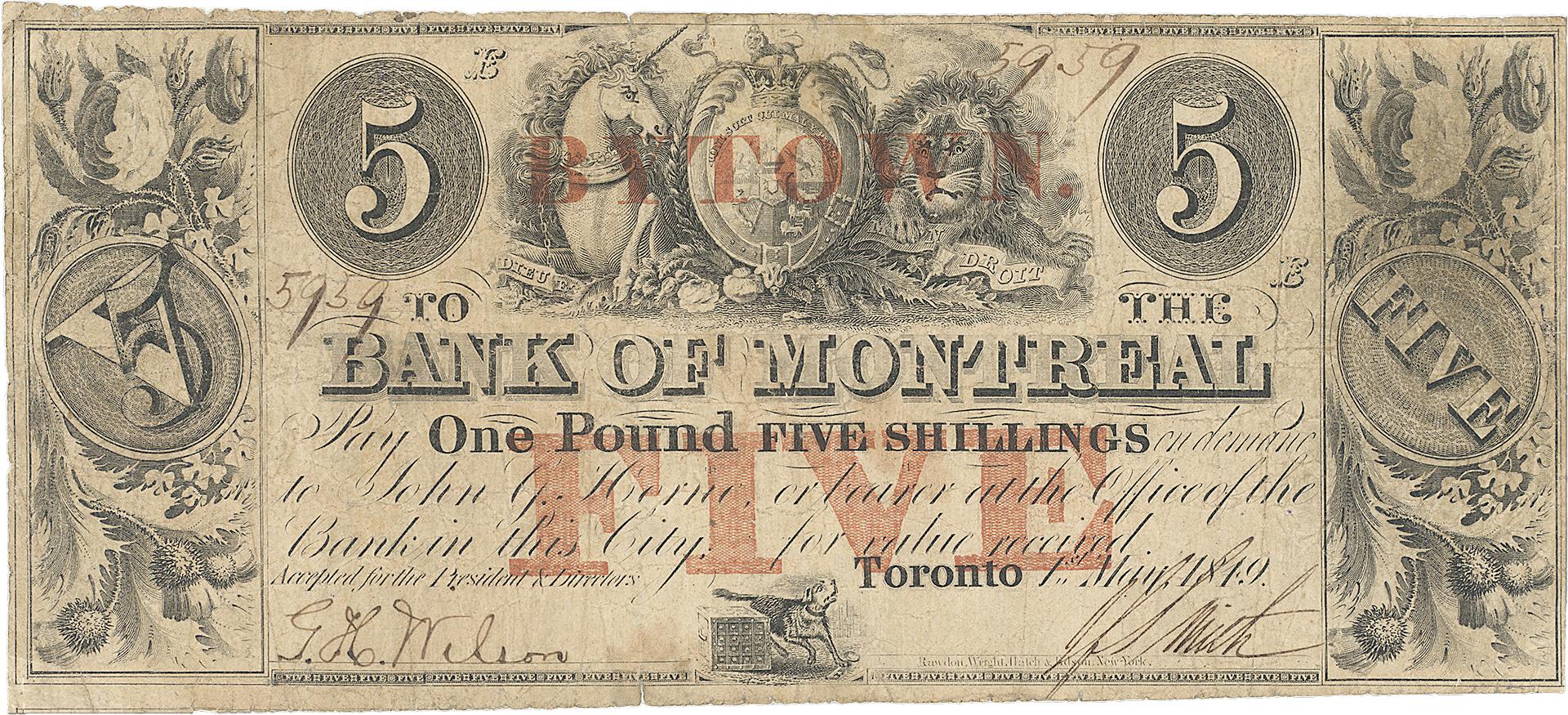
This is the earliest bank note issued by the Bank of Montreal that is tied to Bytown. The bank opened an office in Bytown in 1842 and, in 1846, its first branch at 202 Wellington St., on the block that is now home to the Bank of Canada.
Source: Canada, Bank of Montreal, 5 dollars, bank note, Bytown overprint, 1849| 1973.112.36
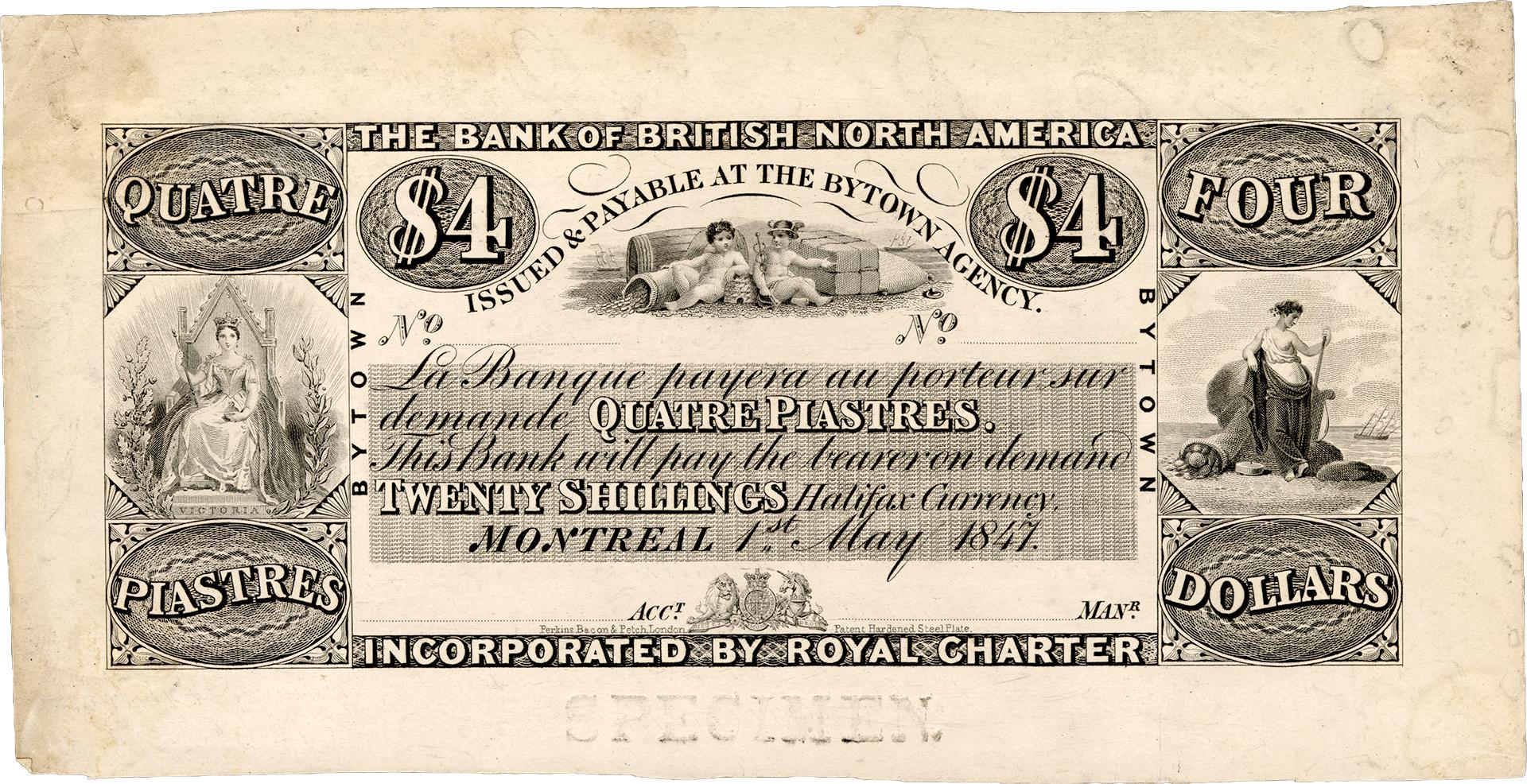
The Bank of British North America was incorporated in 1836 in London, England, and operated branches across modern-day Canada, from St. John’s, NL to Victoria, BC. Its agency in Bytown offered basic banking services, like taking deposits and issuing notes, until 1856 when the Ottawa branch opened and offered expanded banking services, such as loans and bills of exchange.
Source: Canada, Bank of British North America, 4 dollars, face proof, Bytown agency, 1847| 2023.31.114
Competition among banks in Ottawa ramped up after the city was incorporated in 1855 and named the capital of the Province of Canada in 1857. But Ottawa would have to wait until almost a decade after Confederation to see its one and only home-grown bank. This stood in stark contrast to large cities such as Montréal, Toronto, Québec and Kingston as well as smaller ones such as Sherbrooke and Niagara that each had multiple banks since the early to mid-1800s.
The Bank of Ottawa was founded in 1874 and was known as the “lumberman’s bank” because its purpose was to fund the lumber industry. The nickname was fitting in another way: two of its founders, George Bryson and James McLaren, were monumental figures in the local lumber industry. From the start, the bank was successful and grew quickly. At its peak after the First World War, the bank operated 95 branches across Quebec, Ontario and Manitoba. But all 95 branches were folded into the Bank of Nova Scotia when the Bank of Ottawa merged with it in 1919 amid a wave of consolidation in Canada’s banking industry. Today, among the only tangible reminders of the Bank of Ottawa are the bank notes it issued during its 45 years of operation.
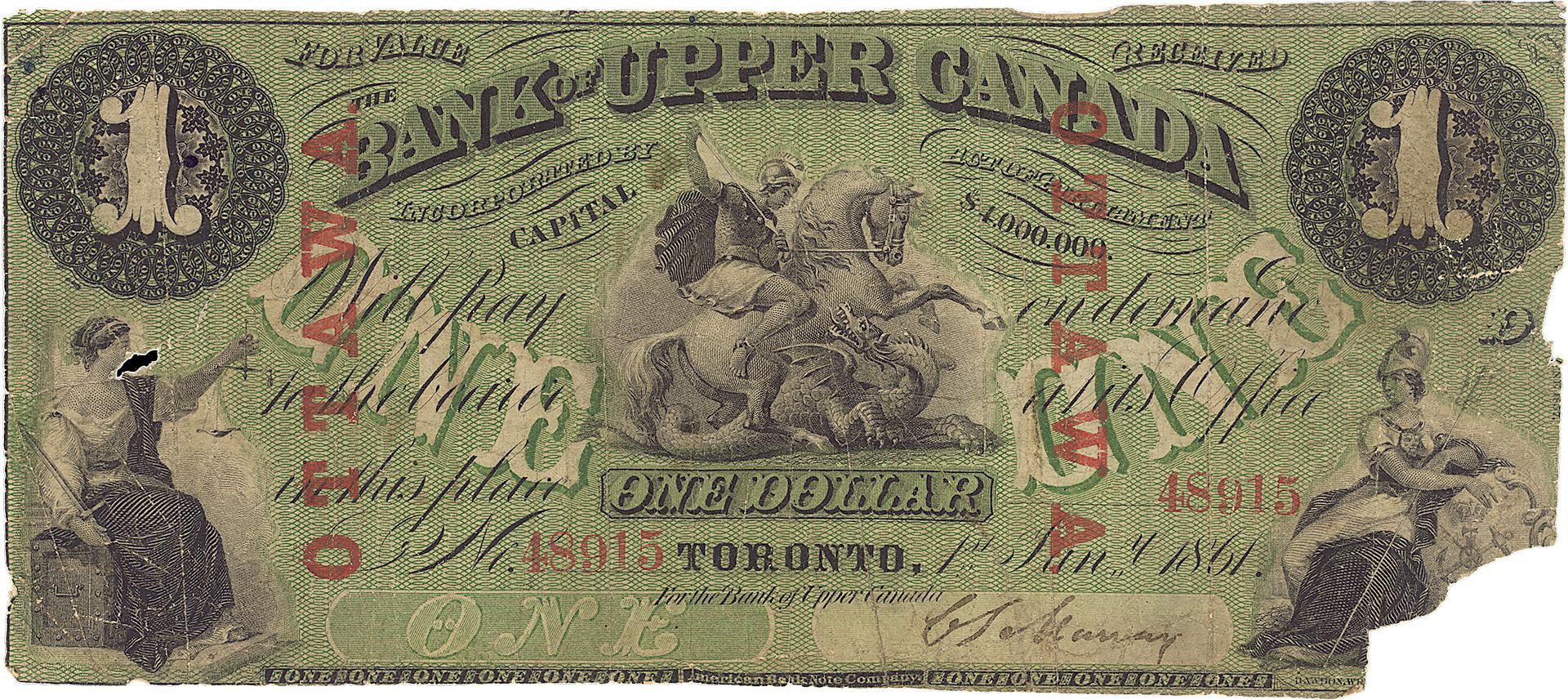
The Toronto-based Bank of Upper Canada opened a branch in Bytown in 1847, most likely to compete with the Bank of Montreal. The earliest notes from the Bank of Upper Canada were later overprinted with the word “Ottawa” after the city was incorporated in 1855. The Bank of Upper Canada failed in 1866, leaving notes like this one as relics.
Source: Canada, Bank of Upper Canada, 1 dollar, bank note, 1861| 1964.88.26
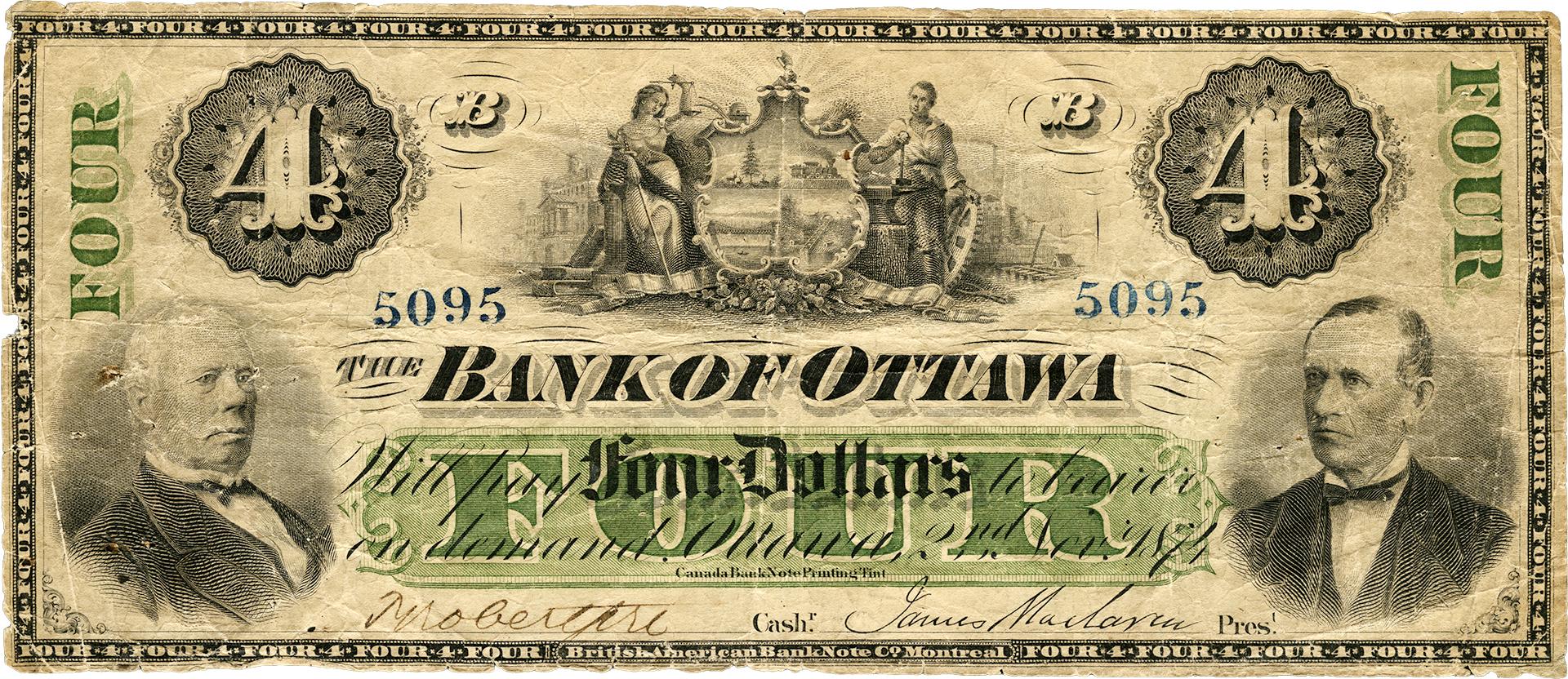
The Bank of Ottawa was known as the “lumberman’s bank” because two of its founders, George Bryson and James McLaren, were key figures in the local lumber industry. Portraits of both appear on this note, which was issued the same year the bank opened.
Source: Canada, Bank of Ottawa, 4 dollars, bank note, 1874| 1965.136.6748
From Bytown to Ottawa: the birth of a capital
Bytown’s importance in the lumber industry drew settlers and drove its rapid growth. Between 1841 and 1871, the town’s population grew sevenfold, from about 3,000 to around 21,000. During this period, in 1855, the city was incorporated and named Ottawa, from the Anishinaabemowin word adàwe, meaning “to trade.” The name also honoured the Ottawa River, with its significance to Indigenous communities and crucial role in the timber trade.
The name change helped the city shed its image as a rough frontier town just as it was making the case to be the national capital. Between 1841 and 1867, the capital of the Province of Canada changed six times. The reasons ranged from political disagreements to international conflicts and violence, including when rioters burned down the parliament buildings in Montréal in 1849. To end the instability, Queen Victoria was asked in 1857 to name a permanent capital. She chose Ottawa. The choice was politically contentious, and it took a tight vote in the Legislative Assembly in 1858 to ratify her decision.
Construction on the new parliament buildings began in 1859 on Barracks Hill, overlooking the entrance to the Rideau Canal. Work on the East Block and West Block buildings finished in 1865, while the Centre Block was completed in 1876. After Confederation in 1867, the buildings housed the Parliament of Canada. A devastating fire destroyed the original Centre Block in 1916; it was rebuilt and the Peace Tower was added as part of the project. Today, the Parliament buildings are icons of Canada’s democracy and of the prosperous and cosmopolitan capital once called Bytown.
The mix of money that circulated in Bytown was typical of what could be found in towns across Upper Canada and the other British colonies. Foreign coins, private merchant notes and copper tokens circulated in Bytown in the late 1820s as construction of the Rideau Canal brought new businesses to the area. And as the lumber industry continued to grow, so too did commercial activity, supported by new banks. By the 1850s, new currency laws stabilized the monetary system and supported a growing economy. Perhaps it’s no coincidence that as currency laws were cleaning up the province’s finances, Ottawa was cleaning up its image to become Canada’s capital.
Content type(s):
Blog posts
We want to hear from you! Do you have an idea for a blog post you’d like to see?
The Museum Blog

Teaching with the Vertical $20
Engage students with creative activities linking the new bank note to careers, civics, history, social studies and art.
A summer road trip of Canadian tokens
We took a virtual road trip through nearly every Canadian province and territory via trade and souvenir tokens.
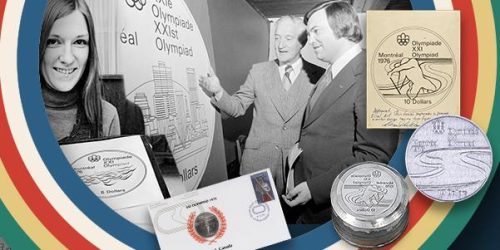
Reminiscences of the 1976 Montréal Olympic Coin Program
The Olympic Coin Program was novel, ambitious, record-breaking and for some, life-changing—much like the Olympic Games that the program helped finance.