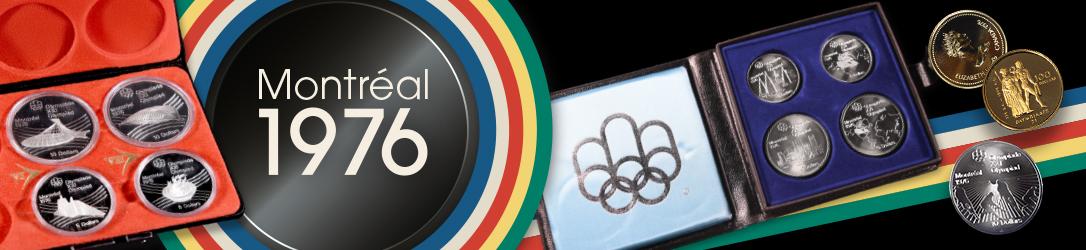
Step back into the excitement and pride of Canada’s first Olympic Games and discover the story of how commemorative coins helped fund them.
In 1976, Canada embarked on one of its most ambitious building projects, a moment that sparked nationwide optimism and pride. But financing the Montréal Olympics proved almost as challenging as staging them. As part of a funding program, the Organizing Committee of the Olympic Games launched the largest commemorative coin program in Olympic history.
Fifty years later, these coins have become cherished little works of art, beautiful keepsakes of a historic event that continues to inspire Canadians today.
An Olympian fundraising effort
Financing Montréal’s Olympic Games was an enormous project that became a national effort. Canadians across the country helped fund the Games by buying lottery tickets, postage stamps and commemorative coins. The media promoted these efforts across the country, turning public enthusiasm into dollars.
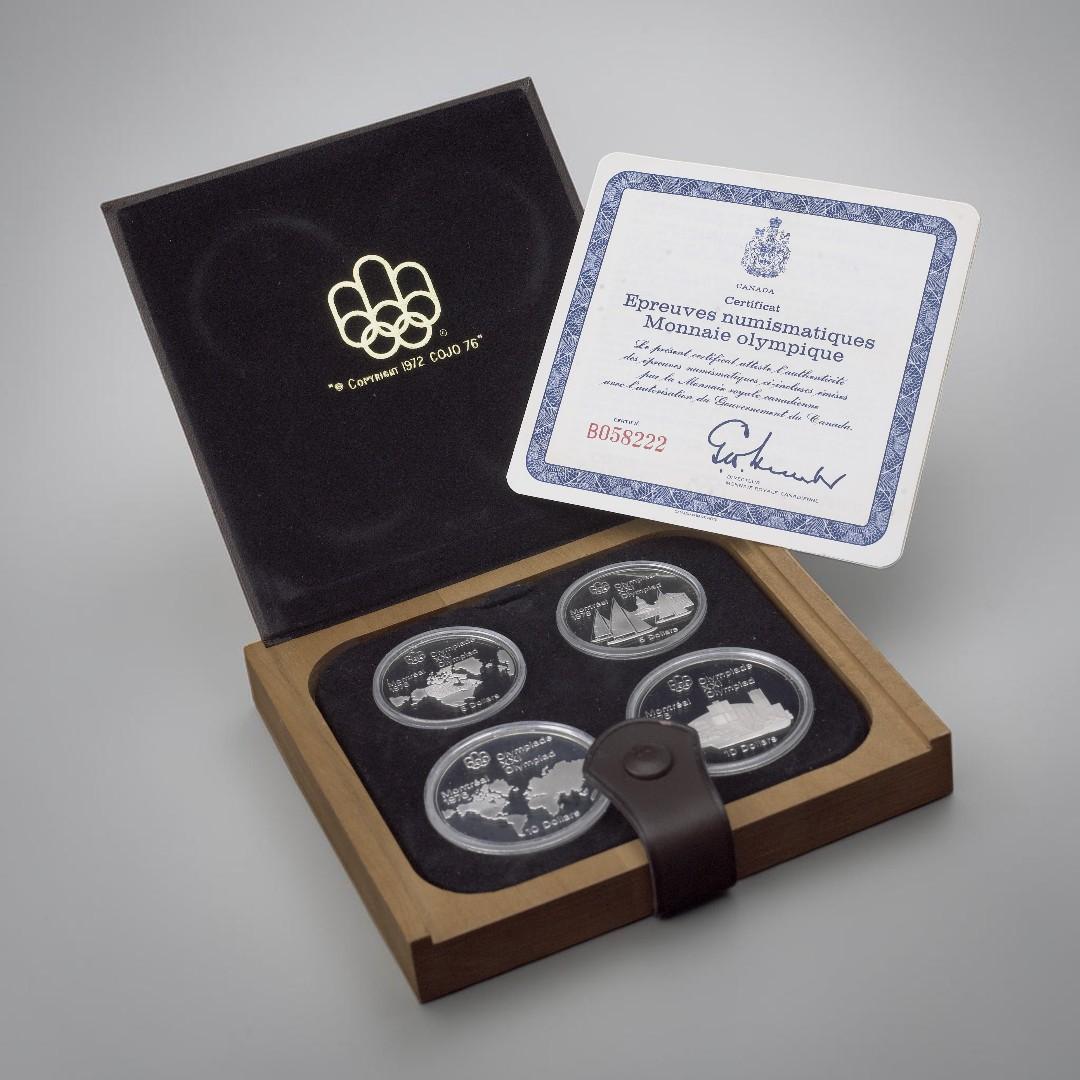
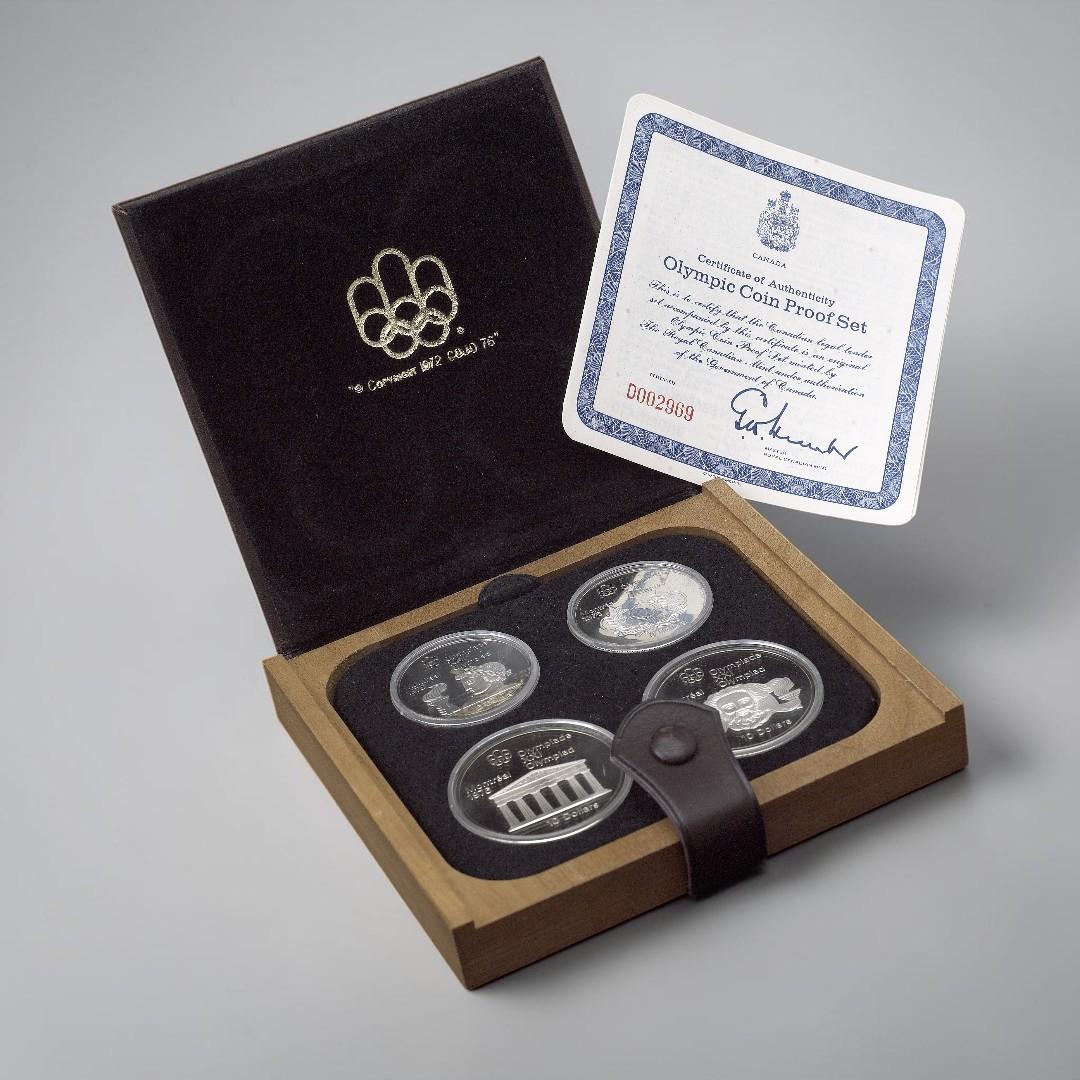
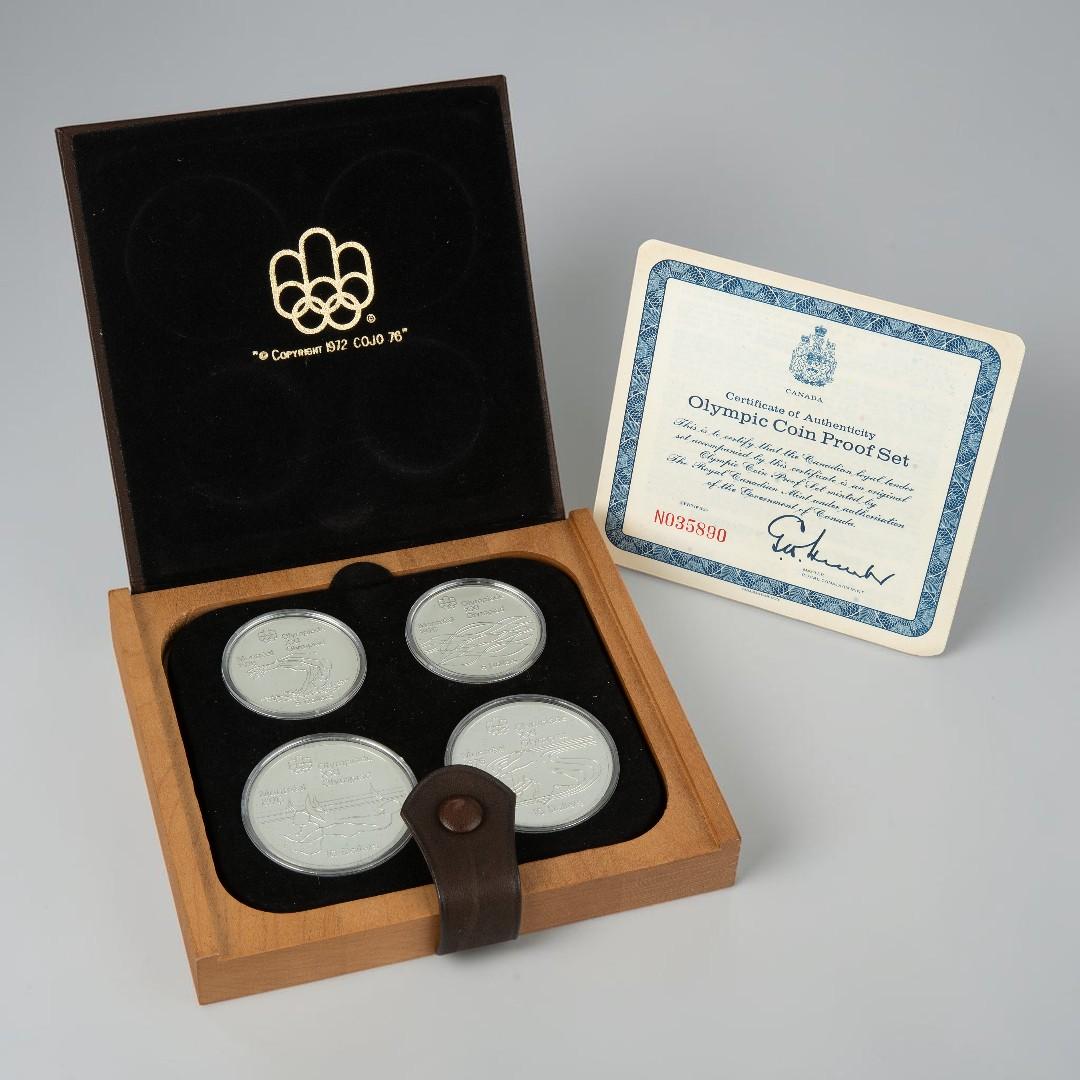
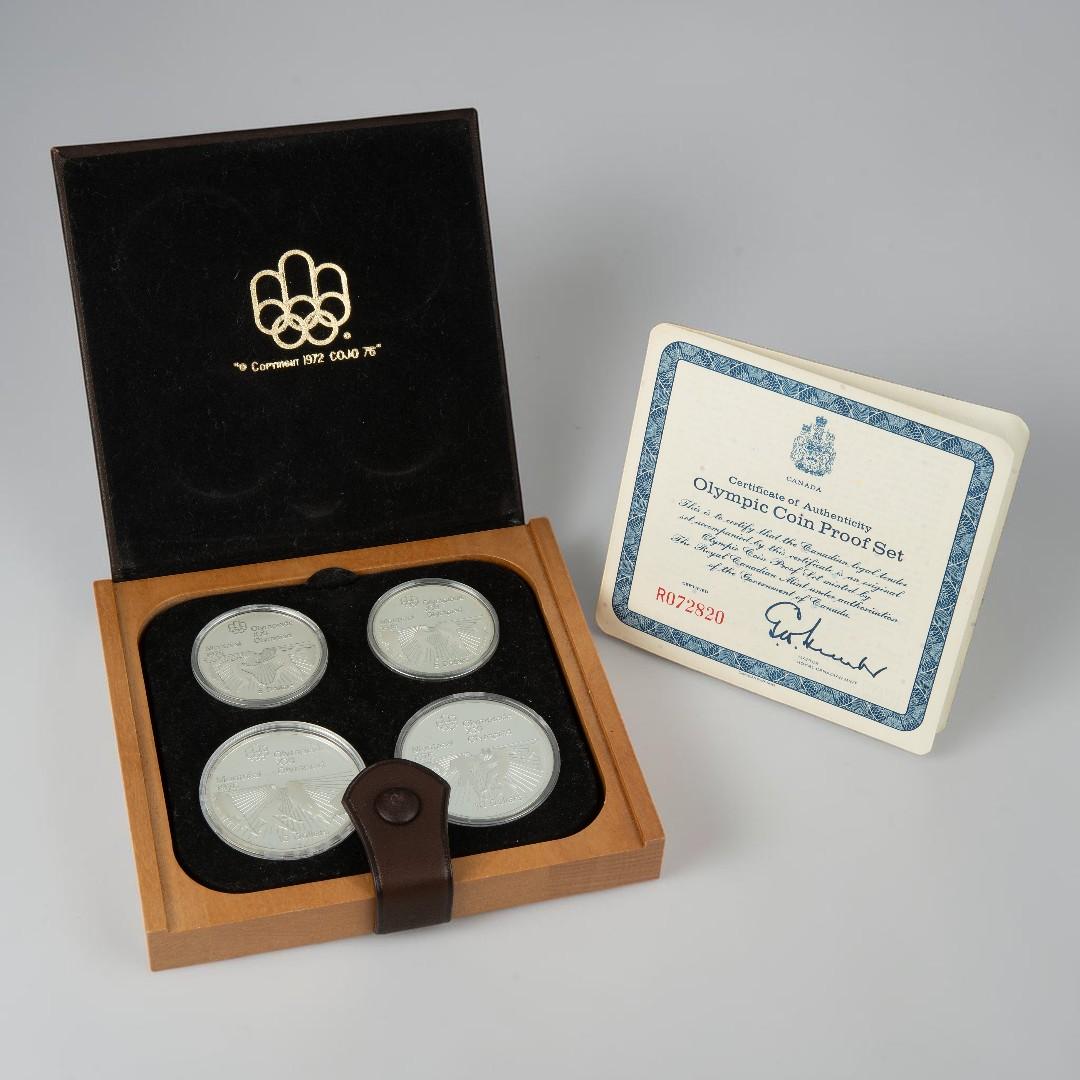
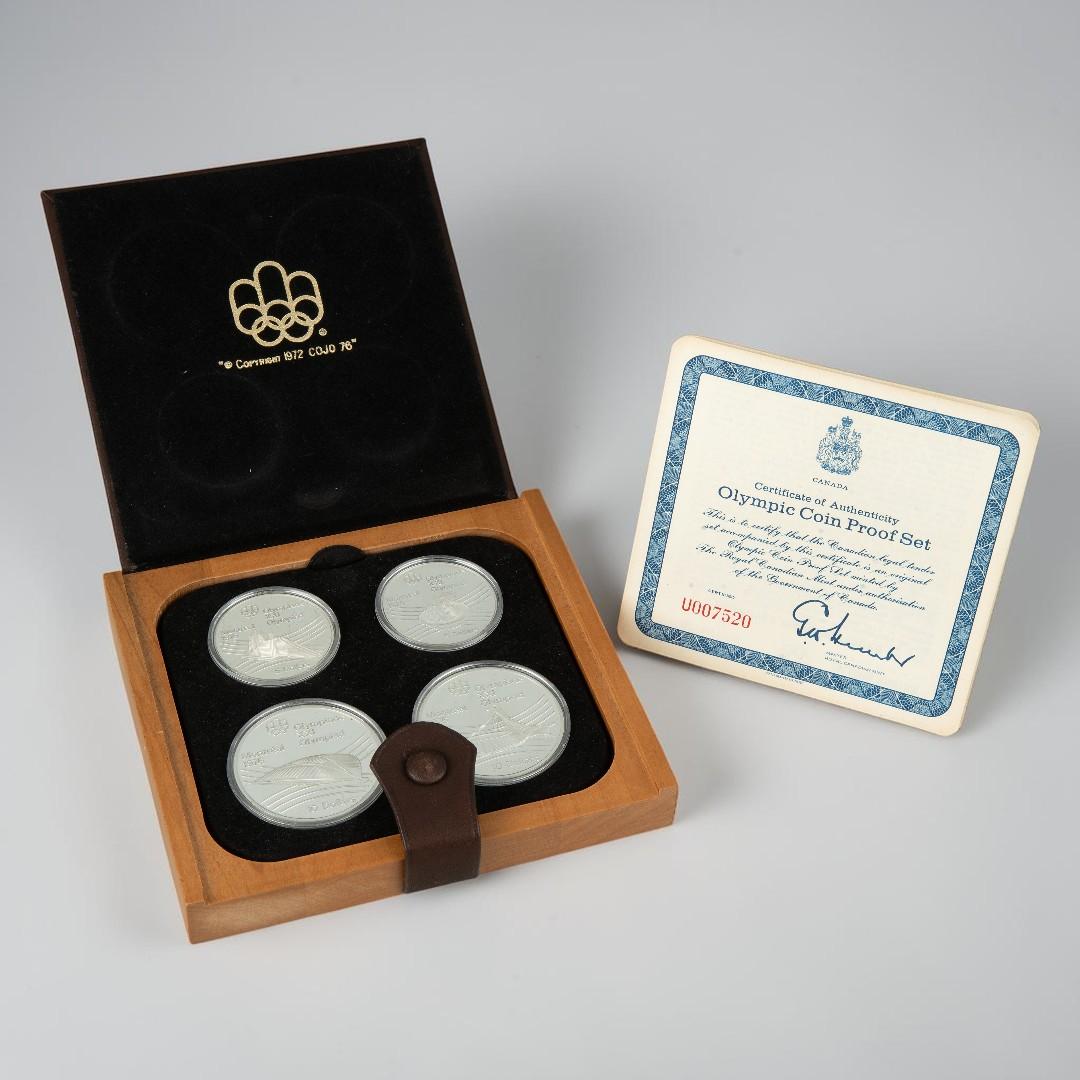
Between 1973 and 1976, the Royal Canadian Mint produced thirty commemorative coins for the Games. It minted seven sets of four silver coins each, followed by two gold pieces. Themed not only on athletics but also on art, culture and national identity, they formed Canada’s first series of collector coins.
The funding campaign for the Montréal Olympic Games grew right alongside the Games’ rising construction costs. The coin program was expanded to include a gold piece—a world first.
Take a tour of the entire series.
Series one: Geography
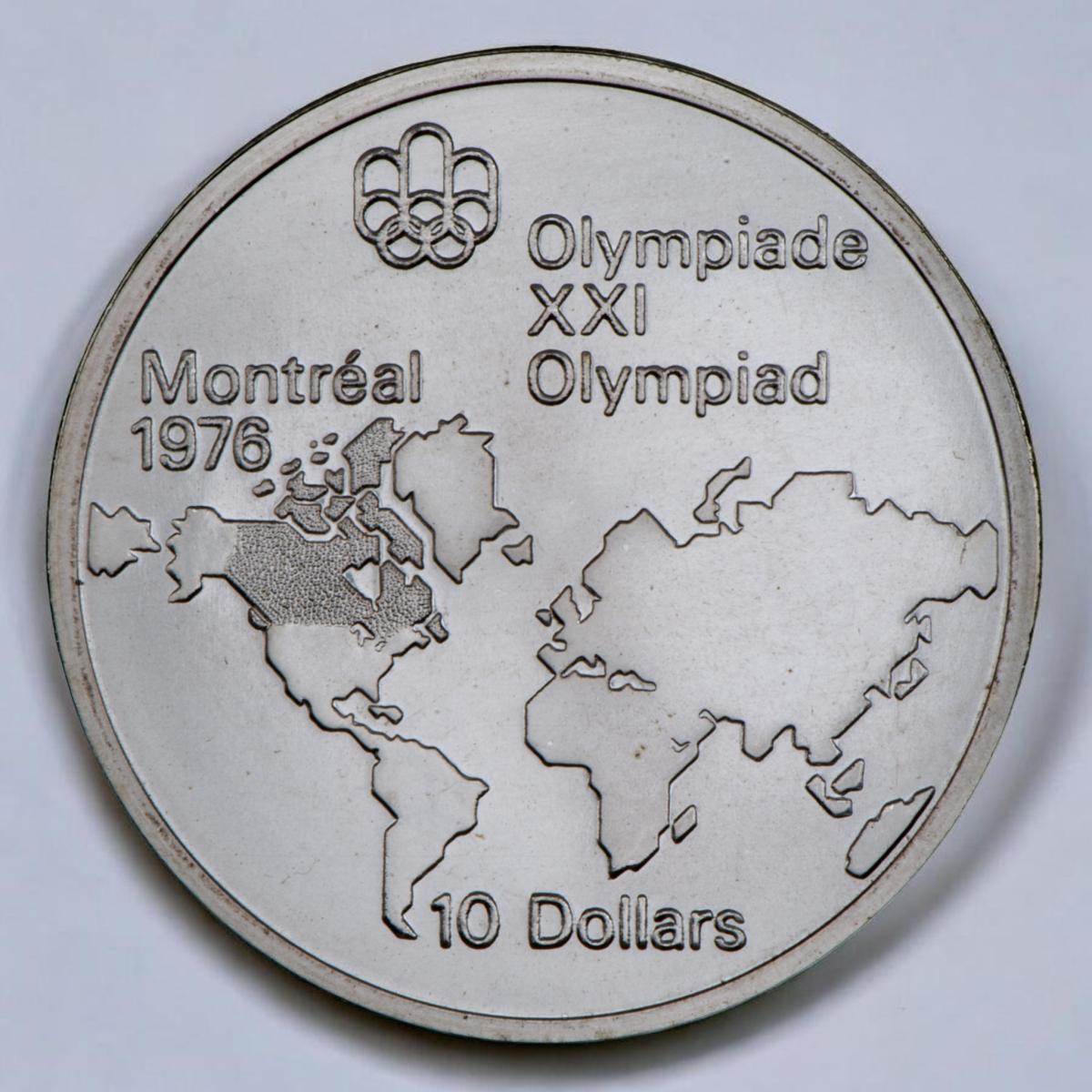
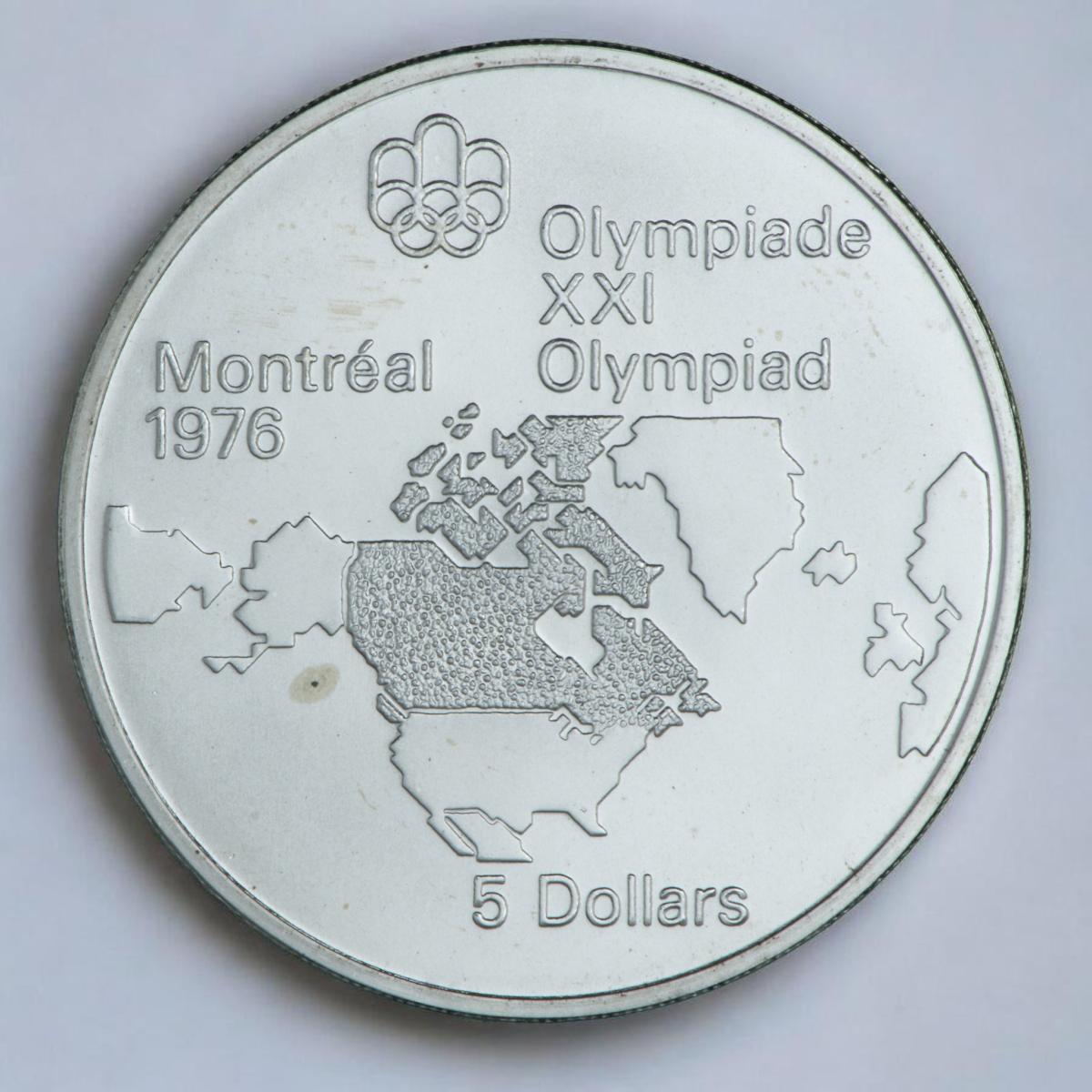
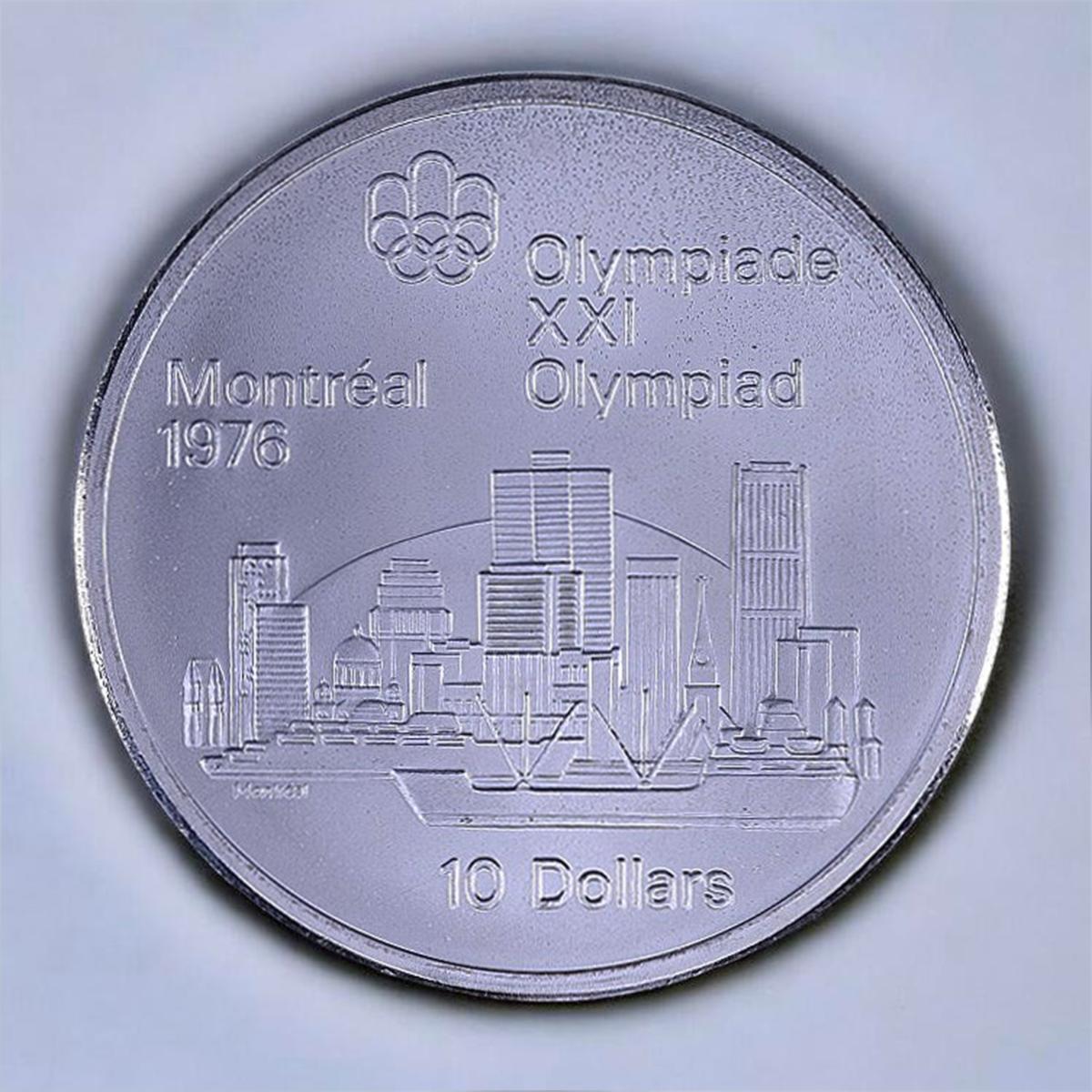
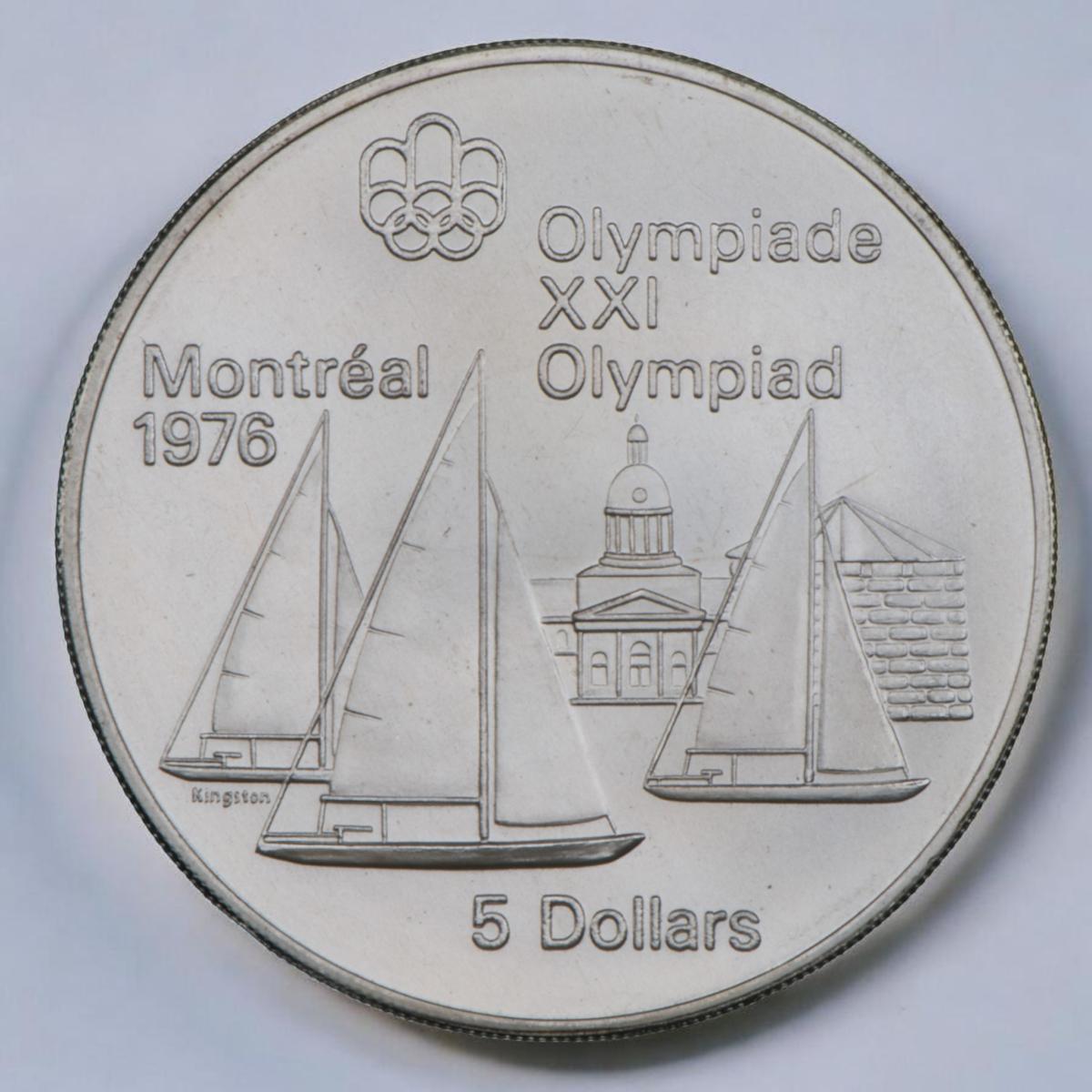
The universal spirit of the Olympics is expressed in this coin series by renowned Quebec artist, Georges Huel. He begins with a map of the world and then narrows his scope to North America and finally to the two Olympic venues: Montréal and Kingston Harbour (site of the sailing competition).
Series two: Olympic motifs
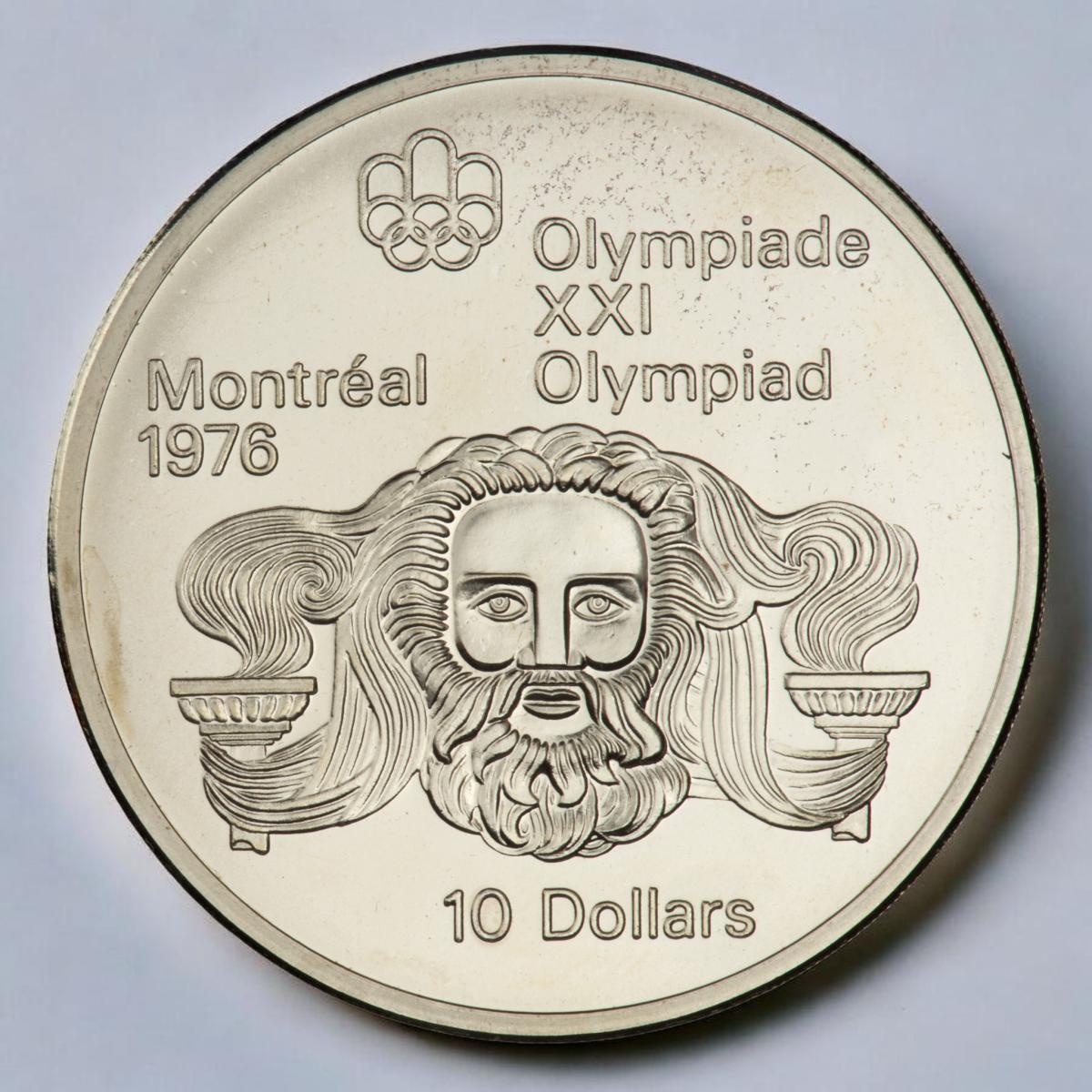
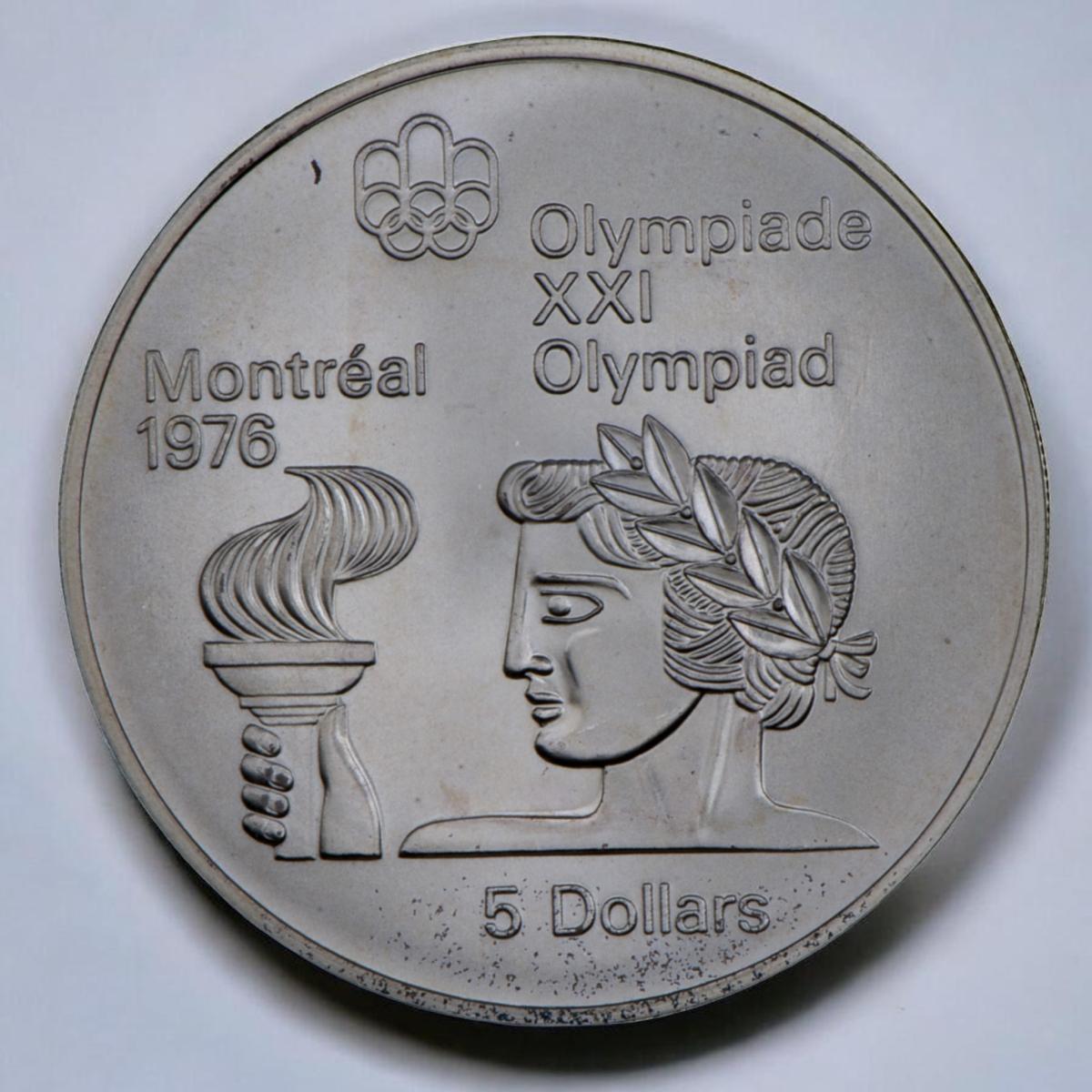
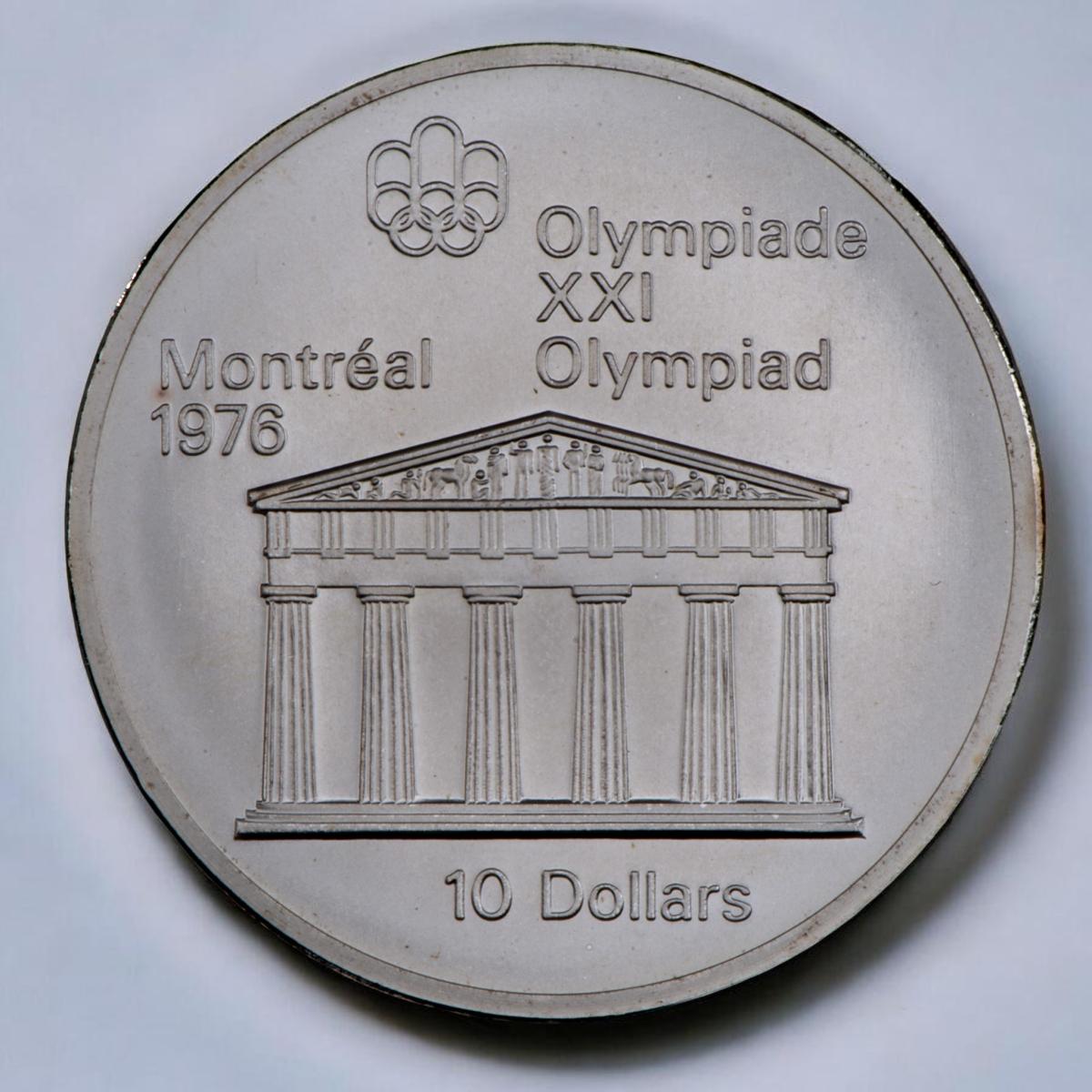
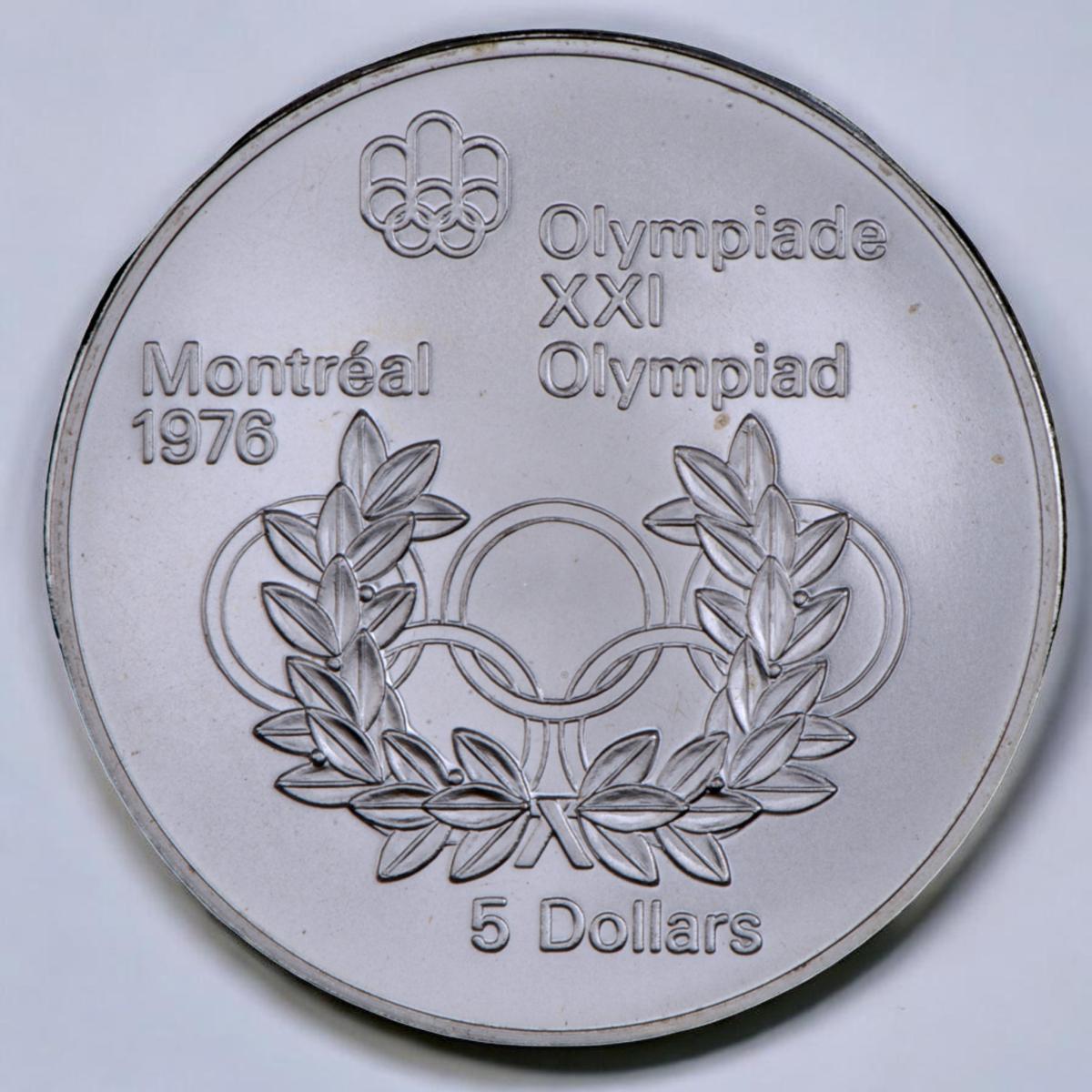
Gods, torches, temples and laurel wreaths—the symbols in Anthony Mann’s series of coins—all remind us of the Olympics’ deep roots in Ancient Greece. The first Games took place there in 776 BCE—and centuries later, the first modern Olympics returned in 1896.
Series three: Early Canadian sports
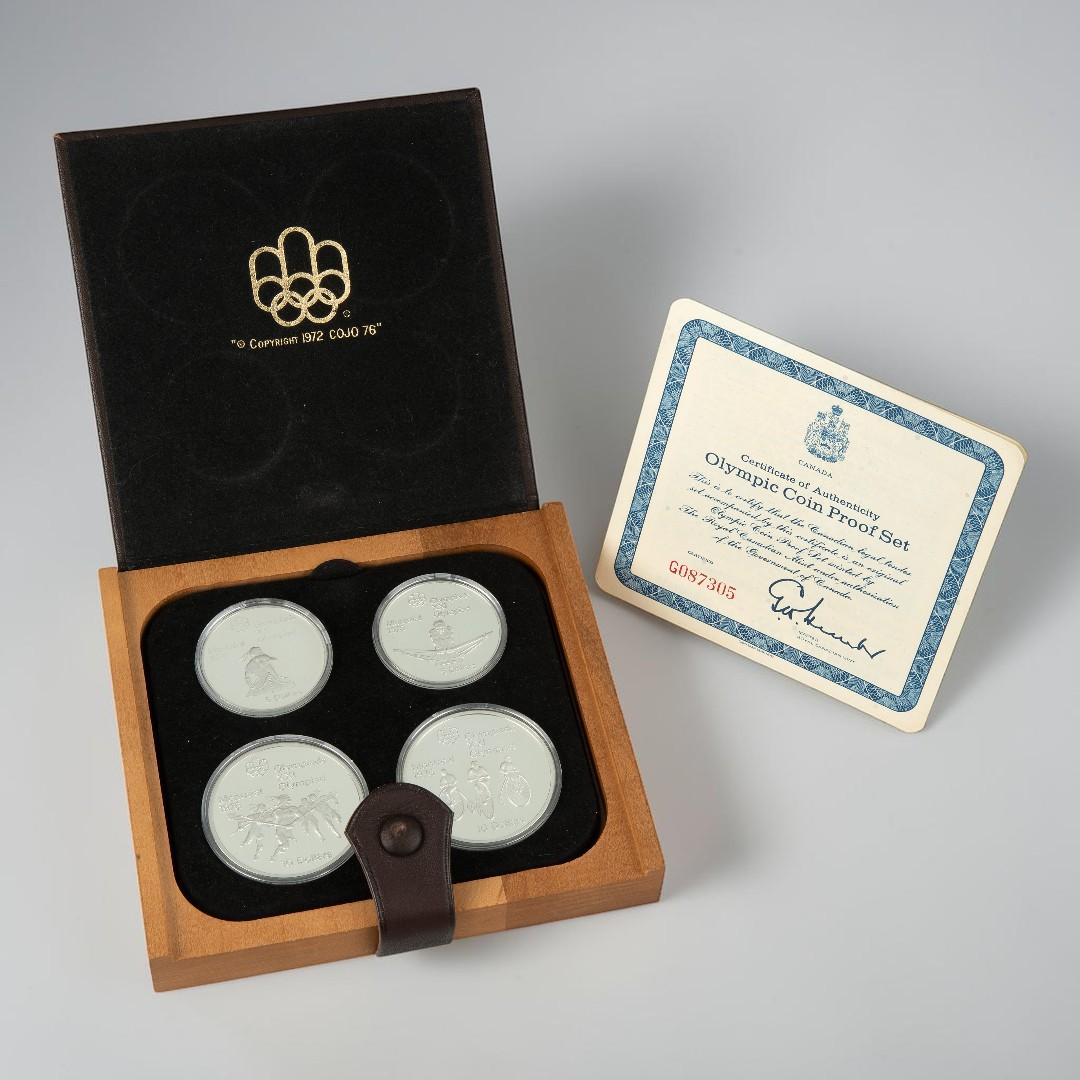
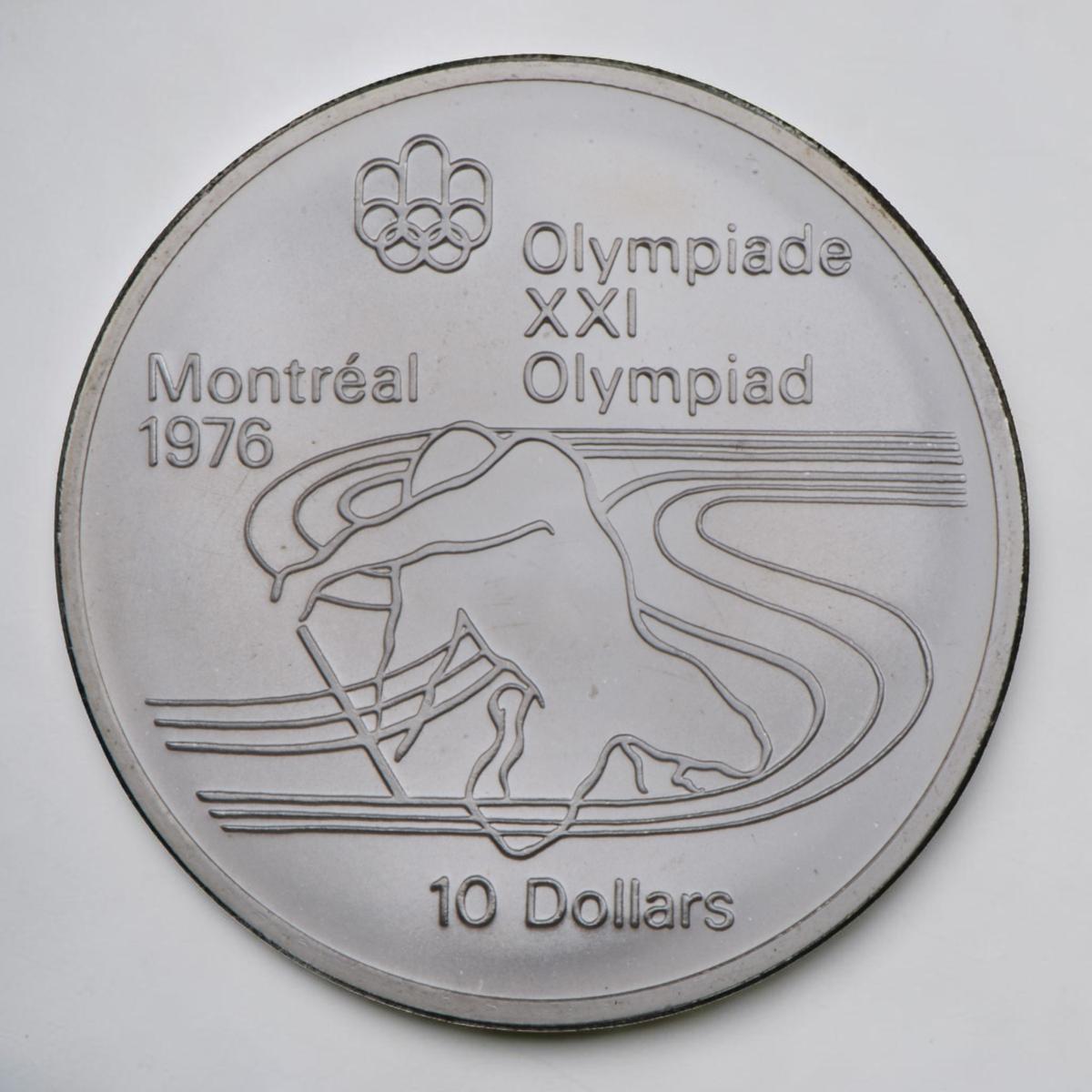
This series by Ken Danby celebrates Canada’s sports heritage. Lacrosse and canoeing have deep roots in the traditions of some First Nations, while cycling and rowing are popular modern sports.
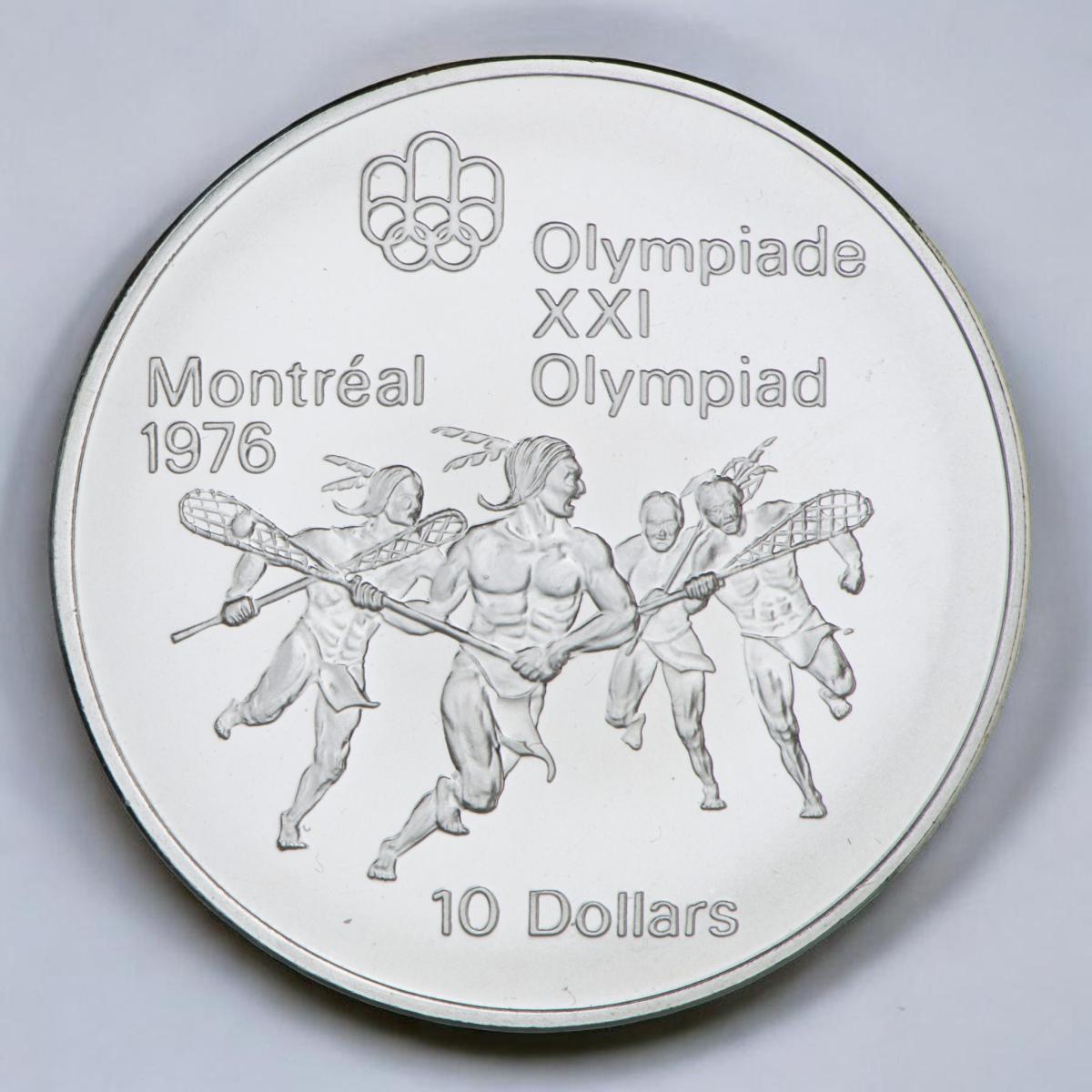
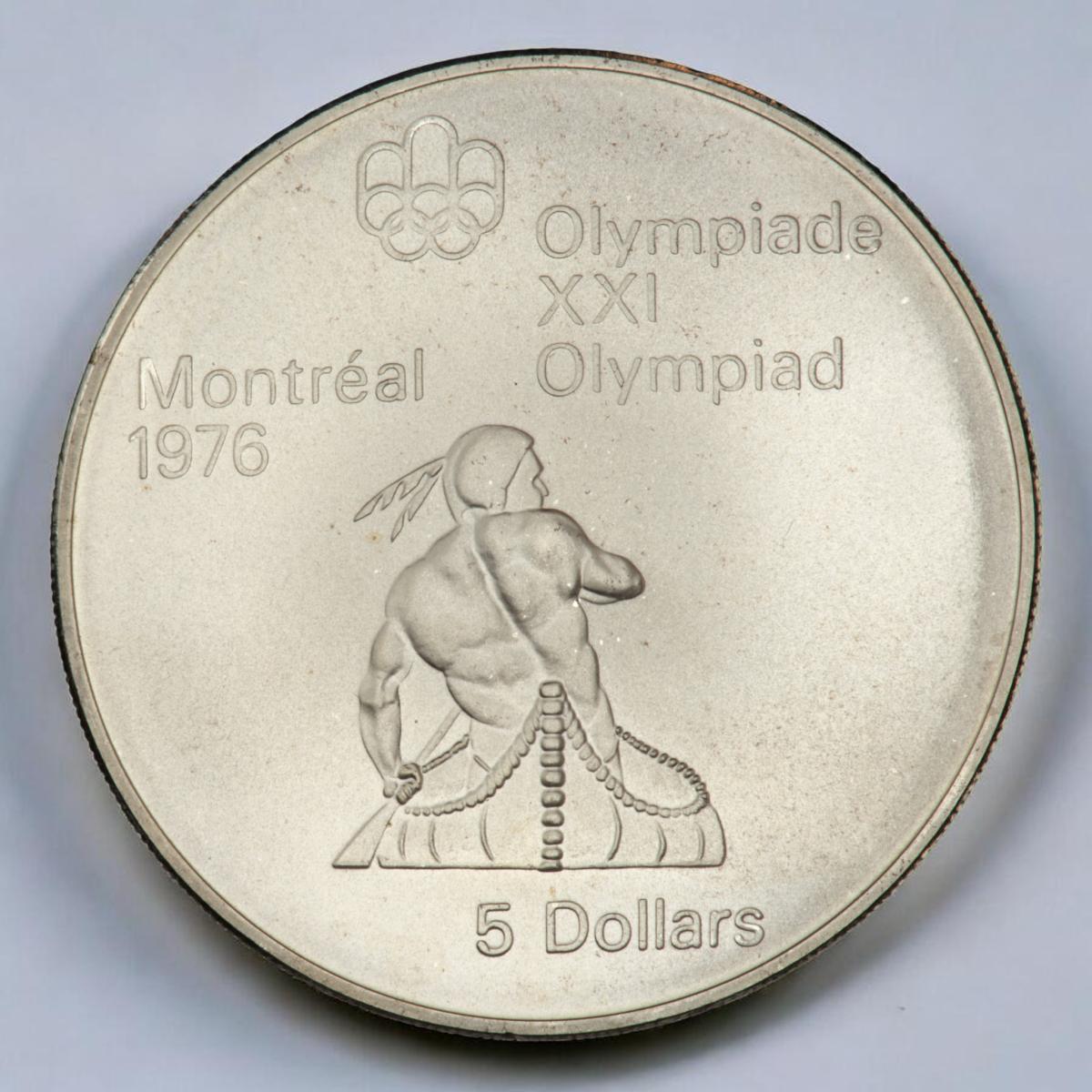
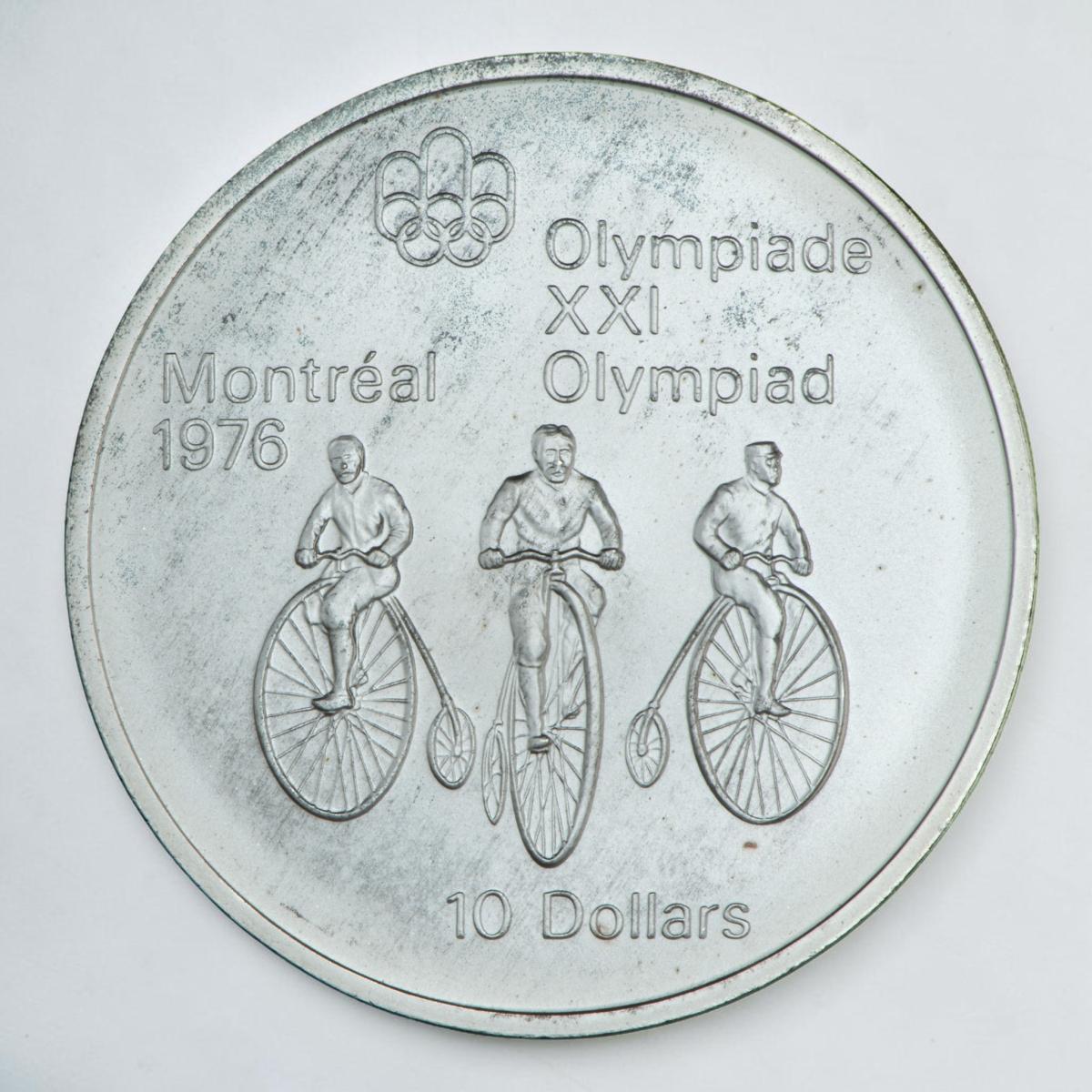
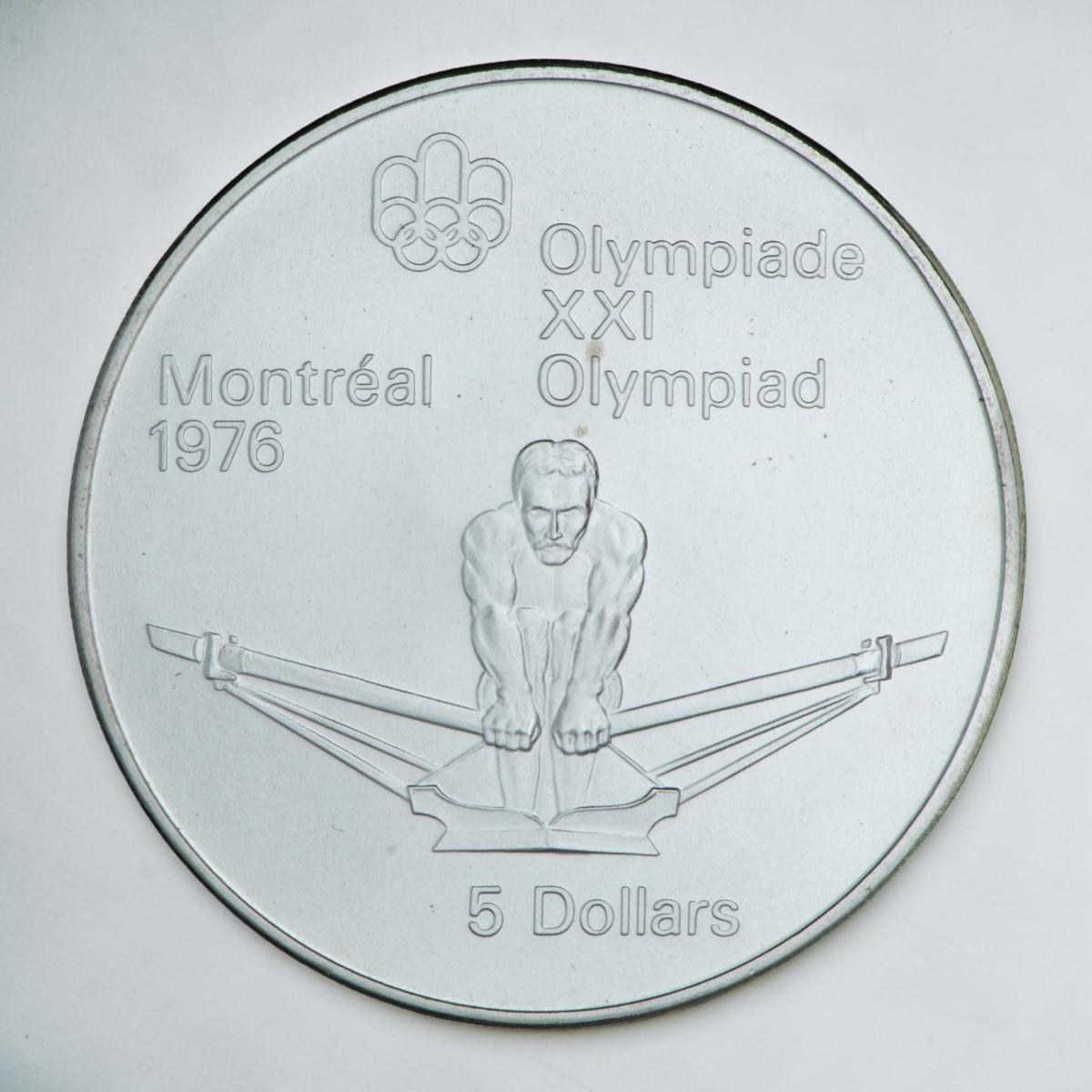
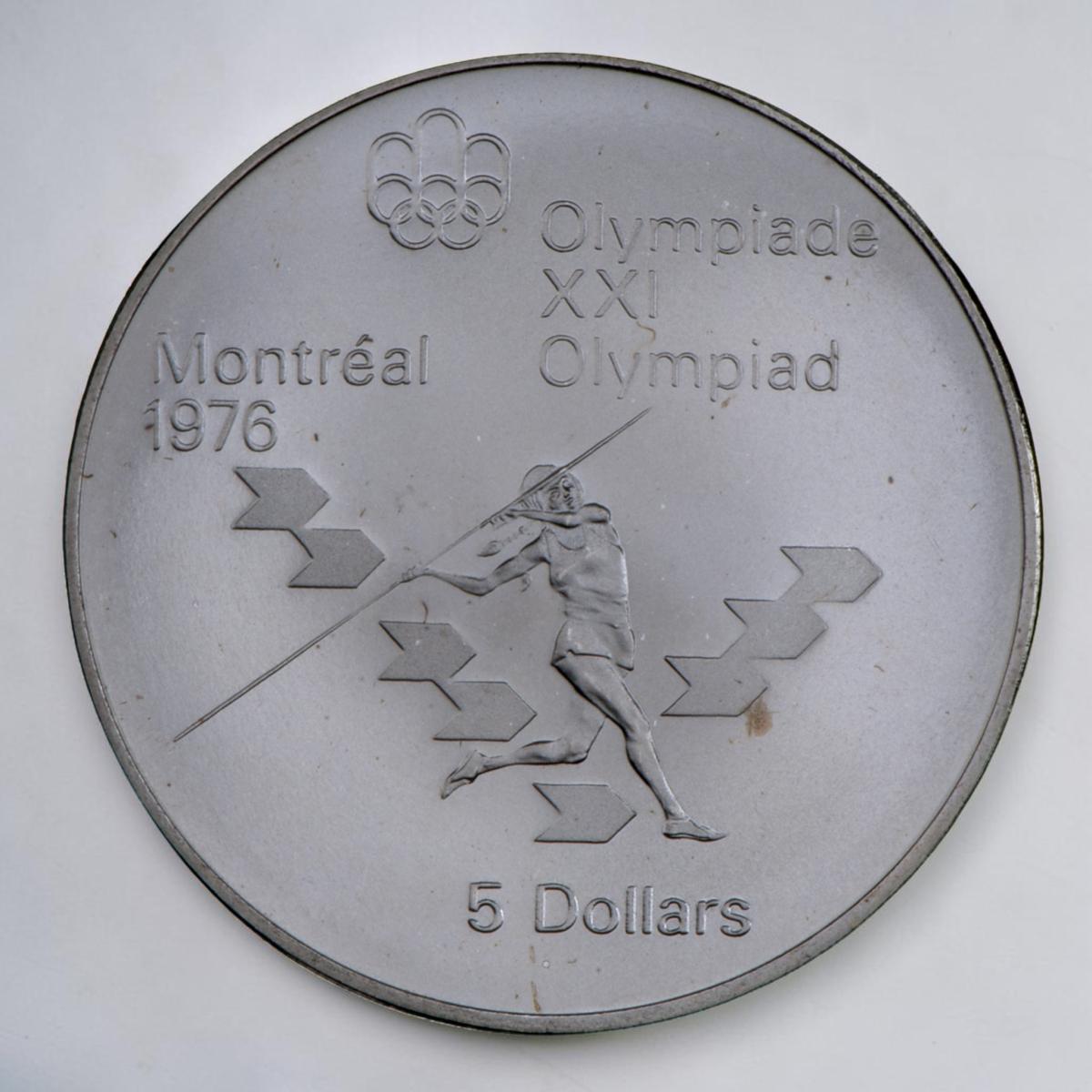
Series four: Olympic track and field sports
Track and field events are at the very heart of the Summer Olympics. The sports in Leo Yerxa’s designs most closely resemble those played by the athletes of ancient Greece more than 2,700 years before the Montréal Games.
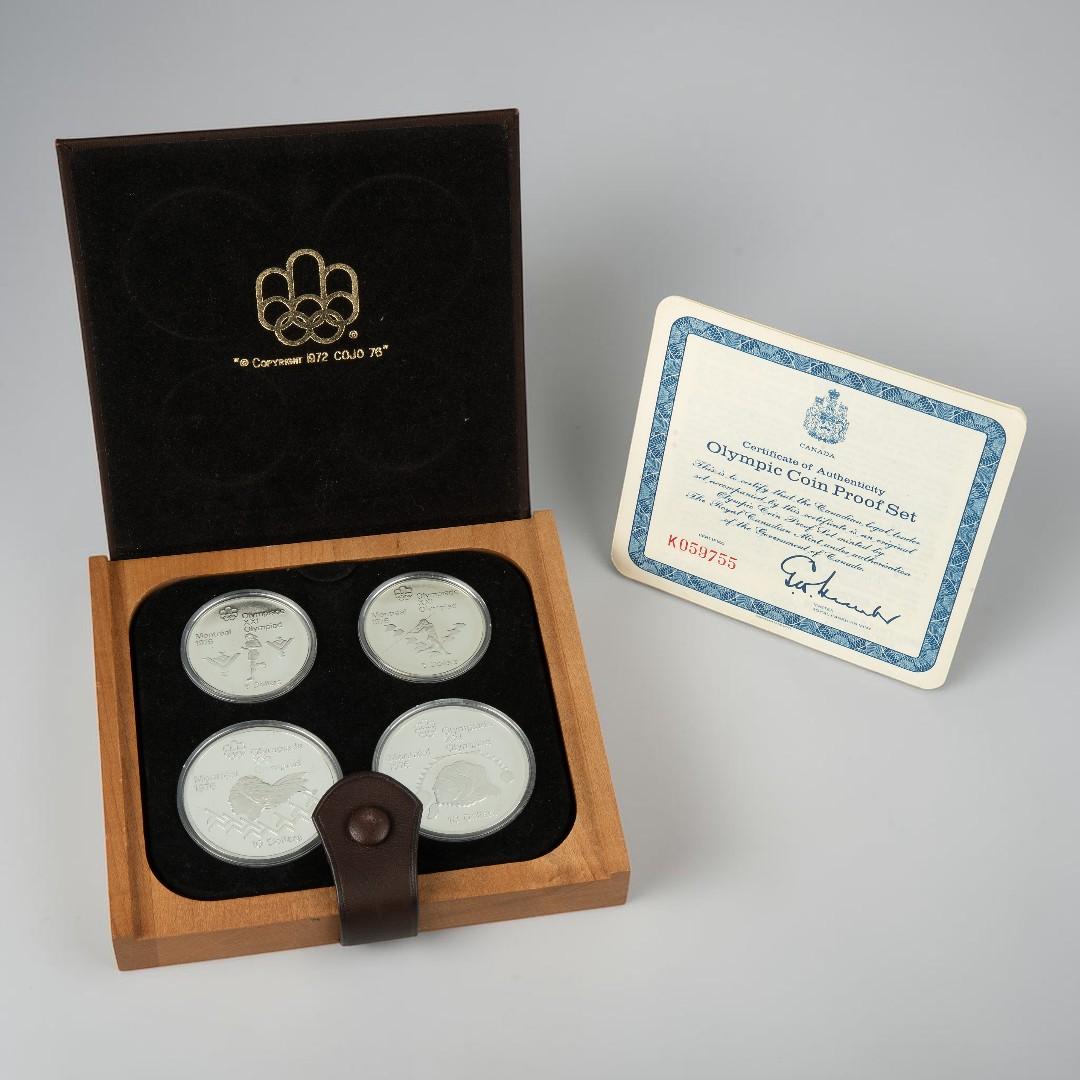
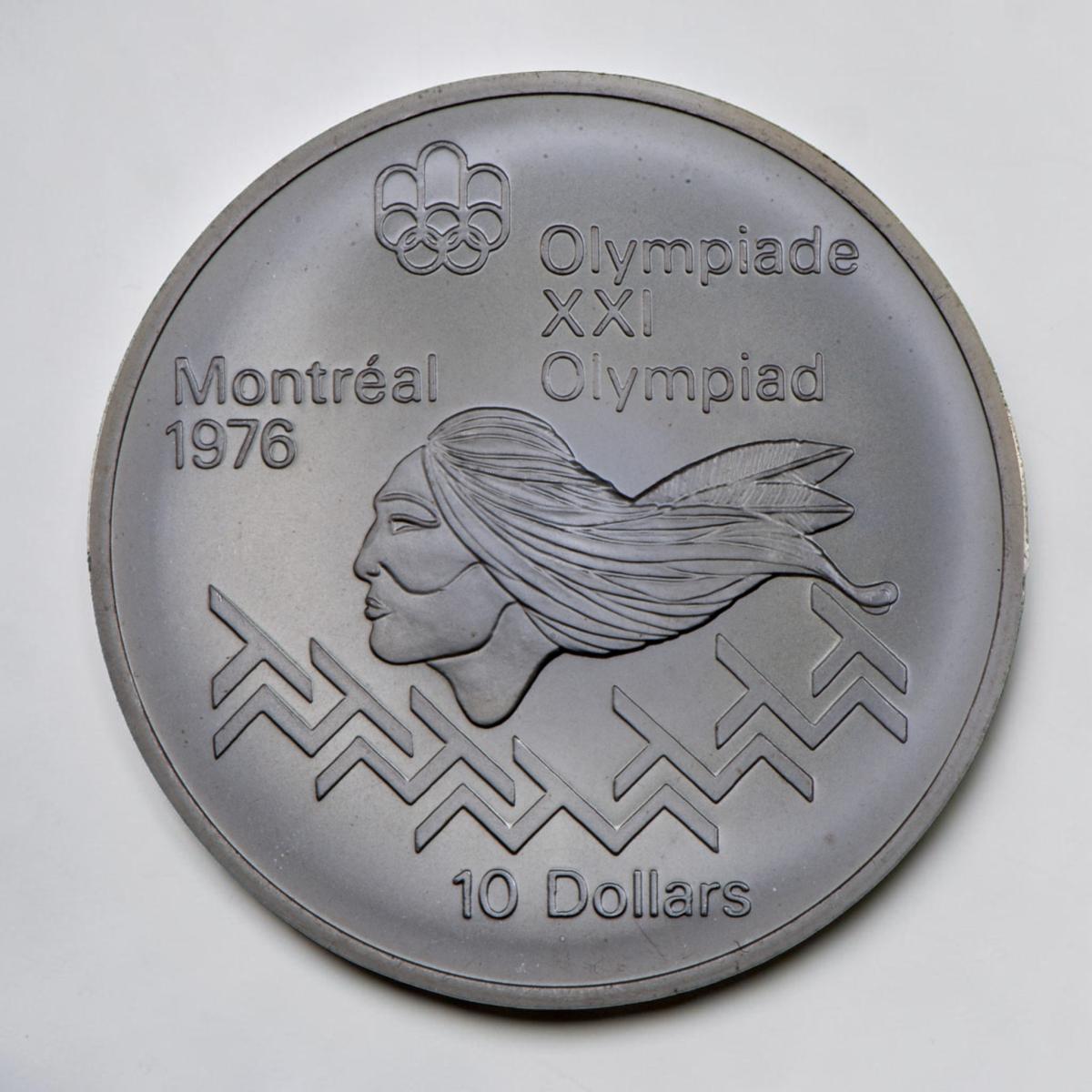
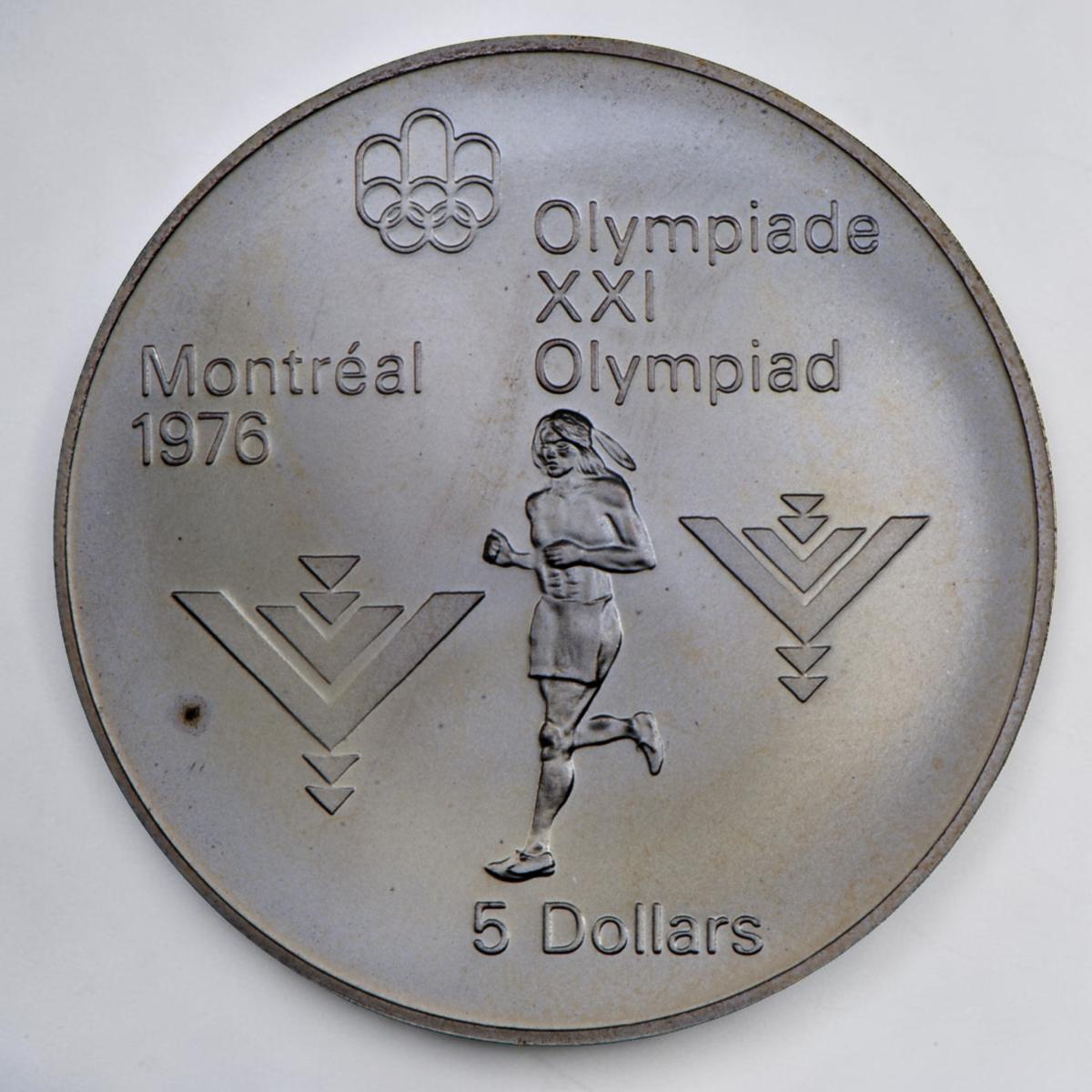
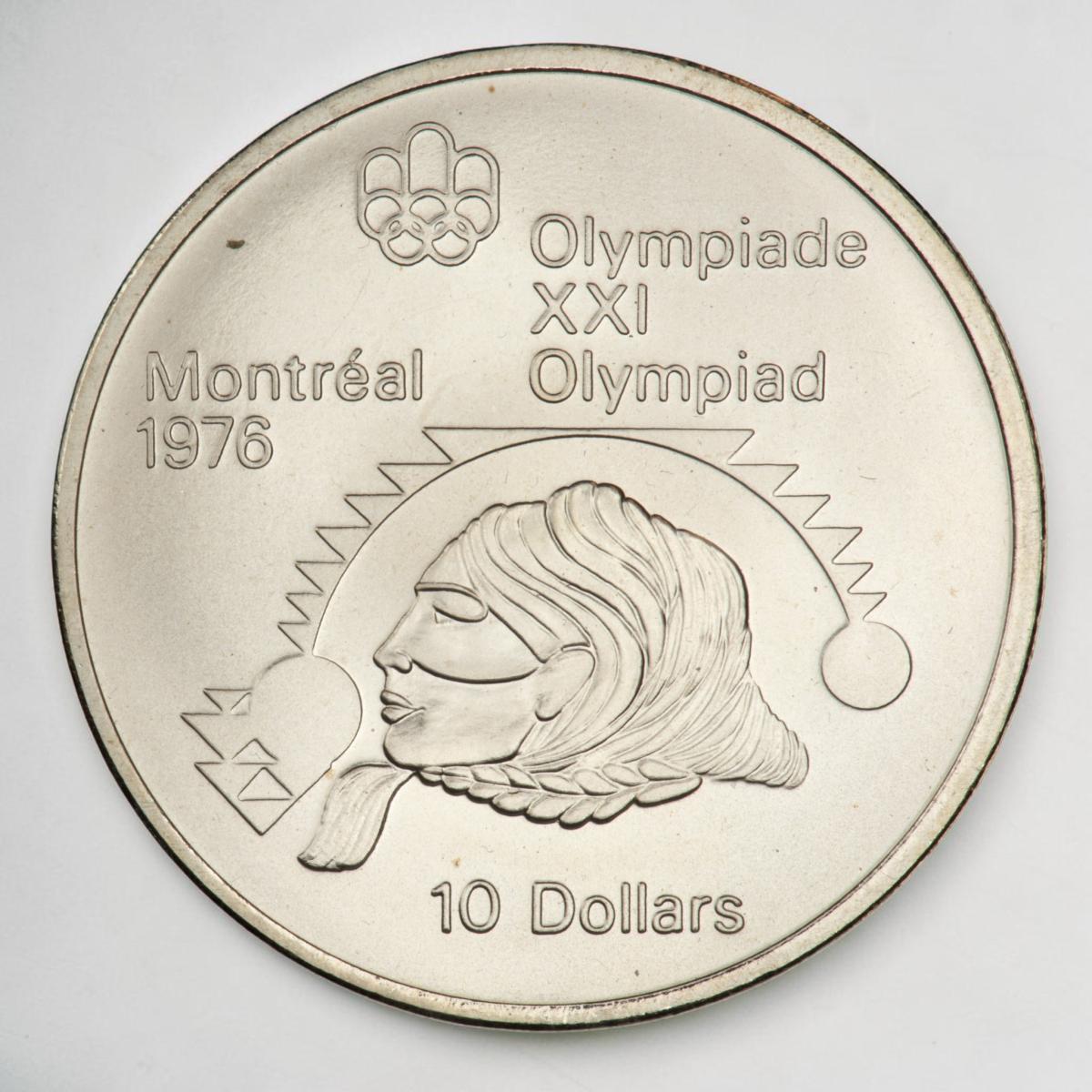
Series five: Olympic water sports
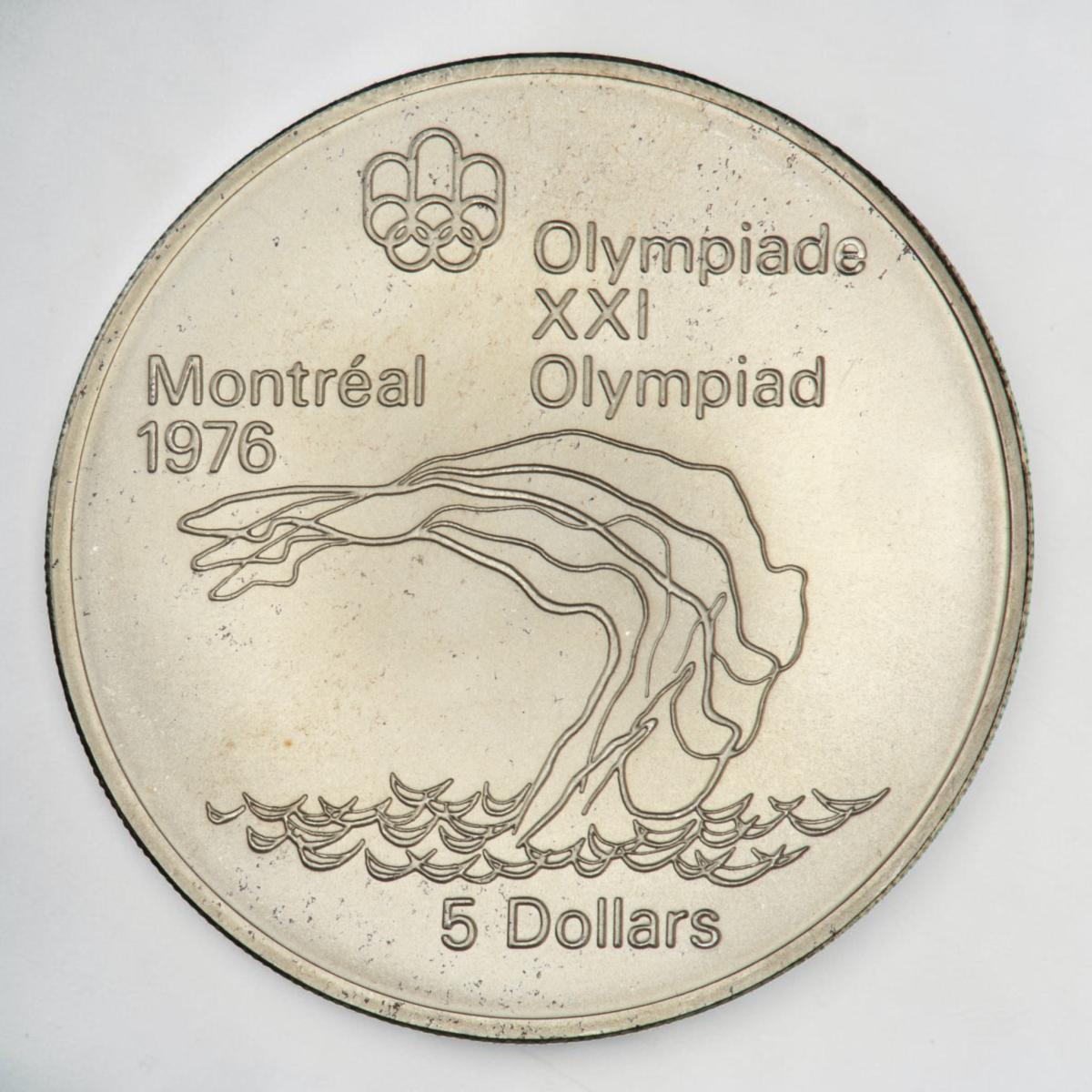
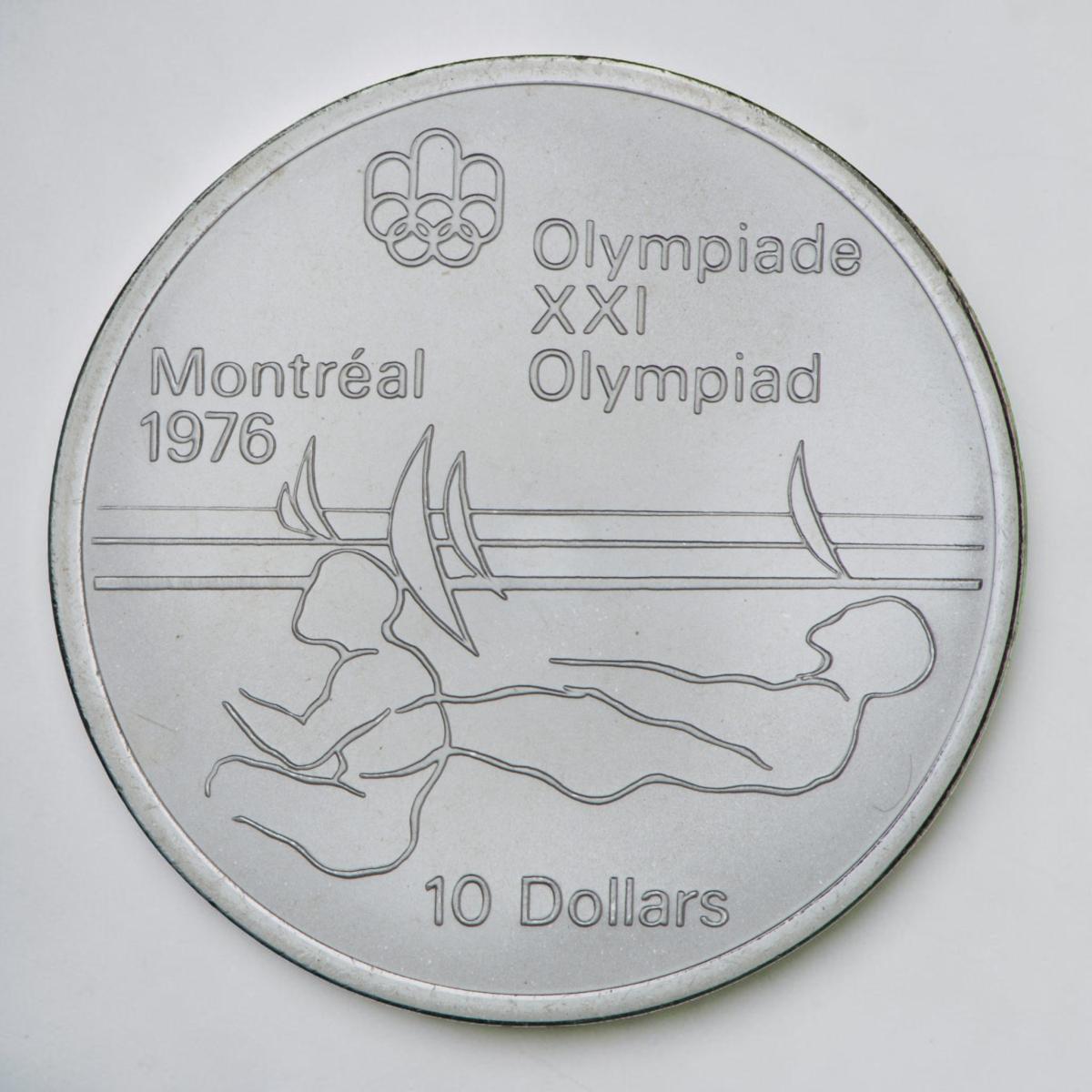
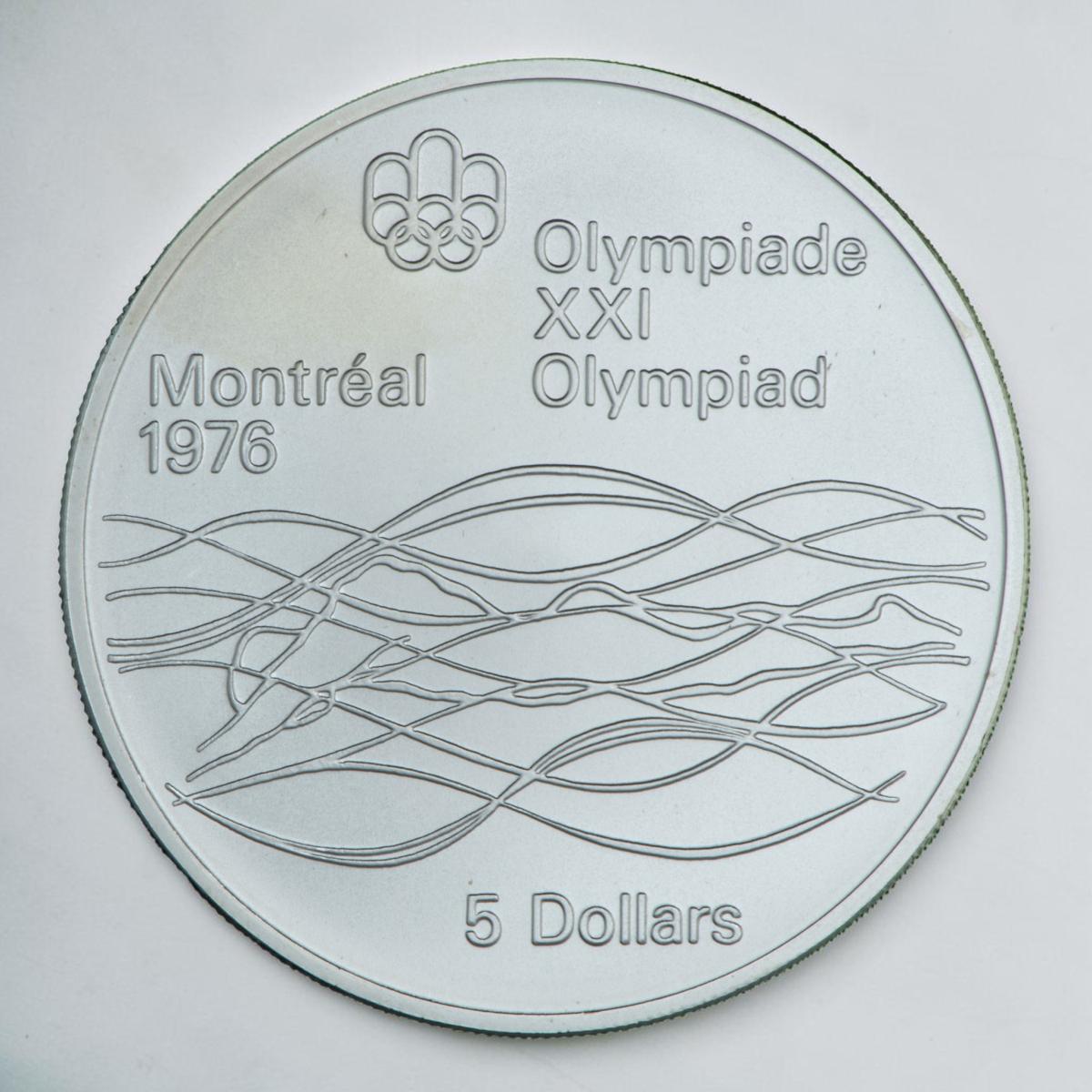
This series was created through a national competition inviting Canadian artists to submit their ideas for Olympic coins. Lynda Cooper’s winning designs feature flowing, abstract depictions of water sports that capture the beauty, motion and strength of the human body.
Series six: Olympic team and body contact sports
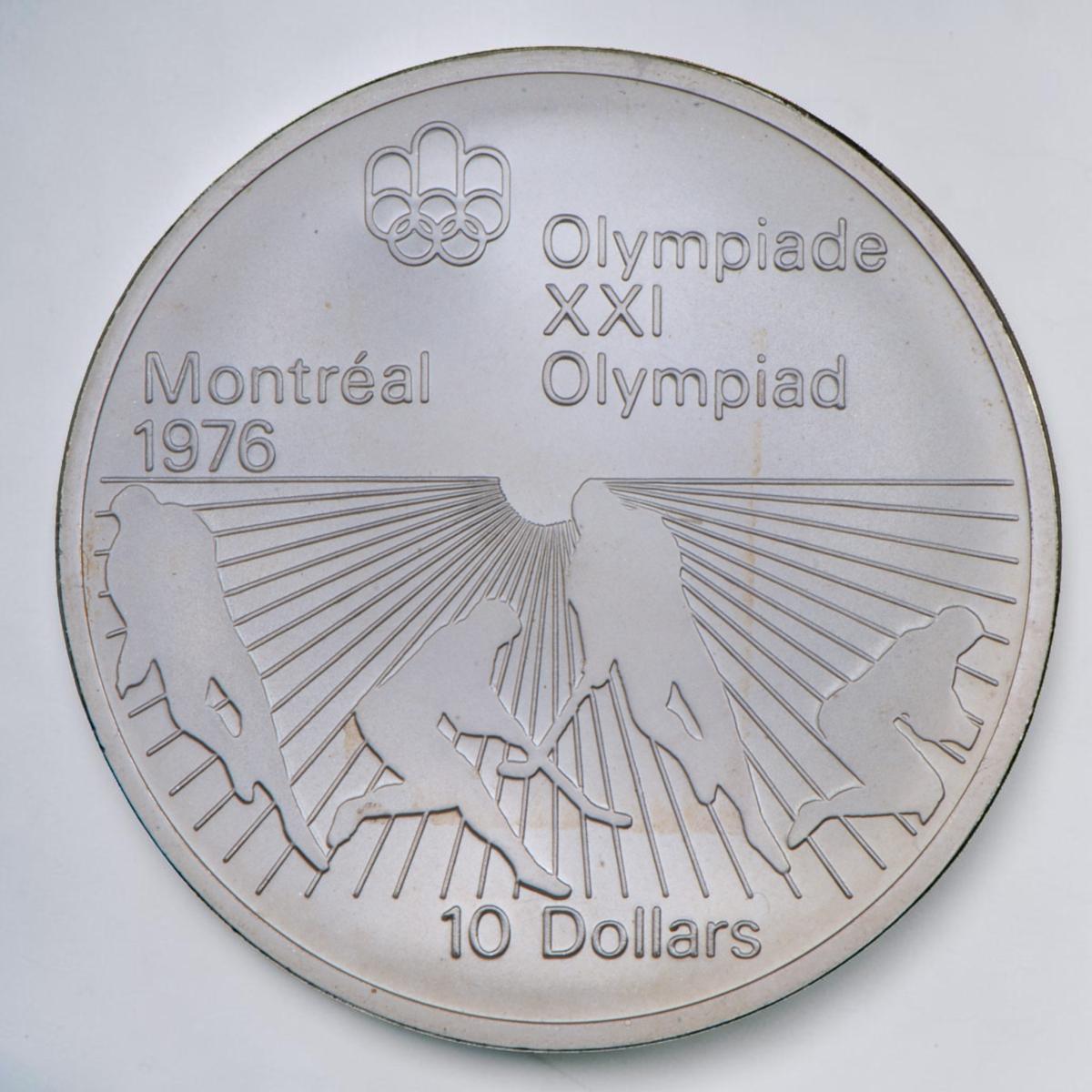
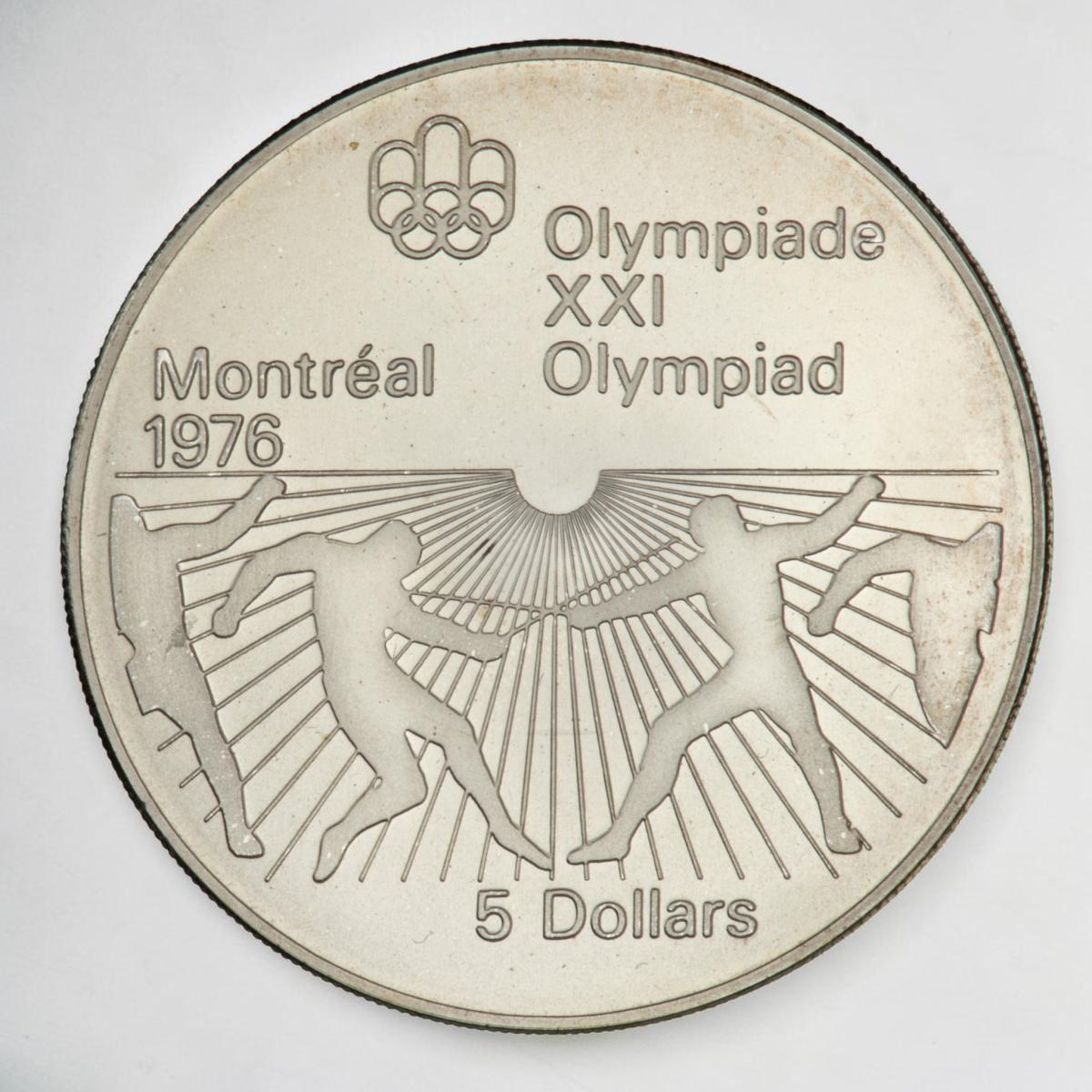
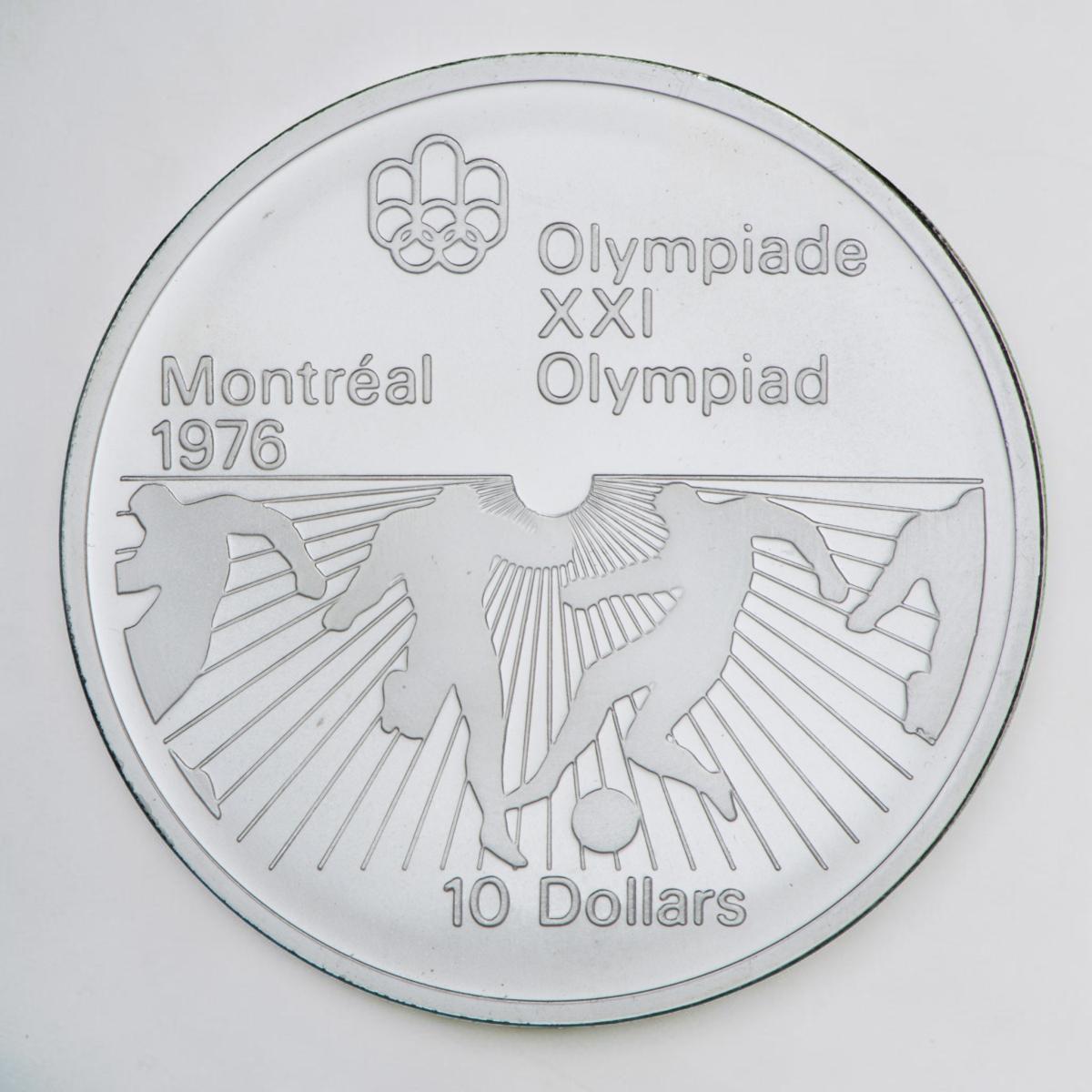
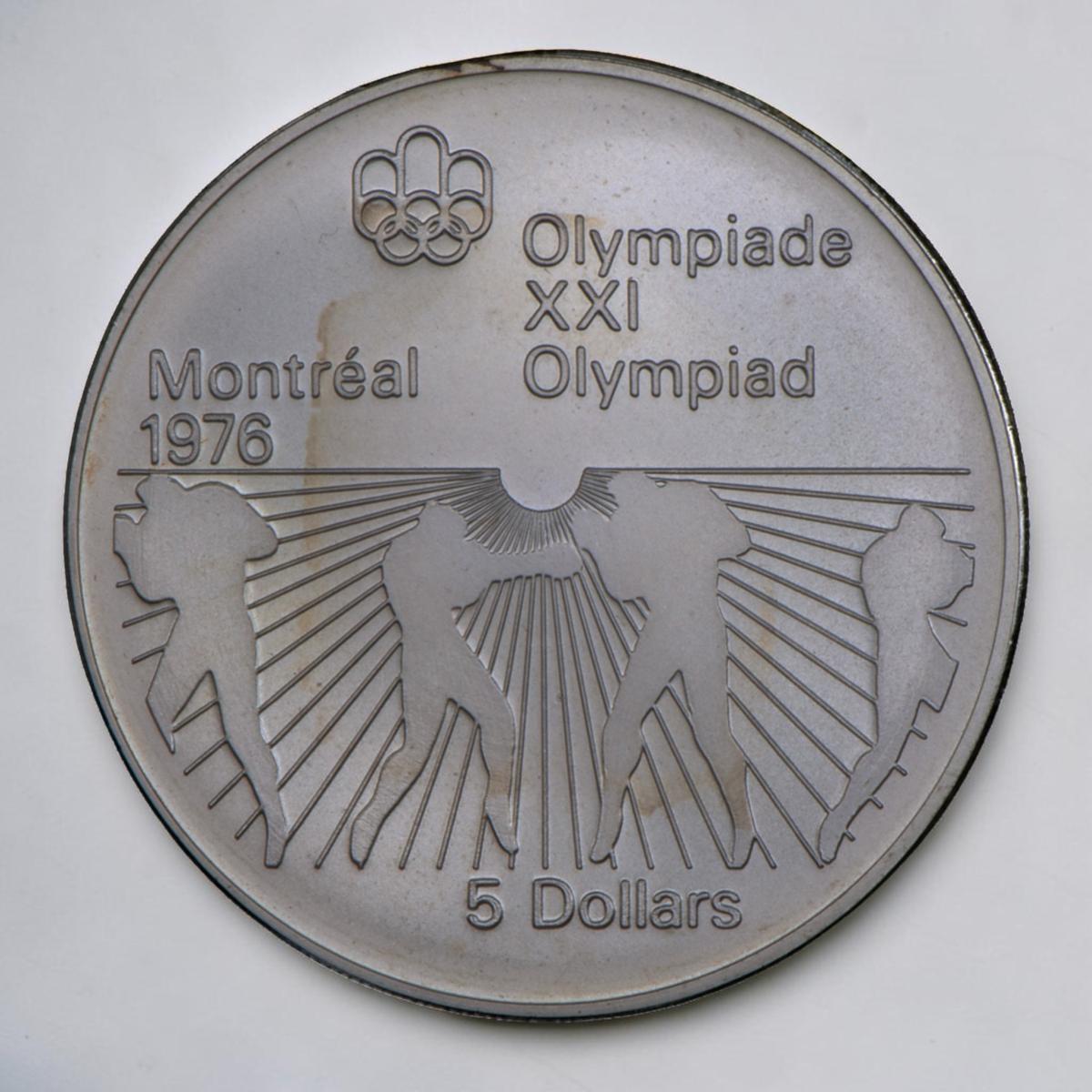
These coins were created by Shigeo Fukuda, one of the winners of the international design competition held by the Organizing Committee of the Olympic Games. Fukuda’s sunburst pattern visually unified the coins, creating a sense of depth and movement for each.
Series seven: Olympic Games souvenir
The daring architecture and the unique Olympic flame of the Montréal Games became memorable icons of the event itself—perfect subjects for these souvenir coins by Elliott John Morrison.
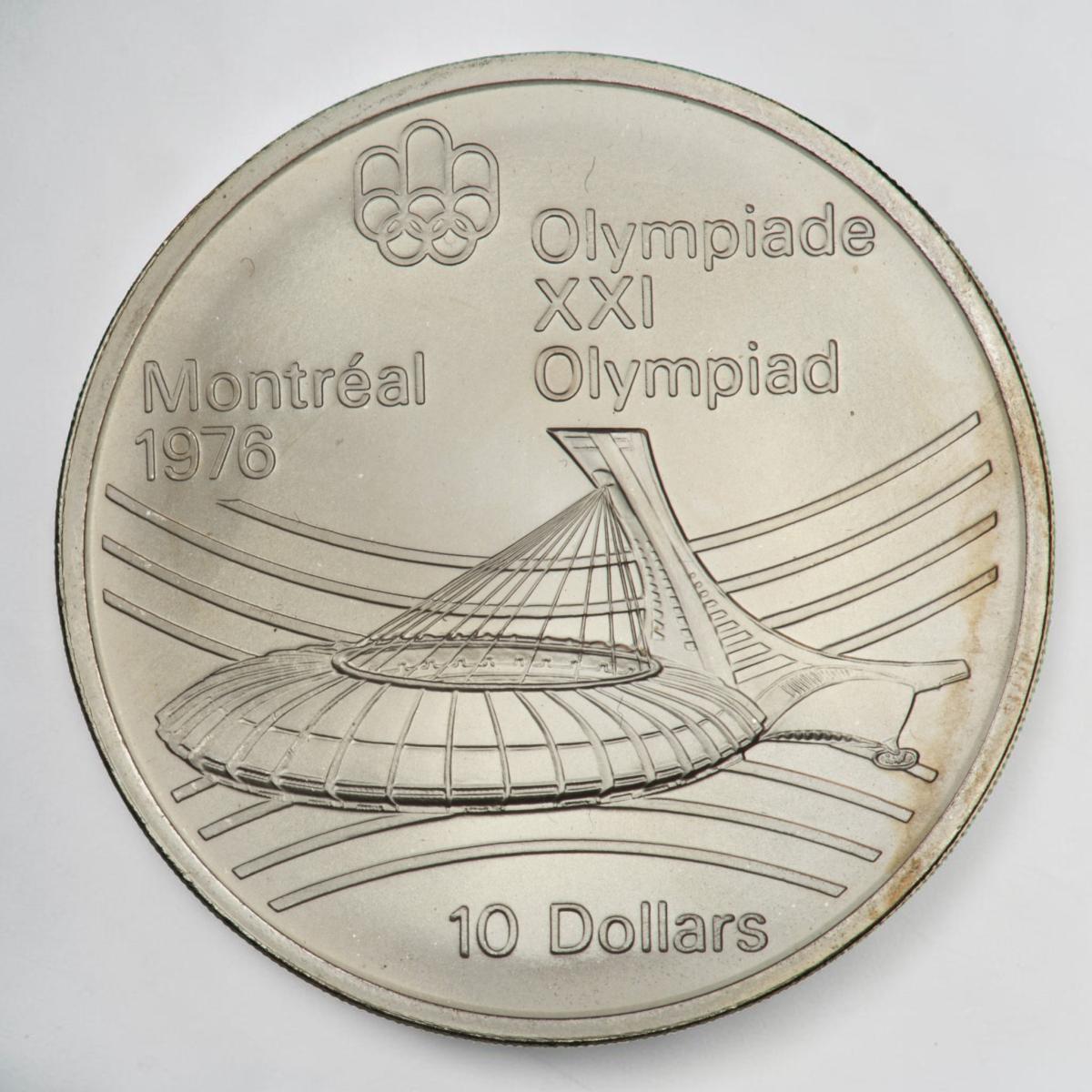
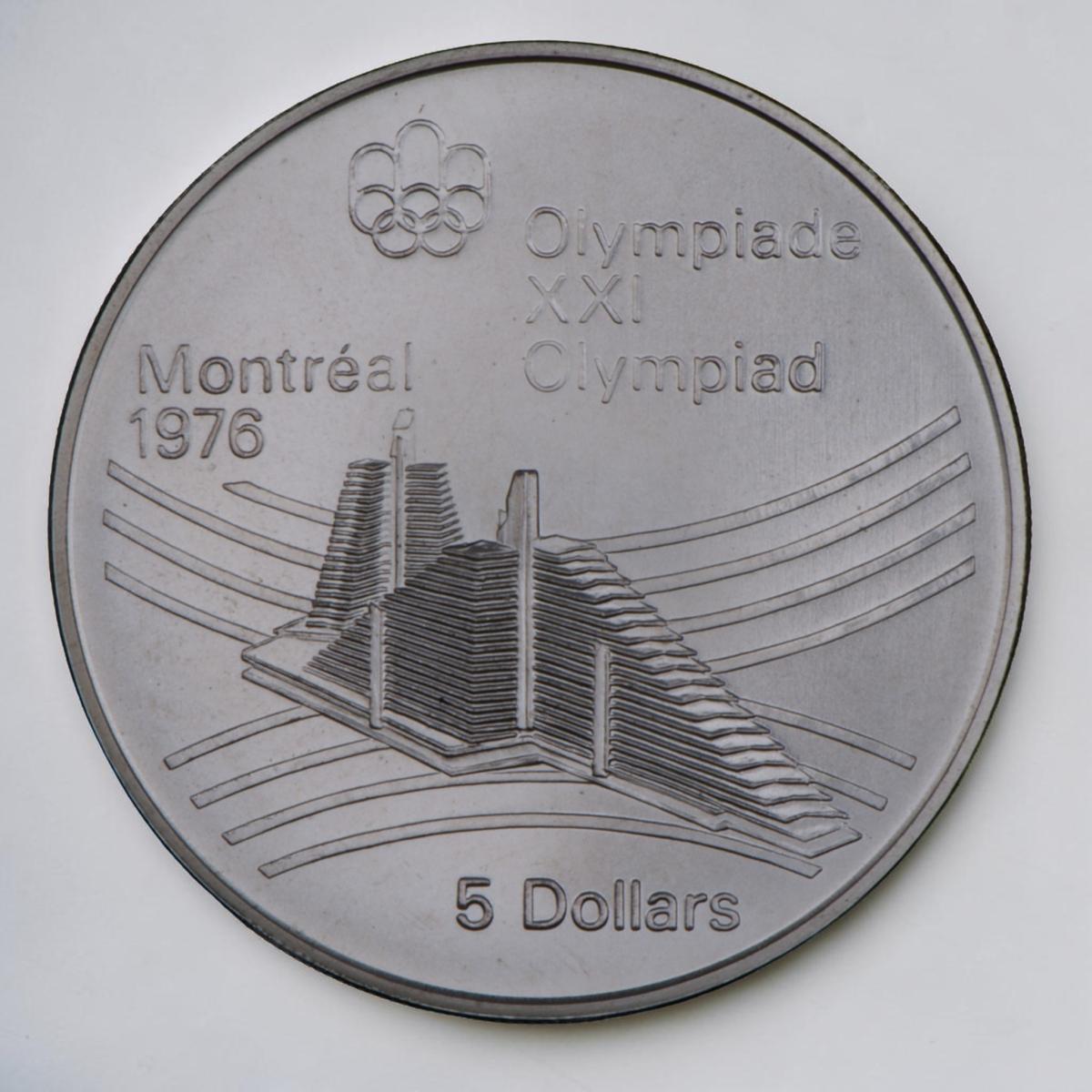
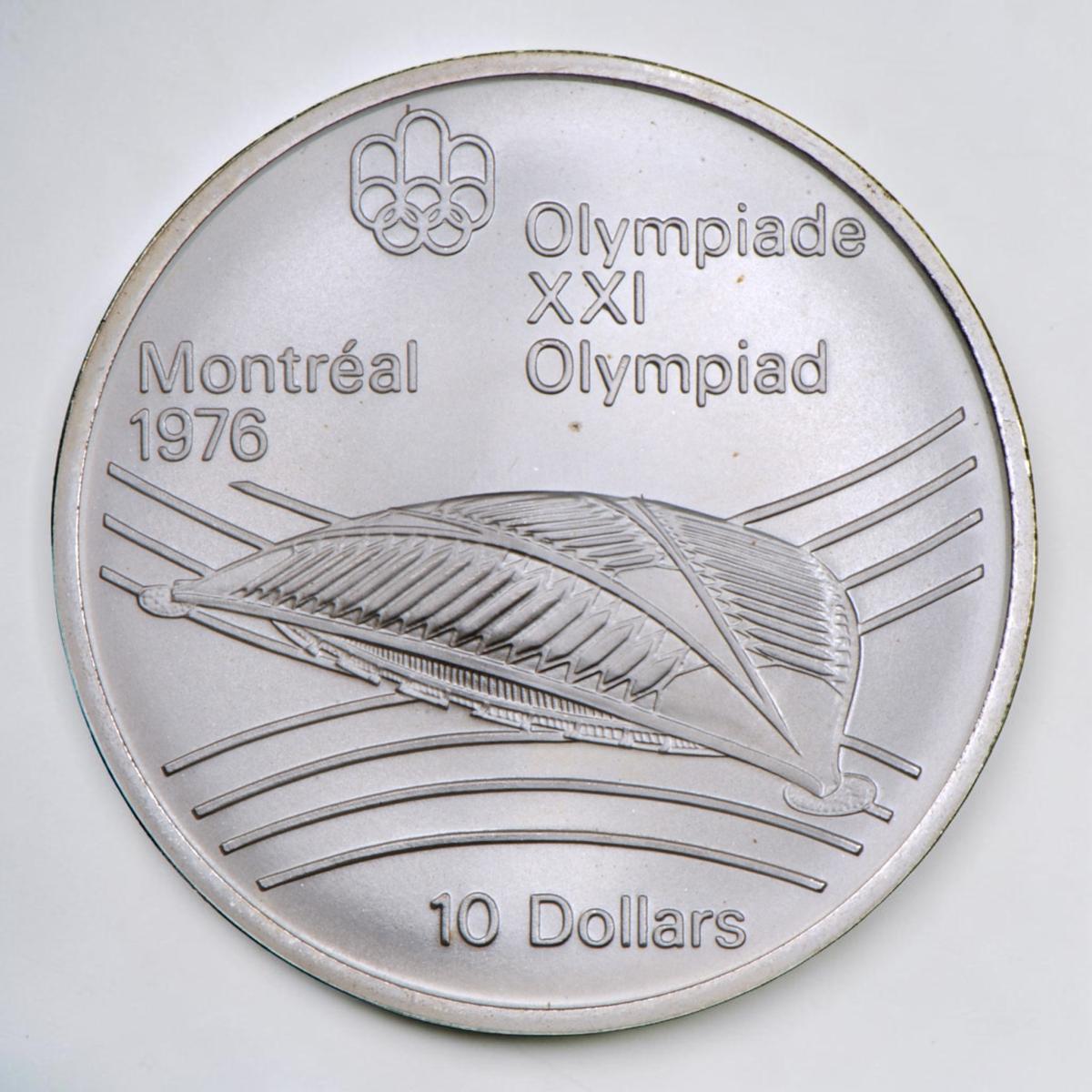
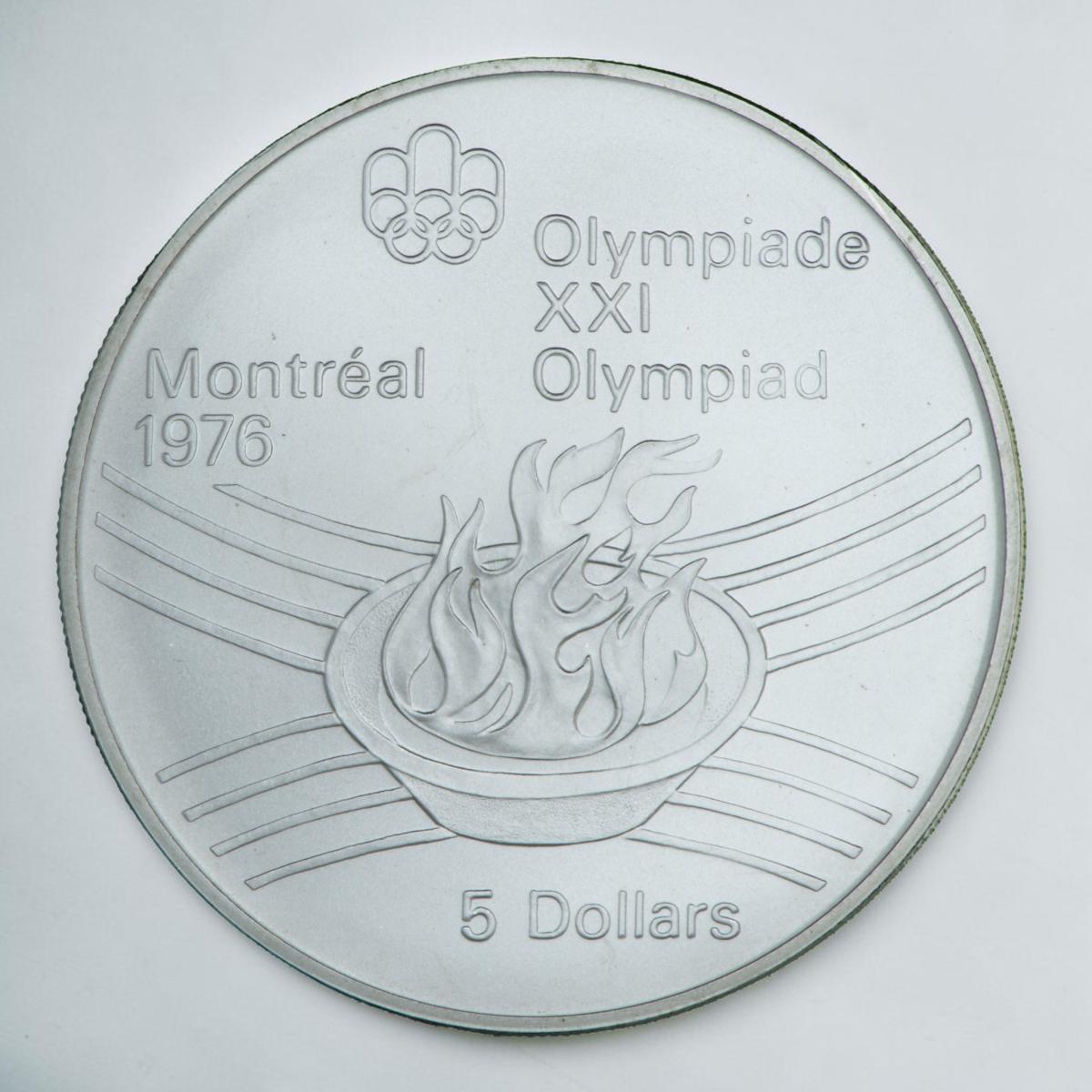
Olympic gold coins: Ancient Greek Olympics
Sculptor Dora de Pédery-Hunt designed the 1976 Montréal Olympics’ only gold coins. Inspired by Ancient Greece, a victorious athlete is crowned by the Goddess Athena. Two versions were struck: an estimated 650,000 coins in 14 karat gold and 350,000 coins in 22 karat.
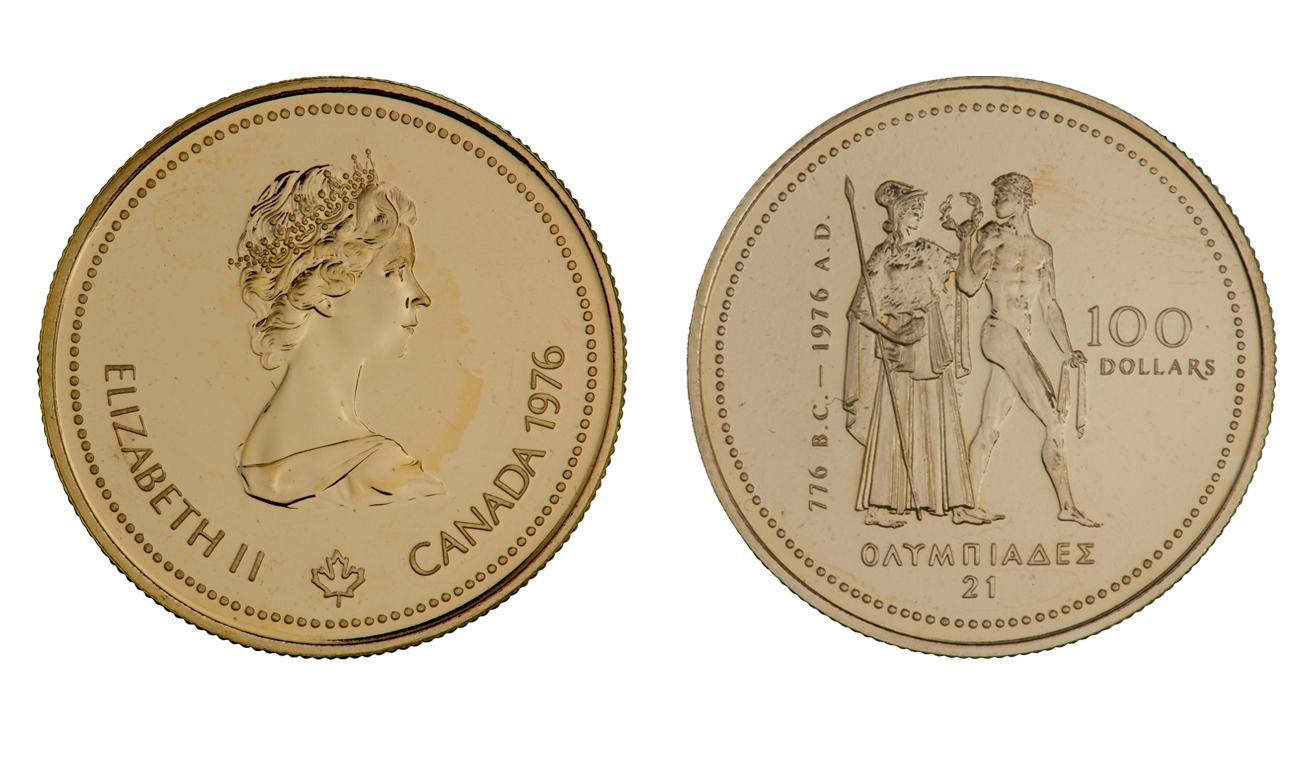
100 dollars, 22 karat proof, Montréal Olympic Coin Program, Canada, 1976 | 1976.5.1
Though it covered only part of the ballooning costs of the Montréal Olympic Games, Canada's Olympic coins raised $108 million—a world record at the time. The biggest win came from the world’s first Olympic gold coins, which generated nearly half the total revenue. Canada’s coin program remains a milestone in Olympic fundraising history.