We’re taking a virtual road trip across Canada using trade and souvenir tokens as our map. No motels, campgrounds or fast food—just good, clean, numismatic fun.
Why tokens?
Coins are legal tender issued by governments. Tokens can look and act like coins, but they are not legal tender. In what is now Canada, tokens filled a real need. The French and British colonies often lacked low-value coins, so merchants and banks imported tokens to use as small change. They were usually denominated like real coins and sometimes resembled them.
Although the issuing of these tokens was unauthorized and was often plagued with problems of fraud, they circulated for years in the absence of legal coins. After Confederation, the coin shortage was largely resolved and tokens became more of a convenience than necessity. Some served as advertising pieces, many were backed by specific merchandise or services and could be exchanged for either, at any time.
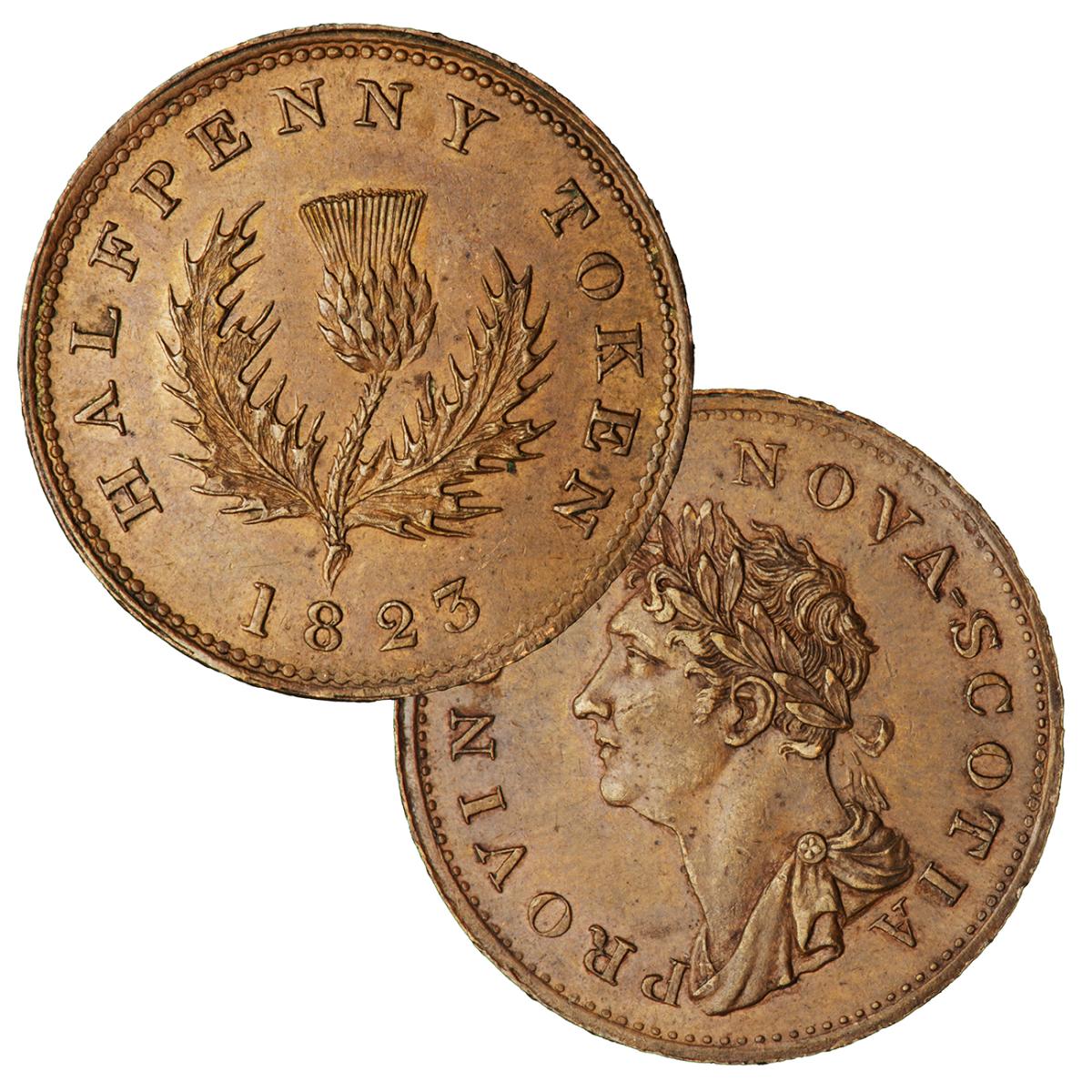
Governments also issued tokens. Dissatisfied with the British government’s inability to supply it with currency, the colony of Nova Scotia issued tokens. They couldn’t be called coins because they weren’t issued, in this case, with royal authority.
Source: ½ penny, token, Nova Scotia, Canada, 1823 | 1964.43.276
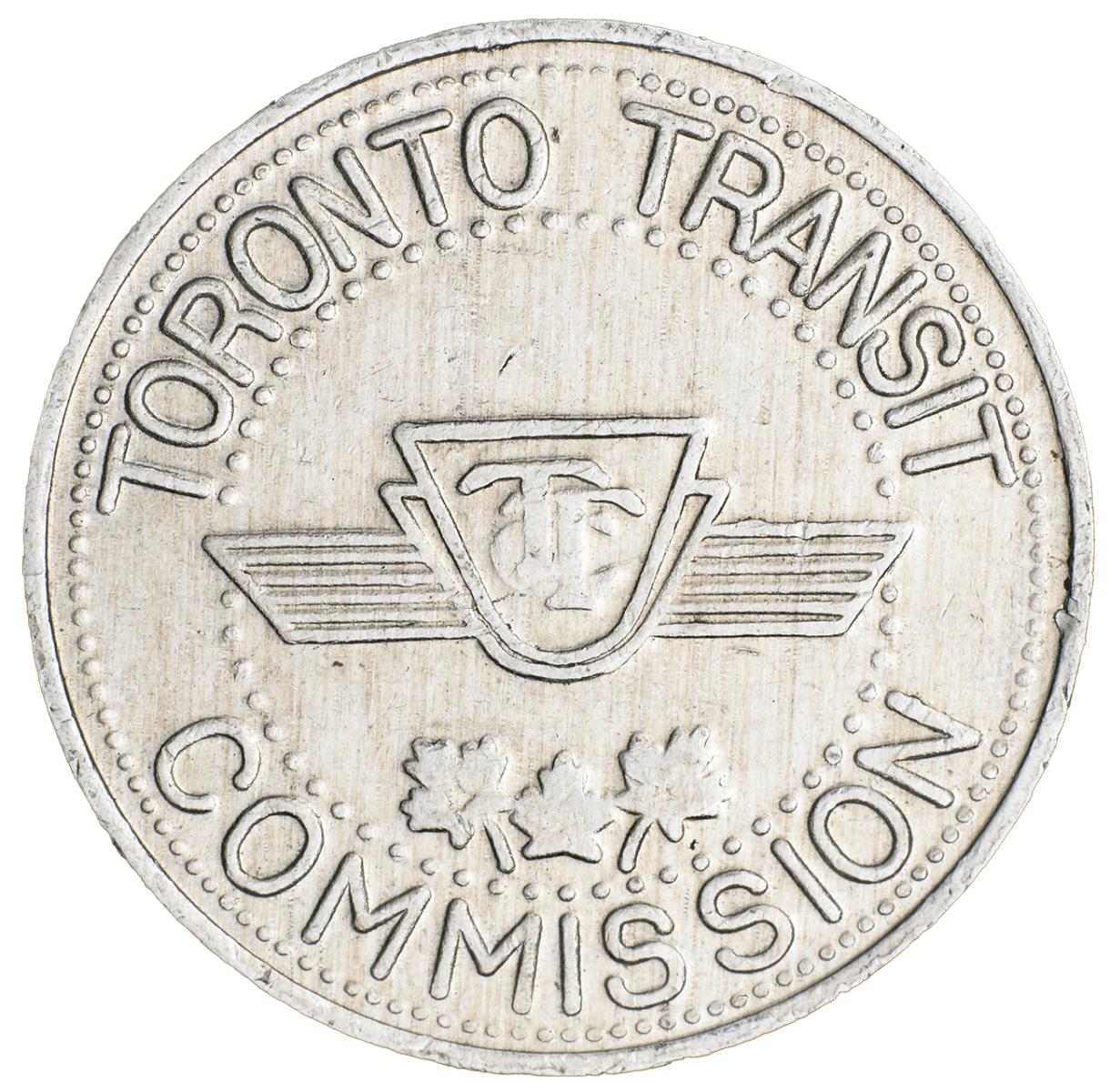
Operations such as transit systems used tokens to simplify transactions. Customers exchanged cash for tokens, which they then used to pay for their trip. This reduced the need for operators to handle cash or make change.
Source: 1 fare, Toronto Transit Commission, Canada, 1975| 1977.169.1
Tokens continued to be issued well into the 20th century, long after the shortages of small change had been dealt with. (And public transit tokens lasted into this century.) Something about the old merchants’ tokens still held people’s imaginations. Into the 1990s, novelty and souvenir tokens were still popular promotions for chambers of commerce and festivals, usually spendable in specific areas or time frames. But such “trade dollars,” as redeemable promotional tokens are called, have almost entirely become things of the past.
So, jump in the car, buckle up and let’s take a trip across the country—and back in time. And we’ll make a few token stops along the way.
Dawson City, Yukon
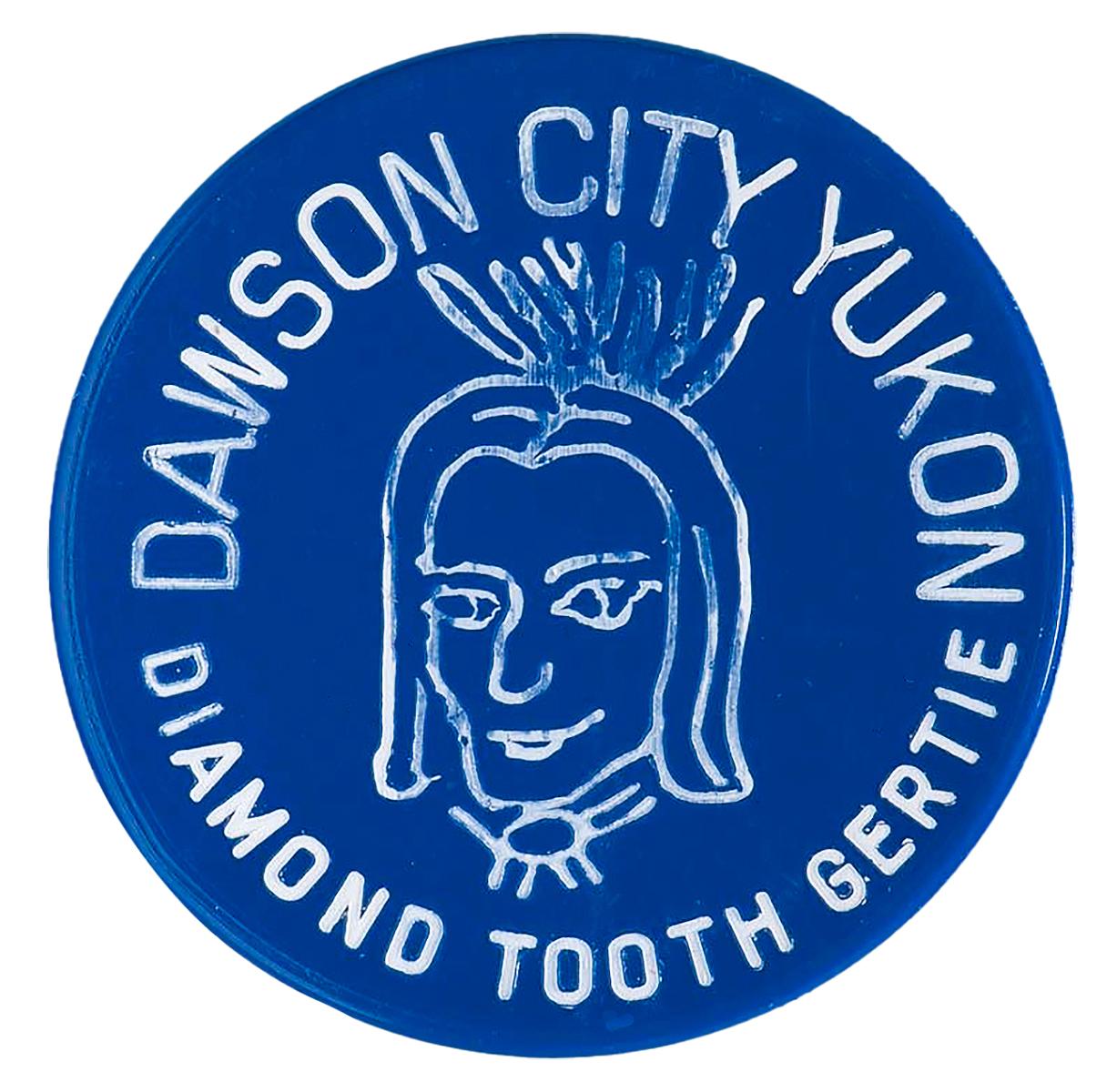
Source: 5 dollars, gaming token, Yukon, Canada, 1971 | 1974.248.21
Diamond Tooth Gerties Gambling Hall in Dawson City has been operating since 1971 in the Arctic Brotherhood Fraternity Hall. It is the oldest operating casino in Canada and named after Gertrude Lovejoy. She was a dance hall star during the Klondike Gold Rush who became more socially respectable after marrying a local—and well-connected—lawyer. And yes, she had a diamond installed between her front teeth.
Yellowknife, Northwest Territories
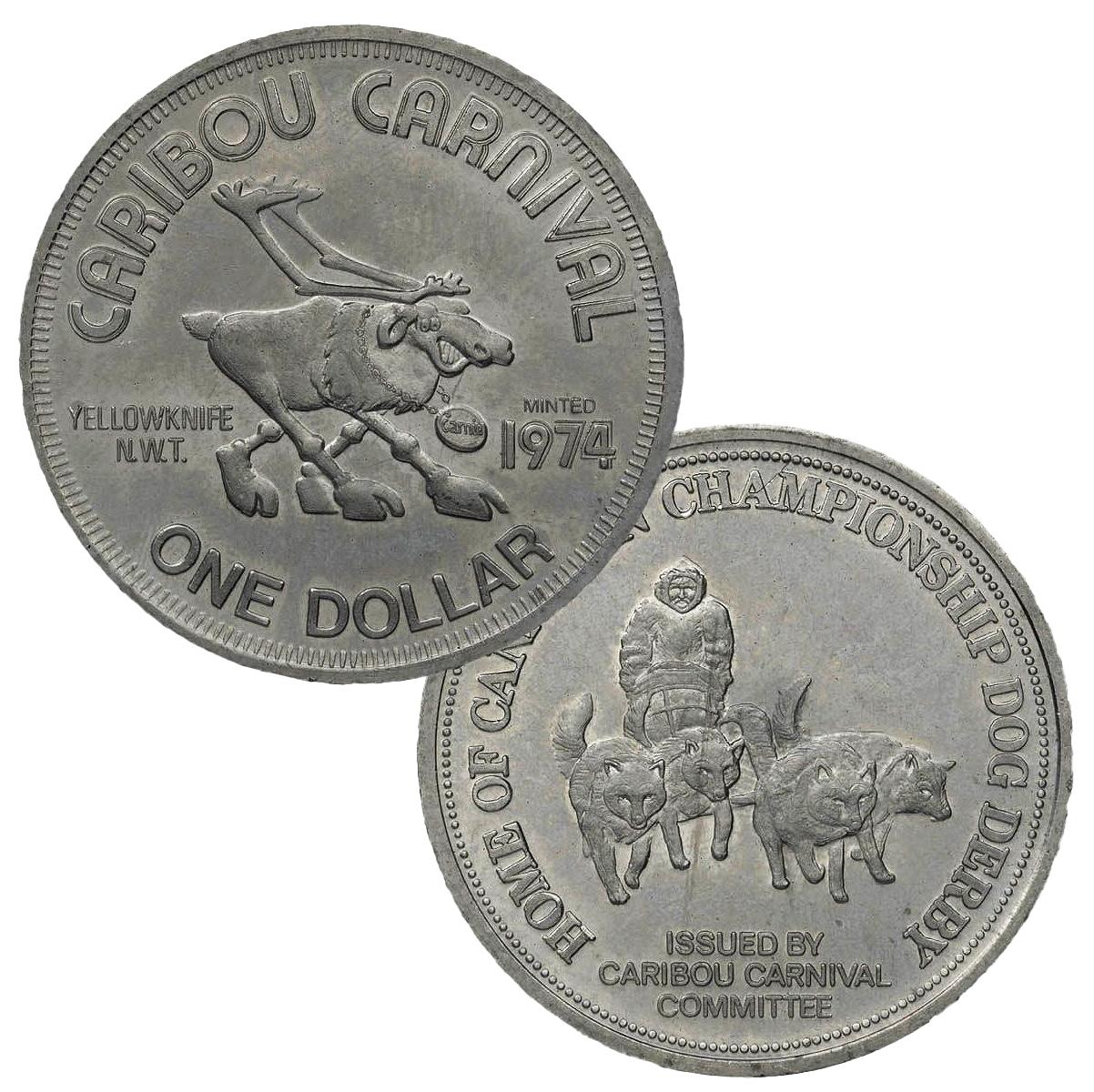
Source: 1 dollar, souvenir token, Yellowknife, Northwest Territories, Canada, 1974 | 1981.62.427
For 50 years, the Caribou Carnival welcomed spring to the Yellowknife region with concerts, ice sculpting competitions, Dene and Inuit games and a 230-kilometre dogsled race. You’d have a tough time spending this dollar, though, because the carnival ceased operations in 2009.
Kelowna, British Columbia
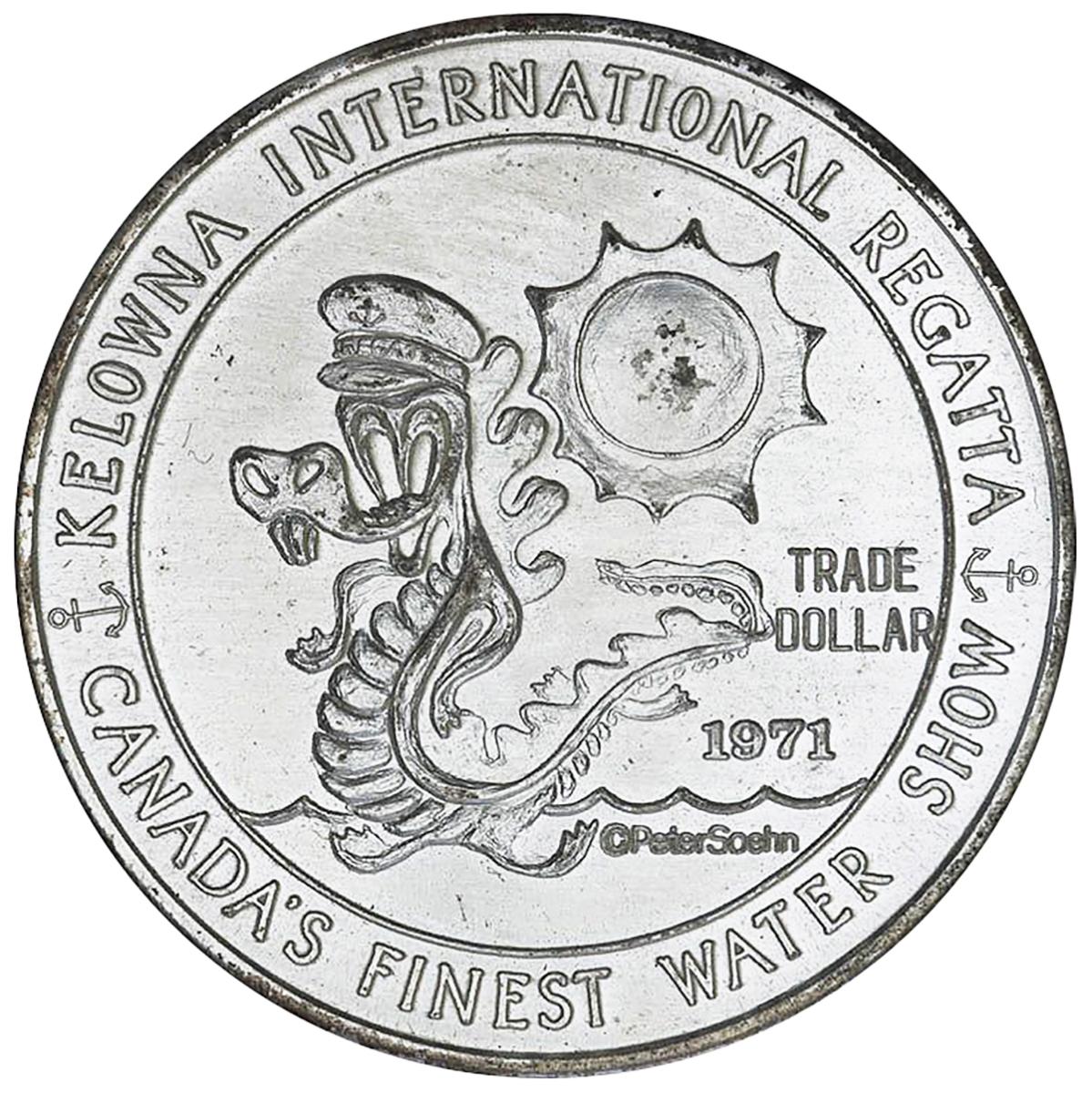
Source: 1 dollar, souvenir token, Kelowna, British Columbia, Canada, 1971 | 1971.176.3
The Kelowna International Regatta was advertised as Canada’s finest water show. It was Kelowna’s summer festival of rowing, diving and boat races that took place on Lake Okanagan. It ran from 1906 until riots in 1986 and 1987 forced city authorities to shut it down. Ogopogo, the legendary monster reputed to lurk deep in the waters of Lake Okanagan, rears its cheerful head on this token.
Vulcan, Alberta
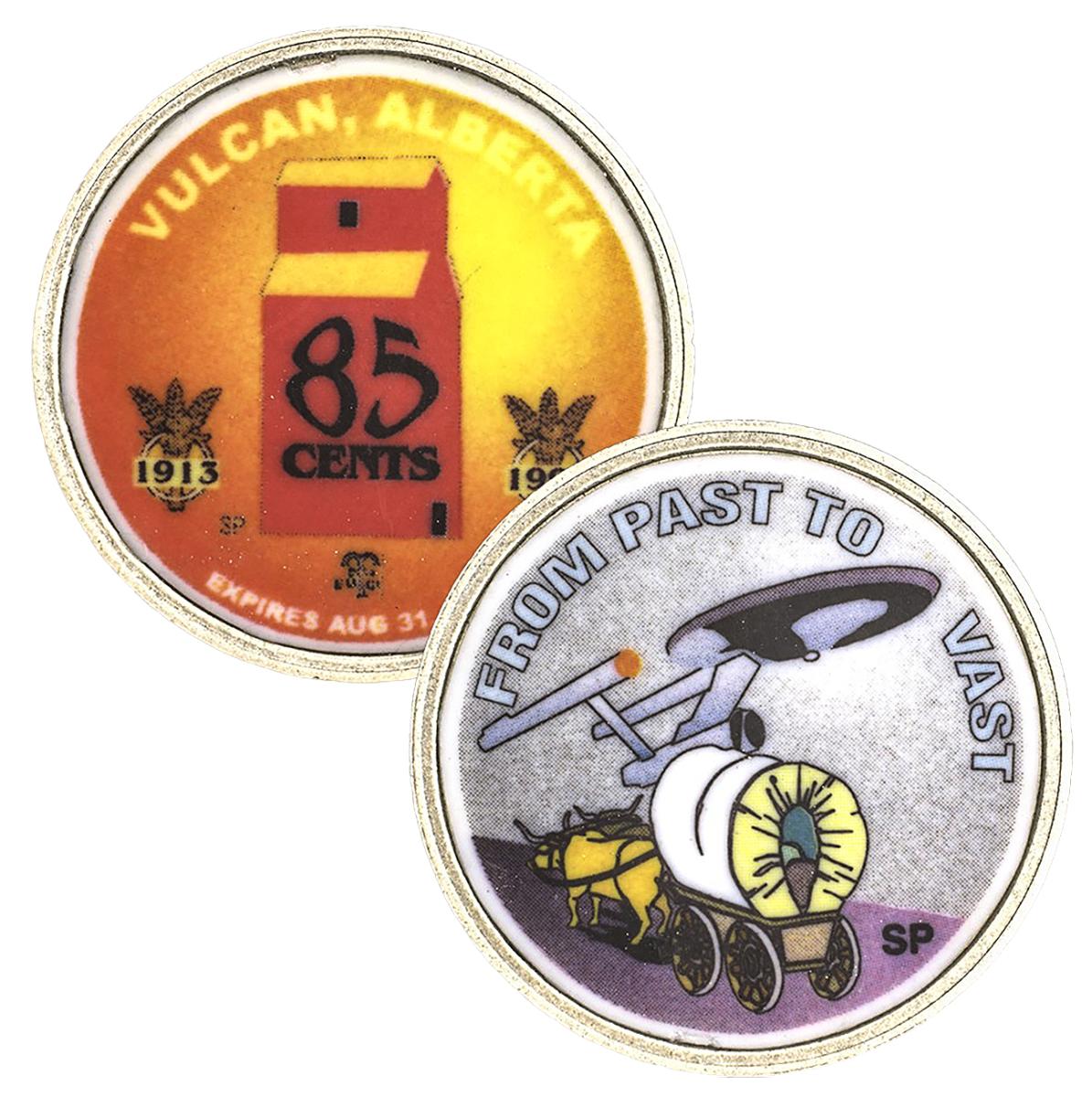
Source: 85 cents, souvenir token, Vulcan, Alberta, Canada, 1998 | 2004.117.86
Though named for the Roman god of fire, this Prairie town has chosen to align itself with the planet Vulcan in the Star Trek universe. In fact, Vulcan calls itself the “Official Star Trek Capital of Canada.” Outside the local tourism centre, you’ll see a large replica of the USS Enterprise—a logical decision for a roadside attraction—and for a token. The other side of the token has a grain elevator. Little Vulcan was once home to a line of 12 elevators—one of the largest grain storage capacities in Canada. Vulcan’s last wooden elevator was demolished in 2025, but it’s still home to the USS Enterprise.
Riverhurst, Saskatchewan
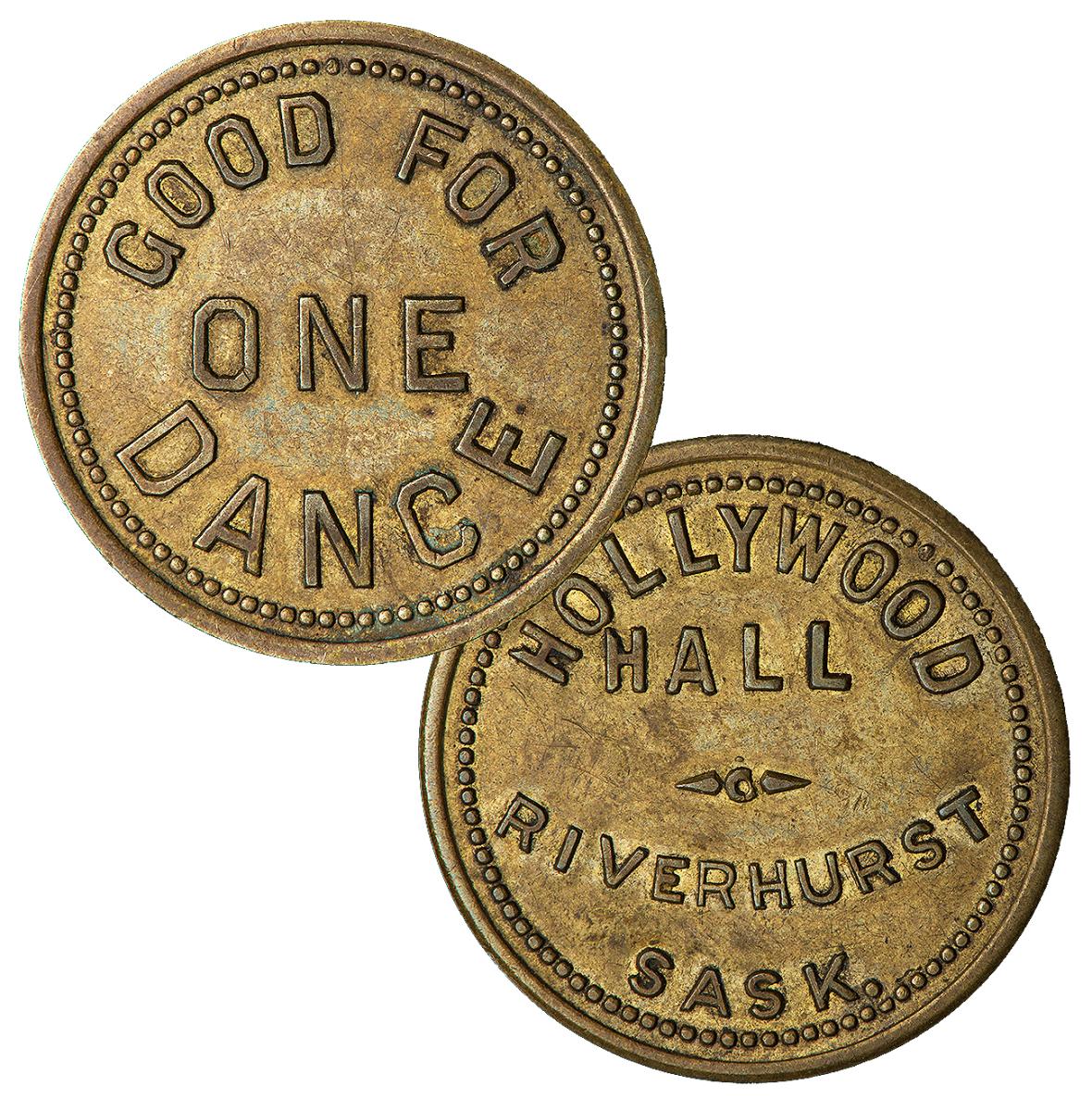
Source: 1 dance, token, Hollywood Hall, Riverhurst, Saskatchewan, Canada, 1922 | 1979.129.480
Back in the 1920s, you couldn’t buy a ticket for a whole evening of dancing at the grandly named Hollywood Hall in Riverhurst, Saskatchewan. Instead, you would buy a token for each turn on the dance floor. Between dances, the floor would be cleared, and the band wouldn’t play until everybody who wanted to dance had handed in their token. You can’t dance at Hollywood Hall anymore but you can at least have fun at nearby Diefenbaker Lake.
Winnipeg, Manitoba
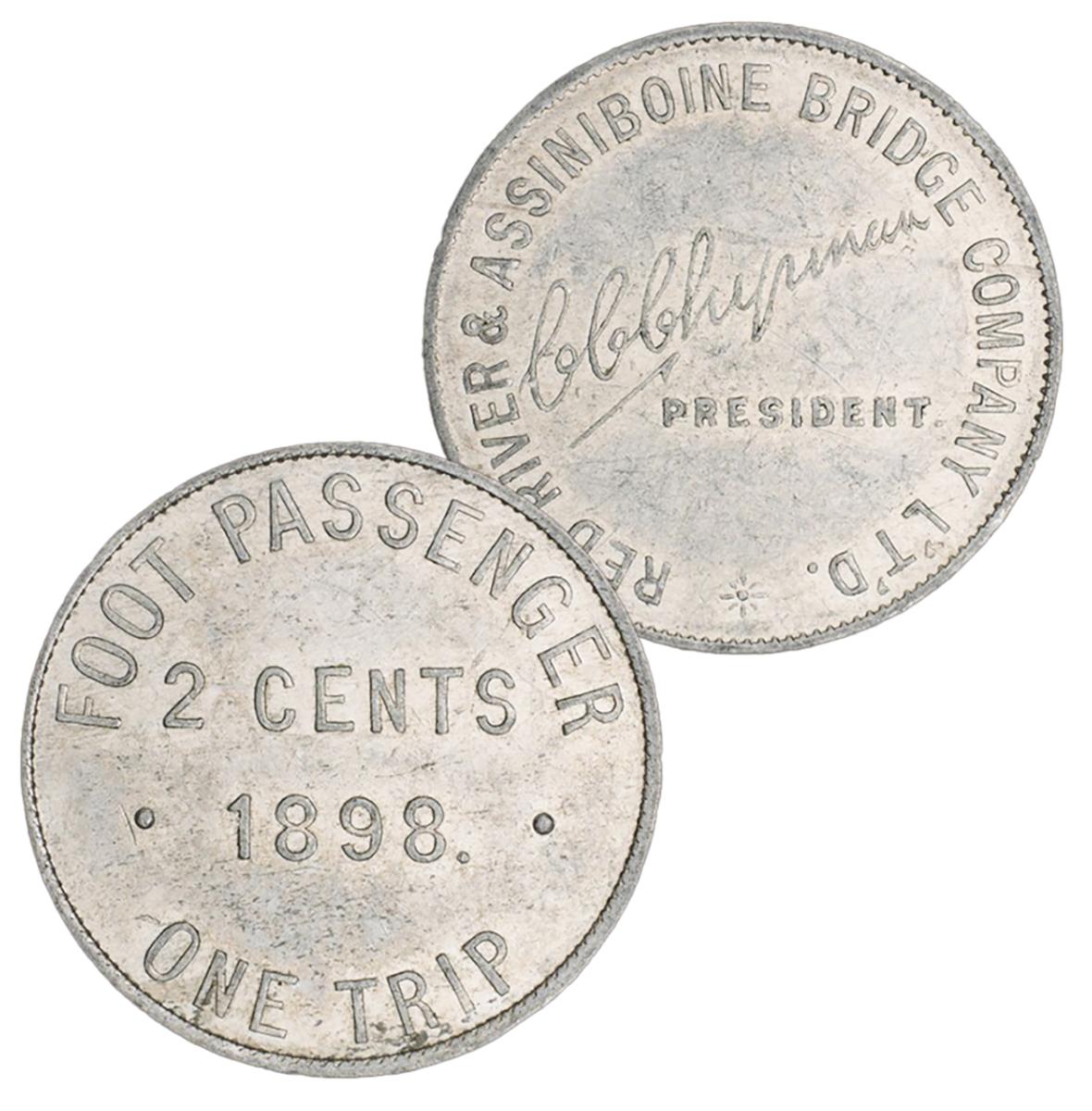
Source: 2 cents, bridge token, Red River & Assiniboine Bridge Co., Canada, 1898 | 1964.43.646
From 1883 to 1908, the Red River & Assiniboine Bridge Co. managed the Broadway Bridge, a steel truss structure that spanned the Red River, connecting Winnipeg and St. Boniface. Each time you went across the bridge you were charged a fee, with the amount depending on your mode of transport. This token was good for two cents, which covered the cost of one crossing on foot. Crossing the river these days costs you nothing.
Kenora, Ontario
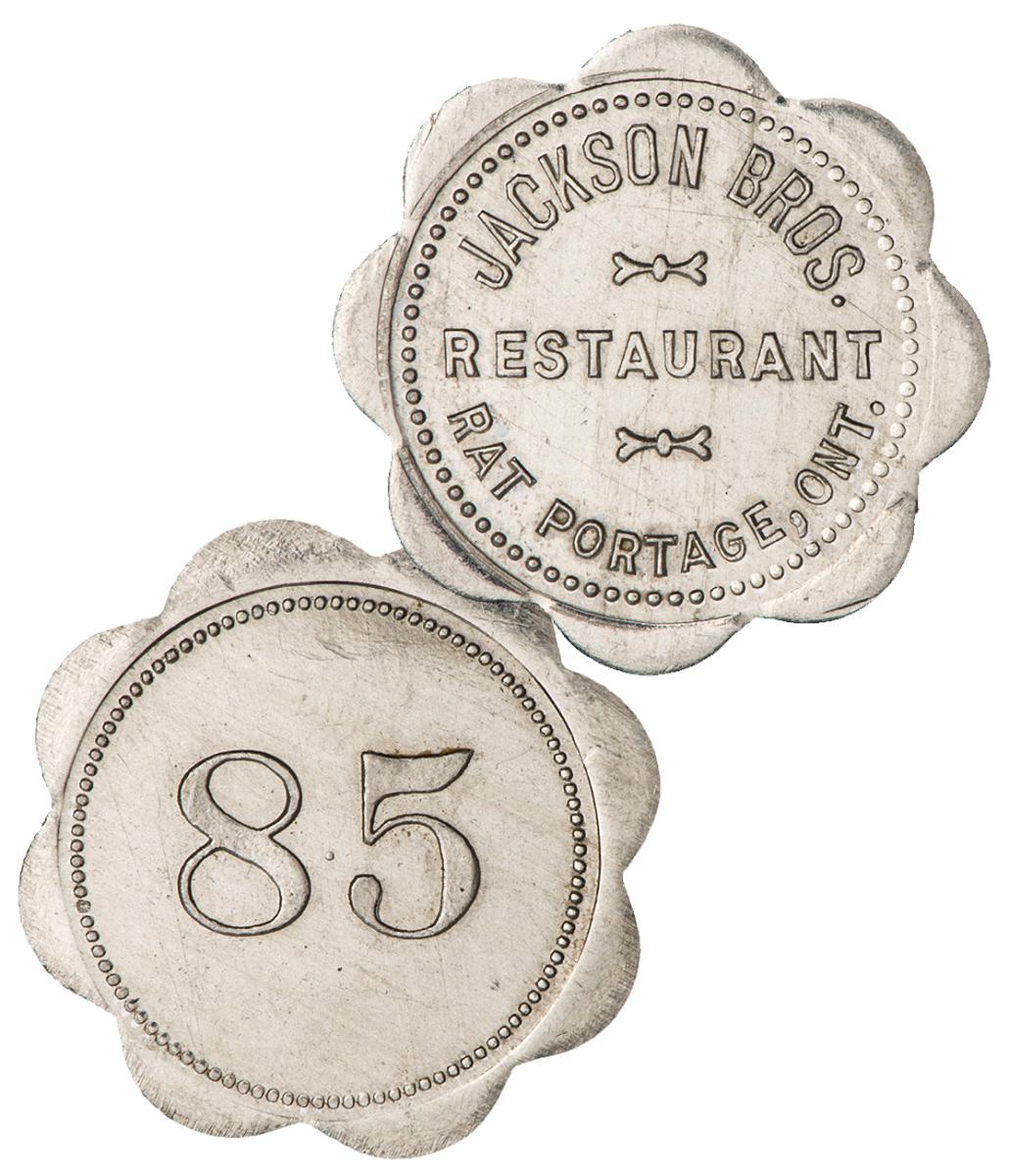
Source: 85 cents, token, Jackson Brothers Restaurant, Rat Portage, Canada, no date | 1965.136.1004
Kenora, Ontario, was originally known as Rat Portage from the Ojibwe name for the area, Waszush Onigum, meaning “portage to the country of the muskrats.” A name change had been debated as early as 1892, but legend has it that a driving force of the eventual change was the management of the Maple Leaf Milling Co. The company simply refused to open a mill there if it had to put the word “rat” on its packaging. Fair enough. The name of the town was changed to Kenora in 1904.
Québec City, Québec
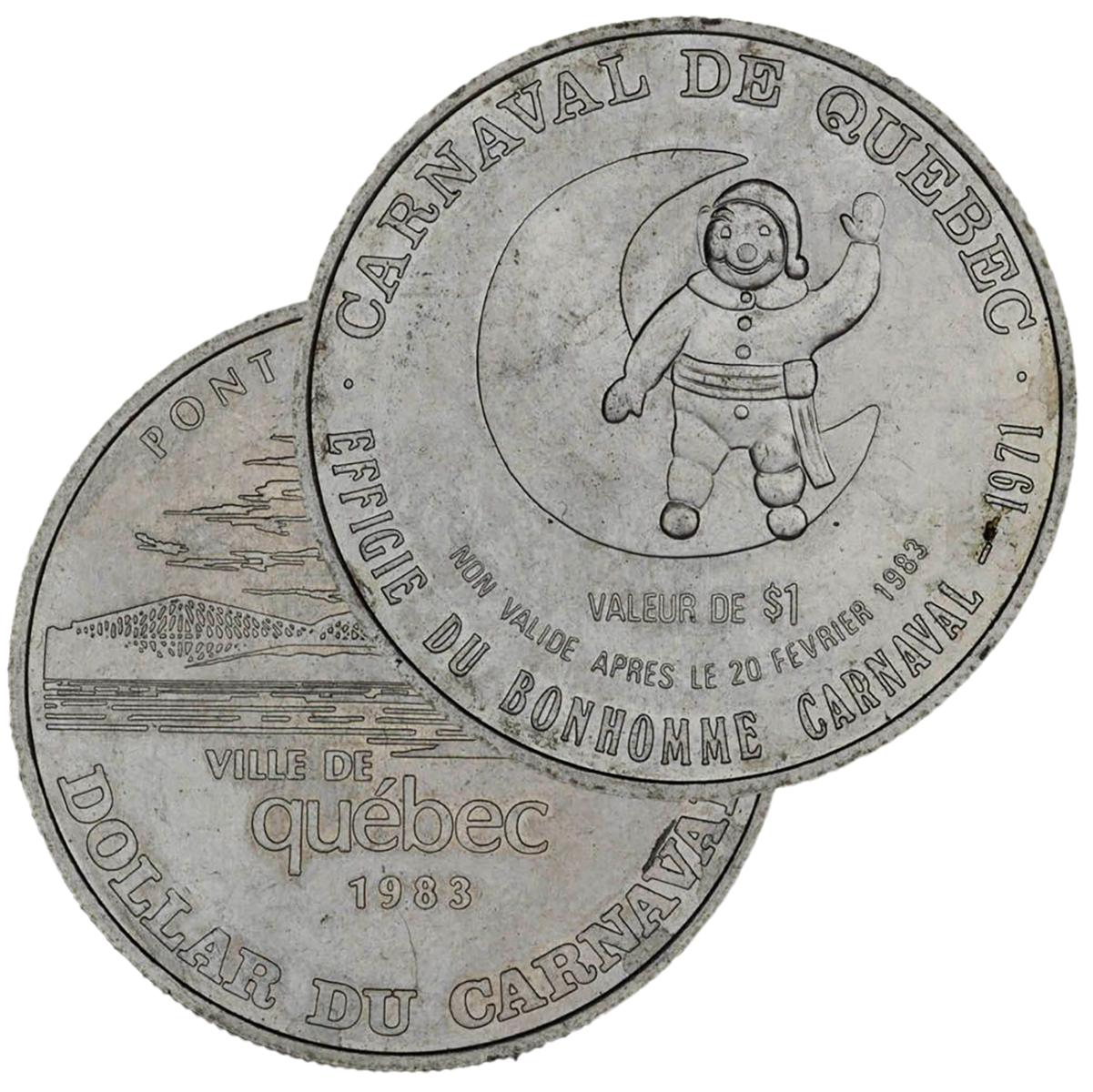
Source: 1 dollar, souvenir token, Carnaval de Québec, Canada, 1983 | 1985.15.22
Considered one of the world's largest and oldest winter carnivals, Carnaval de Québec runs from the last week in January through the first week of February. The fun includes night parades, ice sculptures, snowshoeing, an ice canoe race and a toboggan slide that has been in place since 1884. And for more than 70 years, a giant ice palace has been built for the festival's mascot, a big, walking snowman named Bonhomme. Clad in a red tuque and a traditional Quebecois arrow sash, Bonhomme walks the streets of Québec throughout the event. And it’s also spectacular place to visit in the summer, of course.
Moncton, New Brunswick
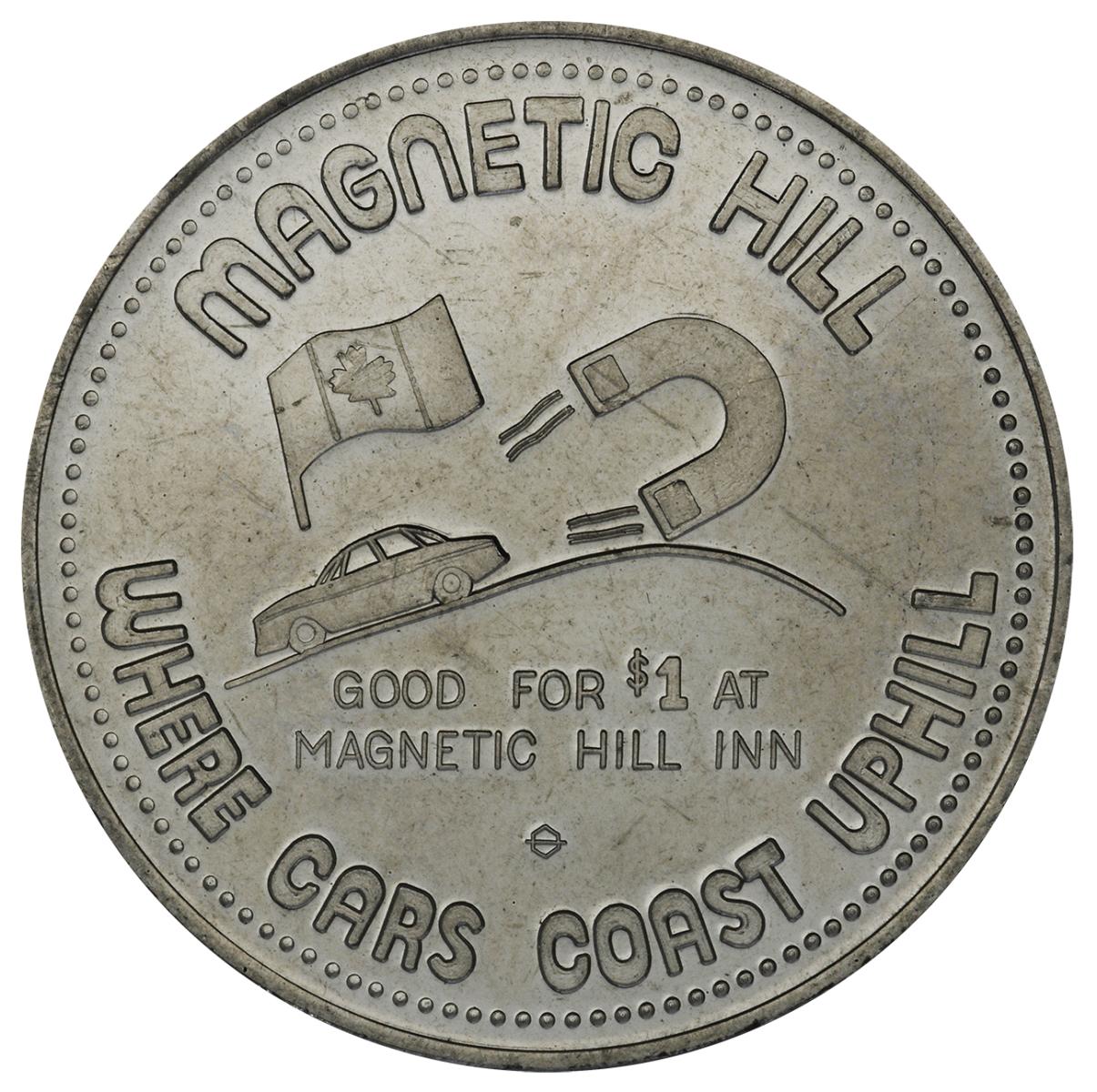
Source: 1 dollar, souvenir token, Magnetic Hill Inn, Canada, 1978 | 1981.62.207
Near Moncton, New Brunswick is a commonplace stretch of country road where you can stop your car, put it in neutral, lift your foot off the brake and find yourself magically rolling uphill! Magnetic Hill is a very convincing optical illusion and one of the biggest attractions in the Maritimes. Looking for a hotel nearby? Sadly, the Magnetic Hill Inn is no longer there. With nowhere to spend it, perhaps you could try rolling the token uphill.
Charlottetown, Prince Edward Island
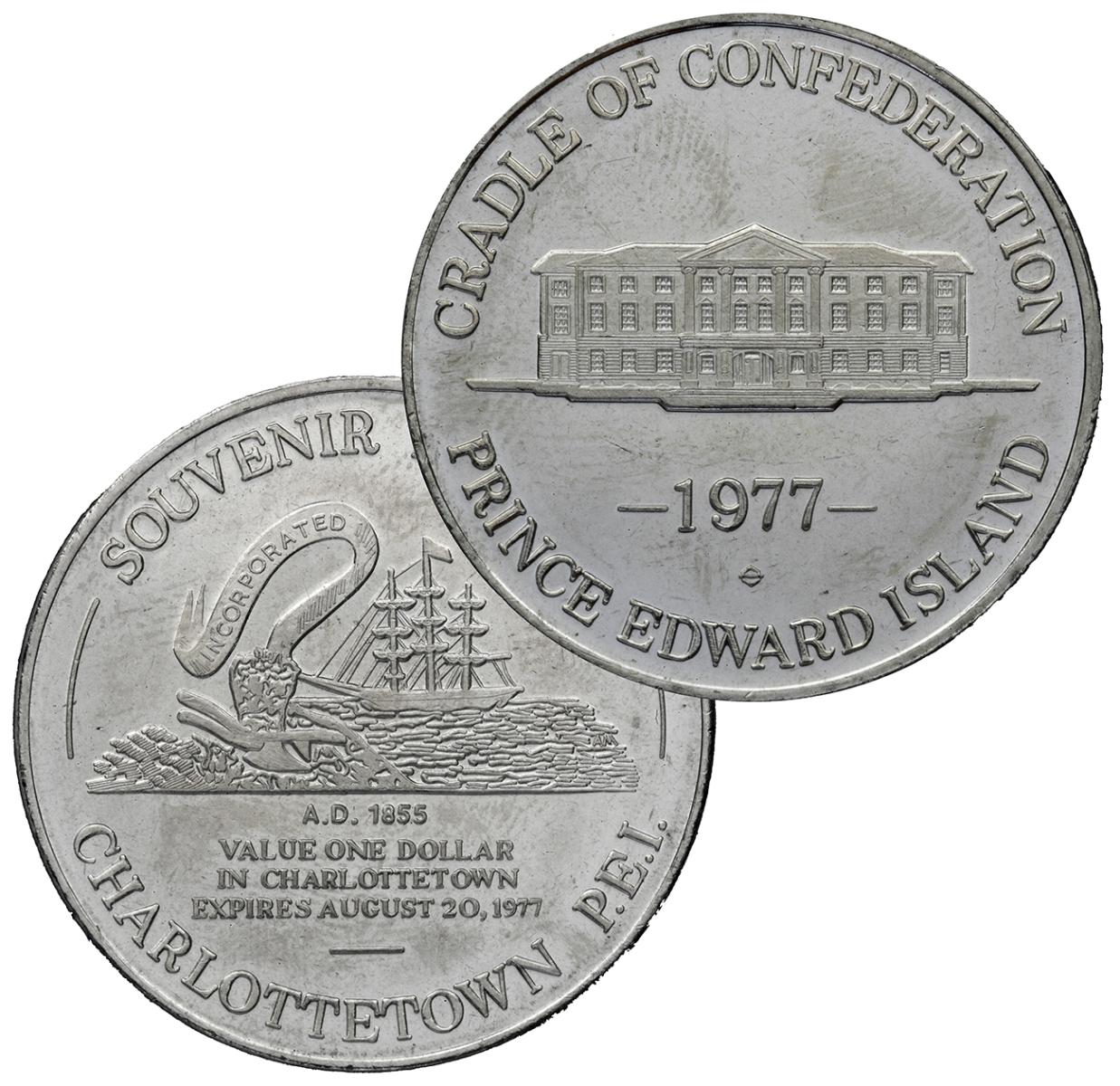
Source: 1 dollar, souvenir token, Charlottetown, Prince Edward Island, Canada, 1977 | 1981.62.58
Province House in Charlottetown is a National Historic Site and the location of the 1864 conference where the process of Canada’s confederation began. The week-long conference had famously included social events, good food and liberal supplies of intoxicating liquids—all creating a relaxed and convivial atmosphere for what could have been a seriously contentious event. Province House, considered the birthplace of Confederation, is on this souvenir token that the local chamber of commerce created to promote Charlottetown to tourists. You can still visit Province House, of course, and see where the action took place.
Halifax, Nova Scotia
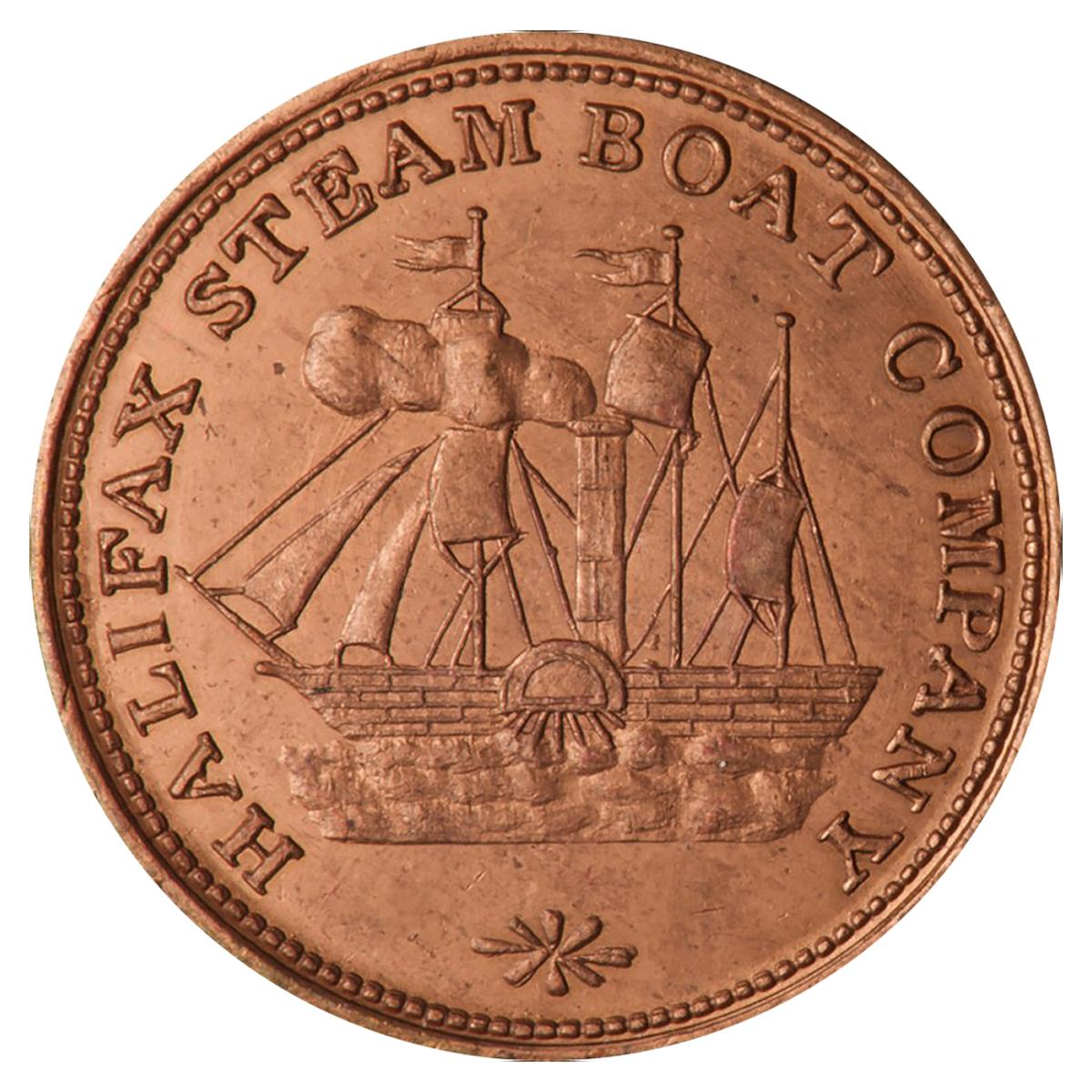
Source: 1 fare, token, Halifax Steamboat Co., Canada, 1855-1870 | 1969.125.1
A ferry service has operated between Halifax and Dartmouth since 1752, making it the oldest saltwater ferry service in North America. The Halifax Steamboat Co. ran the Sir Charles Ogle, a side-wheeled paddle steamer, from 1830–94. It was the longest serving ferryboat in the harbour and the first steamboat built in Nova Scotia. However, the Sir Charles Ogle was essentially a powered barge and looked nothing like the fanciful steamship on this token. Nowadays there are two bridges, but a passenger ferry service still runs every fifteen or thirty minutes.
Corner Brook, Newfoundland and Labrador
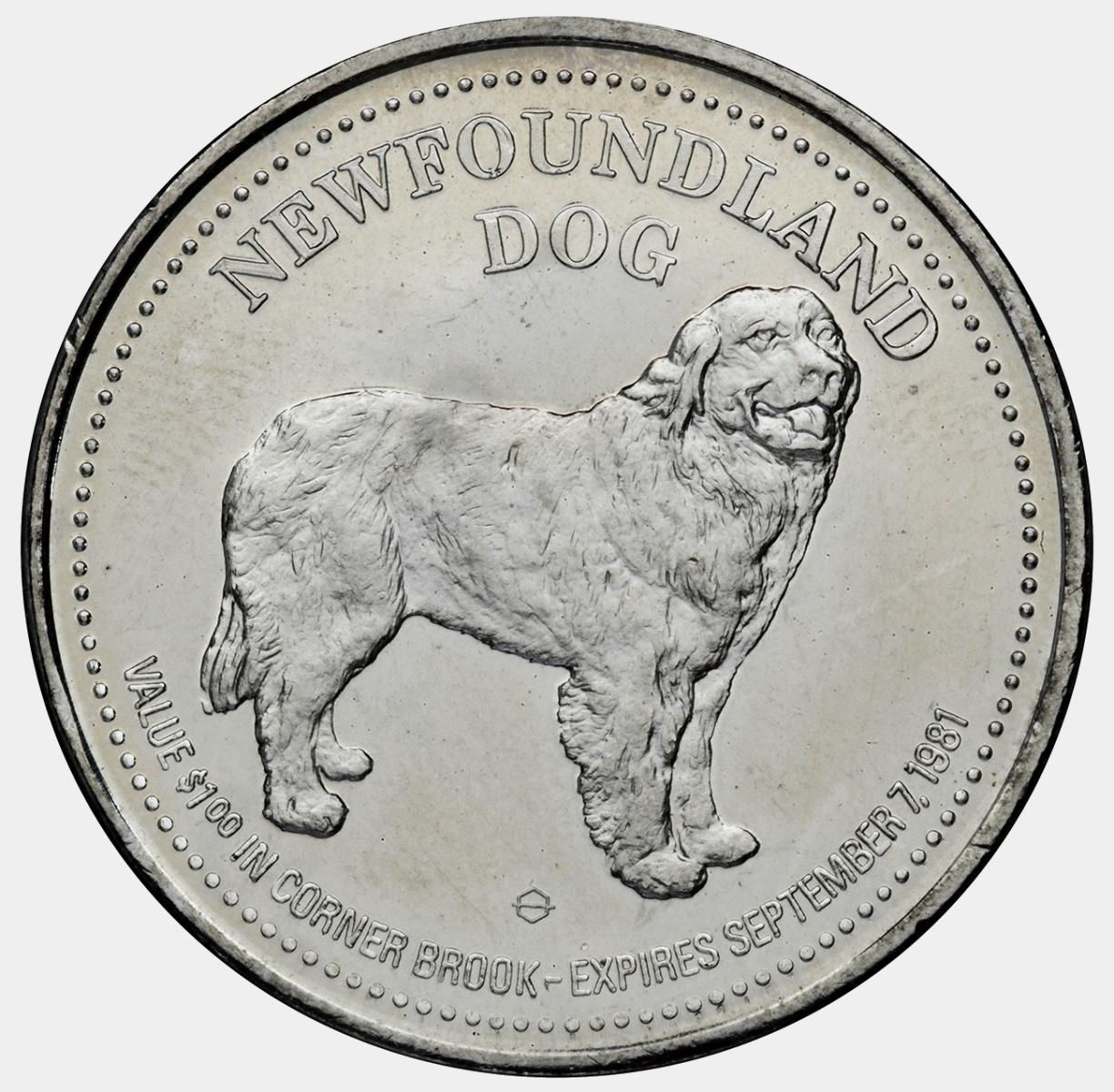
Source: 1 dollar, token, Corner Brook, Newfoundland and Labrador, Canada, 1981|1981.62.84
This token was created to celebrate 25 years of Corner Brook as a municipality. In 1956, four townships—Corner Brook East, Corner Brook West, Curling and Townsite (a neighbourhood built to house paper mill employees)—amalgamated to form the current city. Featured on the token is an image of the big, black working dog that is named for the island. The Newfoundland breed is famous for size, strength, swimming skills and its gentle good nature.
End of the road
Our final stop is behind us. From dance halls and ferries to festivals, restaurants and roadside attractions, these small objects offer a surprisingly big view of the places, businesses and stories that have shaped everyday life across Canada.
Content type(s):
Blog posts
We want to hear from you! Do you have an idea for a blog post you’d like to see?
The Museum Blog
The Money of Bytown
Bytown was a frontier town built on the construction of the Rideau Canal and a booming lumber industry. Access to different forms of money and banking facilities provided the liquidity necessary for the town to prosper into Canada’s capital.
Teaching with the Vertical $20
Engage students with creative activities linking the new bank note to careers, civics, history, social studies and art.
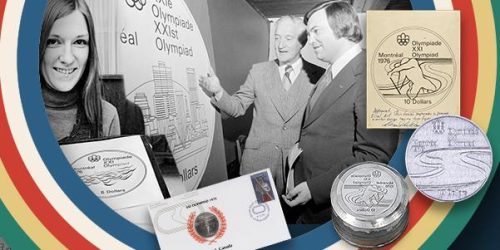
Reminiscences of the 1976 Montréal Olympic Coin Program
The Olympic Coin Program was novel, ambitious, record-breaking and for some, life-changing—much like the Olympic Games that the program helped finance.